Trump awards two Medals of Honor during State of the Union, including 100‑year‑old veteran
President Trump used his Feb. 24 State of the Union to bestow two Medals of Honor, honoring a 100-year-old Korean War pilot and a special operations aviator awarded just 52 days after his mission.

President Donald Trump used part of his State of the Union address to announce two Congressional Medals of Honor, honoring a centenarian Korean War pilot and a special operations helicopter pilot wounded in a recent raid. The awards highlighted both a decades-old, once-classified aerial engagement and a rapidly processed decoration given weeks after combat.
Retired Navy Capt. E. Royce Williams, 100, received the Medal of Honor for a 1952 dogfight in which he engaged seven Soviet MiG fighters and was credited with shooting down four, an episode that remained classified for decades because of its potential to spark a wider war. The medal, upgraded from a Navy Cross, was draped around Williams’ neck by First Lady Melania Trump as the House chamber erupted in a standing ovation that lasted more than two minutes. The president said, “Tonight, at 100 years old, this brave Navy captain is finally getting the recognition he deserves. He was a legend long before this evening.” Officials noted that Congress had waived the usual five-year limit on Medal of Honor nominations to allow the award.
Chief Warrant Officer 5 Eric Slover, a special operations Chinook pilot who was wounded in the raid that captured then-Venezuelan President Nicolás Maduro, also received the nation’s highest military honor. Slover stood with the aid of a walker as the president described severe wounds. “Eric was hit very badly in the leg and hip, one bullet after another. He absorbed four agonizing shots, shredding his leg into numerous pieces,” the president said. The medal was presented to Slover by Lt. Gen. Jonathan Braga, the commander of U.S. Special Operations Command, a departure from the tradition of the president personally placing the decoration. Officials said Slover’s award came 52 days after his mission, an unusually rapid turnaround compared with the multiyear reviews that have become common for modern-era valor awards.
The White House said additional participants in the Maduro raid would be recognized shortly; the president told the chamber that 10 other service members from the operation will receive medals at a private White House ceremony in the near future.
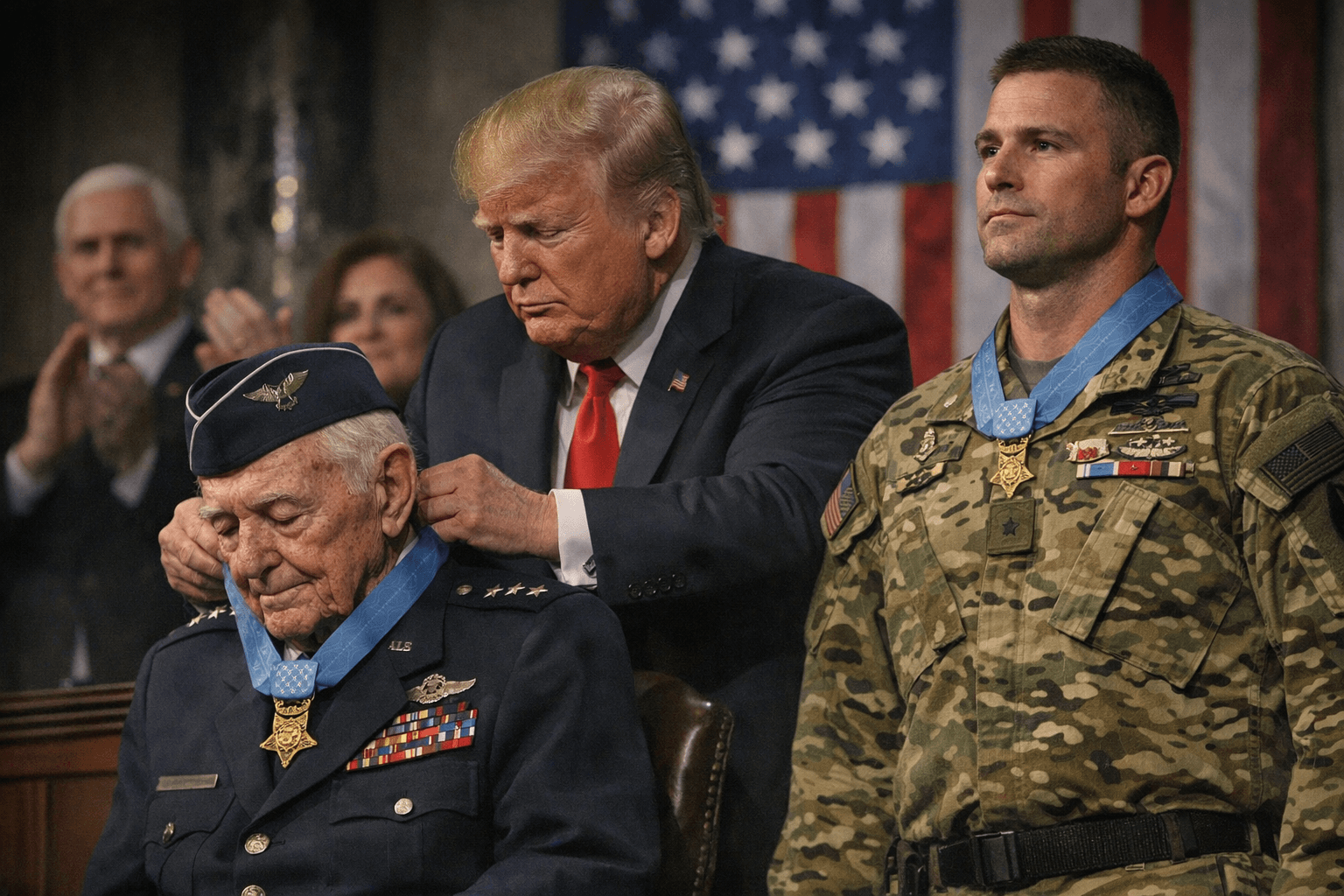
The dual presentations juxtaposed two distinct patterns of military recognition and raised questions about how awards intersect with veteran care and public policy. Williams’ decades of secrecy meant a long interval between heroics and public recognition, while Slover’s swift decoration broke with recent lengthy review practices. High-profile honors can raise public awareness of veterans’ medical and social needs; Slover’s visible injuries and need for mobility assistance underscored ongoing demands for rehabilitation, long-term care, and support for wounded service members.
Beyond ceremony, the events touch on systemic issues in how the nation documents valor and supports veterans. Secrecy and bureaucratic delay have historically left some veterans without timely acknowledgment, while politicized or expedited processes can create perceptions of unevenness. As lawmakers consider veterans’ health and benefits, advocates say consistent, transparent procedures for recognition and care are critical to ensuring that honors translate into sustained access to medical services and community supports for all who serve.
This article was produced by Prism’s automated news system from verified source data, official records, and press releases, then run through automated quality and moderation checks before publishing. The system is built and supervised by the people who set the standards it runs under. Read our full AI policy.
Did this article answer your question?

