Trump-backed 250-foot arch for Washington gains preliminary approval with revisions
A Trump-backed 250-foot arch cleared a first federal review, but commissioners demanded changes to its footing, access and gilded figures.
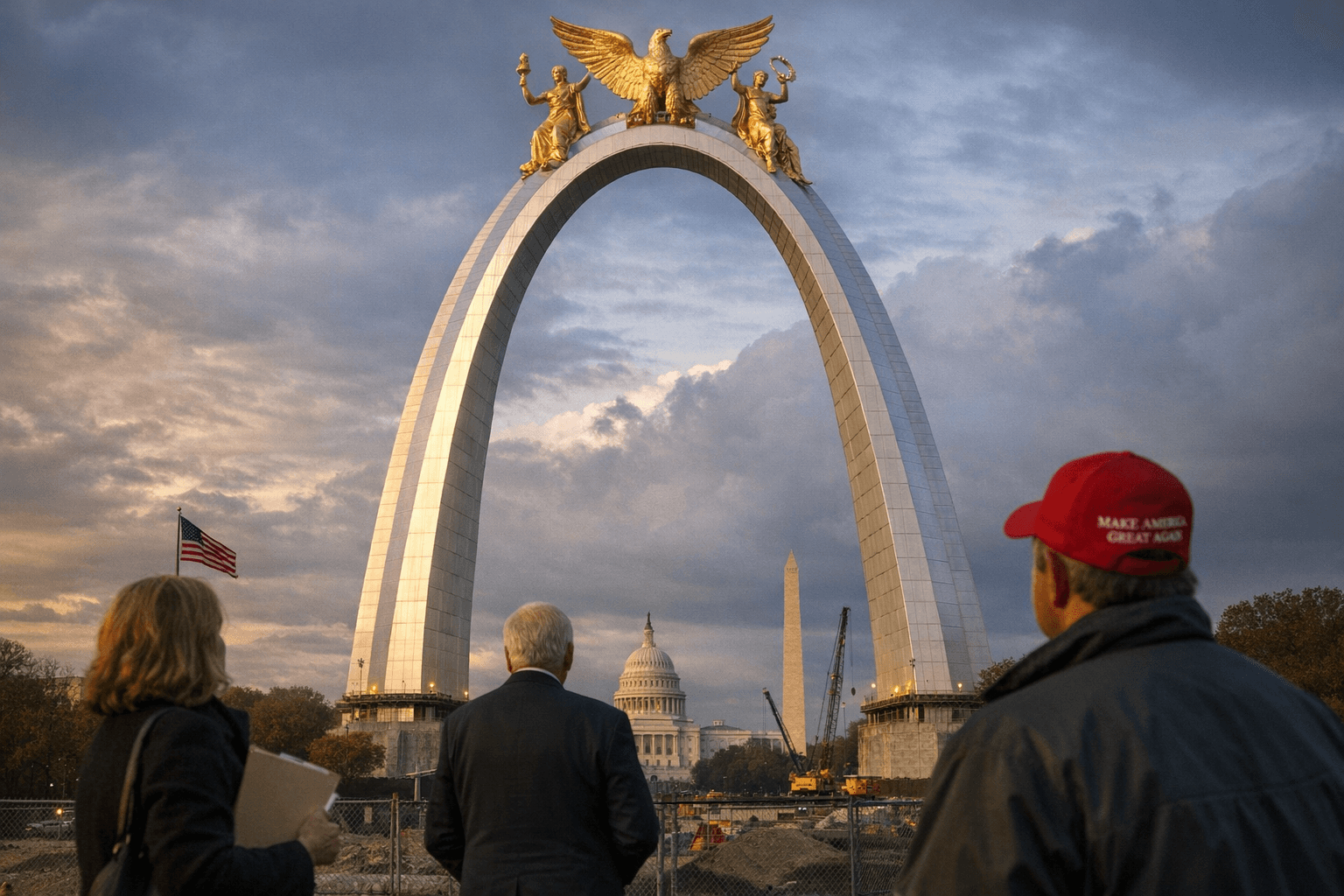
A 250-foot triumphal arch backed by Donald Trump moved a step closer to Washington’s ceremonial core, but only after federal design commissioners pressed for revisions to its foundation, access routes and gold-topped figures.
The proposed monument would rise on Columbia Island at Memorial Circle, the traffic circle at the foot of the Arlington Memorial Bridge, between the Lincoln Memorial and Arlington National Cemetery. The design, by Harrison Design, is meant to echo Paris’ Arc de Triomphe while standing nearly 100 feet taller, a scale that places it among the most assertive additions ever proposed for the capital’s memorial landscape.
The U.S. Commission of Fine Arts gave the project preliminary approval on April 16, 2026, but the seven-member advisory body did not simply wave it through. Commissioners questioned project architect Nicolas Charbonneau about the arch’s structural footings, pedestrian and wheelchair access, and the golden statues planned for the top of the structure. The scrutiny underscored how even a concept tied to the nation’s 250th birthday still must pass through Washington’s layered design review system before any construction can begin.
Renderings show two eagles and a winged, crowned figure atop the arch, imagery that has intensified criticism over symbolism as much as scale. Trump has framed the project as a tribute to America’s 250th anniversary and to military veterans, but the monument’s likeness to a European triumphal arch and its placement in the capital’s most loaded memorial corridor have raised broader questions about whether a sitting president should be able to leave such a visible personal stamp on public ground.
The project still faces legal and congressional hurdles, and the commission’s approval was only preliminary. That leaves the arch in a familiar Washington pattern, where presidential ambition collides with design oversight, land-use authority and the politics of memory. The question is no longer whether the idea can make headlines. It is whether a monumental tribute tied to Trump’s presidency can move from renderings to reality without rewriting the ceremonial balance of the capital itself.
Know something we missed? Have a correction or additional information?
Submit a Tip