Bipartisan senators say U.S. Taiwan weapons sales likely to advance soon
Senators told Taipei approval of long-waiting U.S. arms sales is likely within weeks, but Taiwan still faces a $32 billion backlog and a stalled defense budget.
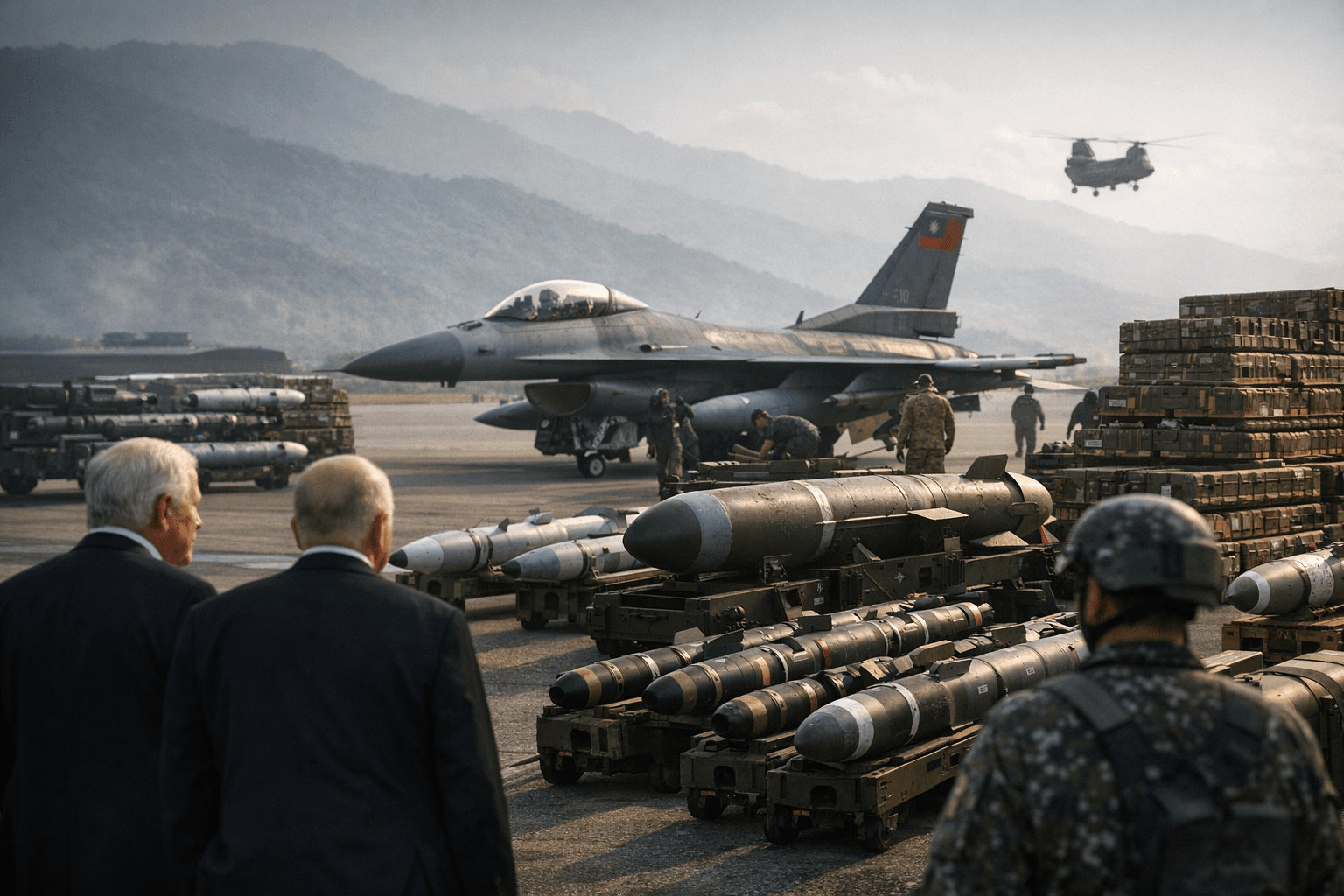
A bipartisan group of senators moved to calm Taiwan’s anxieties over delayed U.S. arms sales, telling Legislative Yuan Speaker Han Kuo-yu and other lawmakers that pending weapons packages are likely to be approved in the coming weeks. The April 14 letter from Jeanne Shaheen, Jacky Rosen, Thom Tillis and John Curtis said Congress was fully committed to the timely delivery of critical capabilities and that the sales should be announced soon.
The message mattered because the systems still waiting in the queue are the ones Taiwan says it needs most to harden its defenses against China. The pending packages include counter-drone assets, an integrated battle command system and medium-range munitions, equipment aimed at making Taiwan’s air defenses faster, more connected and harder to overwhelm. Those sales sit alongside a larger backlog of U.S. weapons cases that Taiwan Security Monitor estimated at about $32 billion after the Trump administration notified Congress on December 17, 2025, of more than $11 billion in new Foreign Military Sales cases.
Timing has become part of the deterrence message. Donald Trump is scheduled to travel to China on May 14 and 15, and Xi Jinping told him in February that Taiwan arms sales must be handled with “prudence.” That has sharpened worries in Taipei and Washington that military support could be slowed or softened just as Beijing keeps pressing its claim over the island. The senators’ letter was meant to counter that impression, signaling that congressional backing remains intact even as the White House weighs broader ties with Beijing.
But the letter also pushed Taiwan to move faster on its own defense spending. Lai Ching-te has proposed an additional $40 billion in defense outlays, including 200,000 unmanned systems and an integrated air and missile defense network, yet opposition lawmakers have delayed the plan. On March 23 to 26, hearings on the special budget ended without consensus, with the Kuomintang and Taiwan People’s Party blocking systems that the Institute for the Study of War said were critical to modern warfare. The U.S. also approved Taiwan’s request on March 30 to defer payment for some systems until May 2026, a sign that procurement timelines are already under strain.
Taiwan’s parliament tried to keep older orders from slipping further by authorizing the government on March 13 to sign agreements for about $9 billion in stalled U.S. arms deals, including TOW anti-tank missiles, M109A7 self-propelled howitzers, Javelin missiles and HIMARS launchers. At least $4.4 billion of the backlog had already been partially delivered, according to Taiwan Security Monitor. For Taipei, the senators’ promise is helpful, but credibility will still depend on whether Washington can deliver and whether Taiwan can show it is willing to pay for its own survival.
This article was produced by Prism’s automated news system from verified source data, official records, and press releases, then run through automated quality and moderation checks before publishing. The system is built and supervised by the people who set the standards it runs under. Read our full AI policy.
Did this article answer your question?

