White House budget chief cannot estimate cost of Iran war
Vought told lawmakers he had no “ballpark” for the Iran war cost as Congress weighed a defense budget surge and an unfiled emergency request.
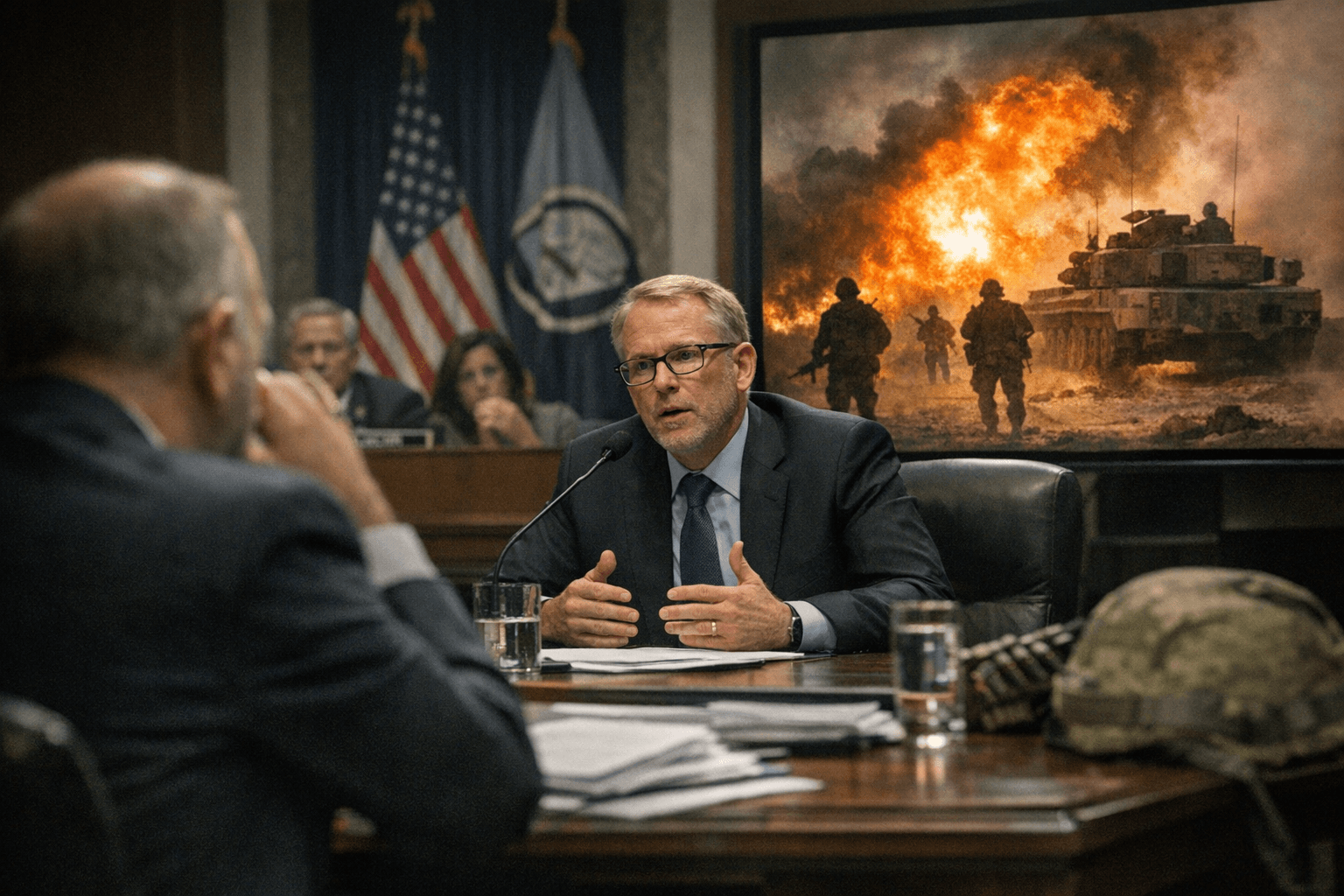
White House budget director Russell T. Vought told lawmakers he could not yet put even a rough number on the Iran war, leaving Congress to weigh a major new defense push without a clear price tag.
Testifying April 15 before the House Budget Committee, Vought said the administration was not ready with a supplemental funding request and was still sorting out what belonged in the current fiscal year and what would spill into the next. Asked by Rep. Veronica Escobar whether the war request would top $50 billion, Vought declined to give even a range. “I don’t have a ballpark,” he said.
The missing estimate lands at a sensitive moment. President Donald Trump’s fiscal 2027 budget calls for $1.5 trillion in defense spending, a 44% increase, while cutting nondefense programs by 10%. At the same time, the White House is expected to ask Congress to finance the ongoing war, but no formal request has reached Capitol Hill. That has sharpened a basic oversight question: how can lawmakers approve tens of billions, or more, when the administration says it cannot yet say what the war will cost?
The Pentagon initially sought $200 billion in emergency funding, though reports in early April said the request could be scaled back to between $80 billion and $100 billion. Defense Secretary Pete Hegseth had earlier said the figure “could move.” Republicans and Democrats alike pressed Vought over the uncertainty, and Rep. Glenn Grothman, a Republican, called for a Pentagon audit before Congress votes on more defense money.
The stakes extend beyond one supplemental. The war began February 28, 2026, and its price tag is already feeding a broader debate over war powers, budget discipline, and whether the White House is asking Congress to fund a conflict without telling lawmakers what they are buying. In past wars, from Iraq to Afghanistan, early cost estimates helped shape public support and became fuel for budget fights once the bill climbed. This time, the numbers are still shifting while the fighting continues.
Some outside estimates point to a far larger burden. CNBC reported Pentagon briefings putting the first six days of war costs at $11.3 billion. Harvard public-policy professor Linda Bilmes estimated the conflict could ultimately cost U.S. taxpayers $1 trillion over the next decade, saying Pentagon accounting understates replacement costs and that the reported $11.3 billion could be closer to $16 billion. She also put short-term costs at about $2 billion a day during 40 days of live conflict. TIME reported Kevin Hassett said $12 billion had already been spent, while rising gasoline prices tied to disruption through the Strait of Hormuz have widened the domestic economic fallout.
For Congress, the problem is no longer abstract. A war funding request is coming, defense spending is already being ramped up, and the White House has admitted it cannot yet say what the war will cost. That leaves lawmakers being asked to oversee an operation whose budget is still taking shape.
This article was produced by Prism’s automated news system from verified source data, official records, and press releases, then run through automated quality and moderation checks before publishing. The system is built and supervised by the people who set the standards it runs under. Read our full AI policy.
Did this article answer your question?

