Trump Budget Seeks Massive Military Boost While Cutting Domestic Spending
Trump's fiscal 2027 budget requests $1.5 trillion for the Pentagon, a 44% jump from last year, while slashing domestic programs by $73 billion.

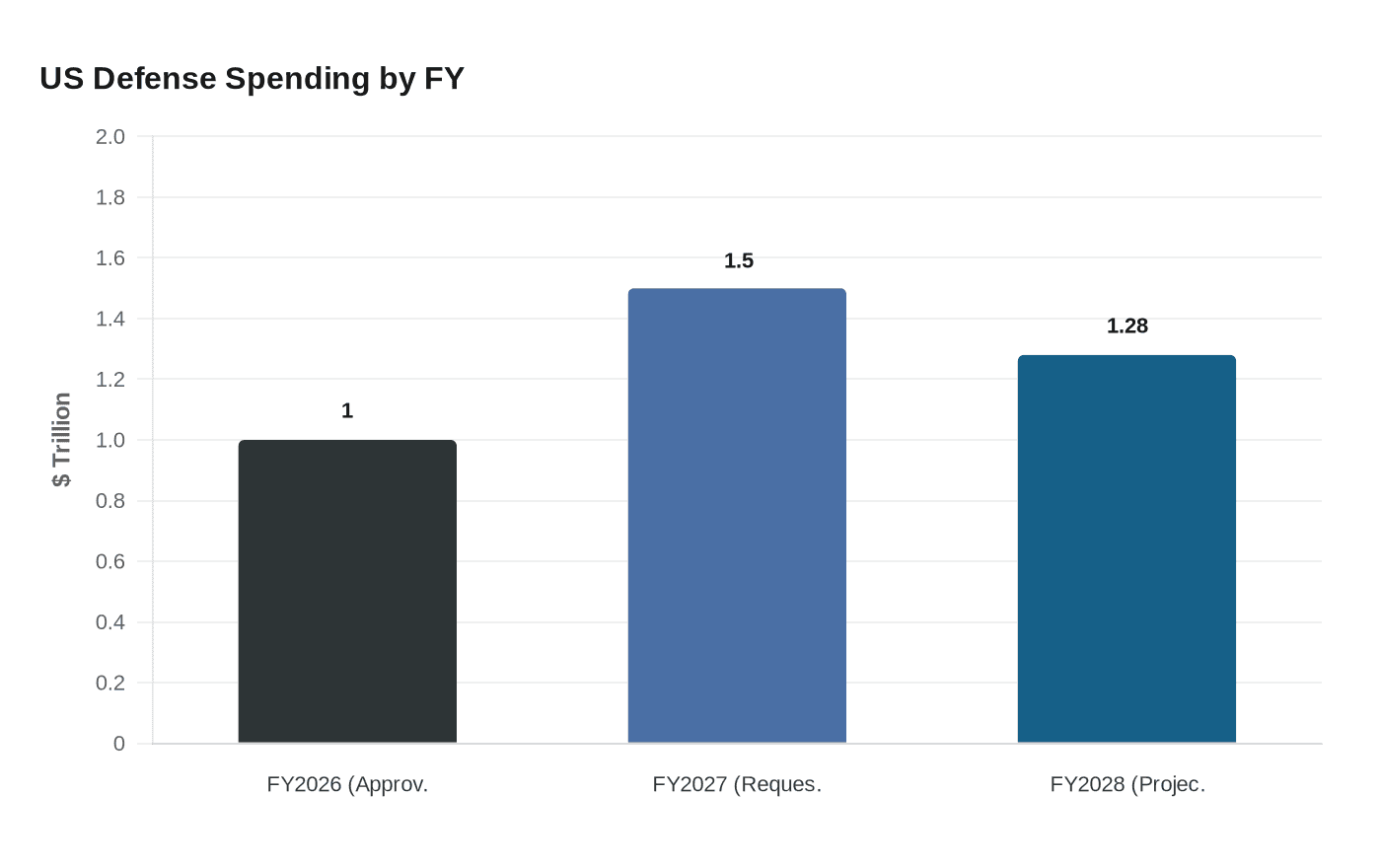
The White House sent Congress a fiscal 2027 budget request on Friday that would push defense spending to $1.5 trillion, the largest such request in American history, while cutting nondefense programs by $73 billion. The proposal, authored by Budget Director Russell Vought, frames the military surge against the backdrop of the ongoing U.S.-led war against Iran and represents, in percentage terms, the steepest year-over-year increase in Pentagon funding since the Korean War.
The 44% increase over the roughly $1 trillion Congress approved for fiscal year 2026 had been telegraphed by Trump even before the U.S.-led war against Iran began. The White House structured the total across two tracks: $1.1 trillion in base discretionary spending for the Defense Department, plus $350 billion in mandatory resources the administration wants passed through budget reconciliation, a procedural maneuver that requires only a majority vote in the Senate and would rely entirely on Republican support.
The spending plan spells out specific military buildups. The budget includes $65.8 billion to build 34 new combat and support ships, along with funds to begin construction on Trump's planned "Golden Dome" missile defense system and bolster munitions stockpiles. The Department of the Navy, comprising the Navy and Marine Corps, receives the largest single share of the proposed spending at $150 billion. The budget would also provide raises of between 5% and 7% for all military personnel, aimed at improving recruitment and retention. Junior enlisted members would receive the largest bump at 7%, mid-level service members at 6%, and higher-ranking officers at 5%.
The domestic side of the ledger absorbs the cost. The proposal seeks to slash nondefense spending by 10%, a $73 billion cut that would primarily affect housing, social services, health care and other domestic programs. The cuts also target health research, K-12 and higher education, renewable energy, climate grants, low-income housing energy programs, and community development block grants. The scientific community faces some of the deepest reductions: the White House seeks to cut the National Science Foundation budget by nearly 55%, to $4 billion, while NASA faces a 23% cut to its total budget and a 47% drop in its science division.
Trump made his priorities explicit at a private White House event Wednesday. "We're fighting wars. We can't take care of day care," he said. "It's not possible for us to take care of day care, Medicaid, Medicare, all these individual things. They can do it on a state basis. You can't do it on a federal."
The deficit arithmetic looms over the entire proposal. The federal government currently runs a $2 trillion annual deficit, and the $350 billion reconciliation component does not offset but rather compounds that gap. Separate from Friday's budget, the Pentagon has already requested an additional $200 billion supplemental package to fund ongoing Iran war operations for the current fiscal year, a request the White House has not yet formally transmitted to Congress.
Congressional passage is far from guaranteed. The budget arrives as the House and Senate remain stalemated over current-year spending, with Democrats demanding changes to Trump's immigration enforcement regime and a partial government shutdown now at 49 days. Projections from the Office of Management and Budget show the $1.5 trillion figure could drop to $1.28 trillion in 2028 if no additional reconciliation or supplemental dollars are approved, meaning fiscal 2027 could effectively function as a one-year surge. With midterm elections approaching in November, the political window to sustain that level of spending may close quickly regardless of how the current budget fight resolves.
Sources:
Know something we missed? Have a correction or additional information?
Submit a Tip