Trump Claims Iran Agreed to Allow 20 More Oil Ships Through Strait of Hormuz
Trump claimed Iran let 20 more oil ships through the Strait of Hormuz as a "sign of respect" — but shipping trackers show transits have fallen 90% to 95% since the war began.
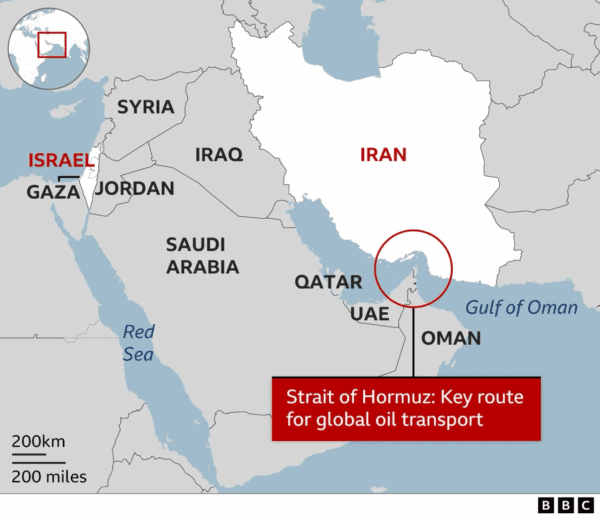
Aboard Air Force One bound for Joint Base Andrews on Sunday evening, President Donald Trump told reporters that Iran had agreed to allow 20 boats laden with oil to pass through the Strait of Hormuz "out of a sign of respect" — a claim that moved markets, complicated diplomacy, and raised immediate questions about what Iran actually agreed to and whether independent data supports it.
The assertion was Trump's largest yet in a series of escalating claims about tanker passage through the chokepoint. At a Cabinet meeting last Thursday, he announced that Iran had sent 10 oil tankers through as a "present" to the United States: "They said, 'To show you the fact that we're real and solid and we're there, we're going to let you have eight boats of oil ... and they'll sail up tomorrow,'" Trump said, adding that Iran then apologized for a separate remark and followed up with two more vessels, bringing the total to 10. By Sunday, the number had grown to 20 additional ships.
What shipping intelligence firms actually show is a far thinner trickle. Daily transits through the Strait of Hormuz have fallen some 90 to 95 percent since the conflict began, according to shipping intelligence firm Kpler, and hundreds of tankers remain trapped in the Persian Gulf. After publication of a story on the IRGC's new tolled passage route, TankerTrackers.com reported that one of the ships, a Pakistani-flagged tanker, did use the route. The gap between one confirmed vessel and Trump's claim of 20 is the central credibility test the administration has yet to resolve.
Trump indicated the tankers transiting are operating under Pakistani flags. That detail is consistent with Iranian policy: Iran's Defense Council said "non-belligerent" countries, including China, India, and Pakistan, could transit the Strait of Hormuz through coordination with Iran. Permission coordinated with Tehran on Tehran's terms is a different arrangement from what Trump described as a diplomatic concession to Washington.

Iran has publicly denied that any negotiations are taking place and has accused the Trump administration of simply trying to calm world markets. The denial matters because Trump simultaneously used the tanker passage as proof that "very substantial talks" with Iran were producing results. Stocks on Wall Street suffered their largest daily decline on Thursday since the start of the war, falling as oil prices rose sharply — a market reaction that unfolded even as Trump cast developments as progress. Iran accused the administration of engineering exactly that kind of headline.
Trump on Thursday announced he was once again postponing the deadline for Iran to fully open the Strait of Hormuz to shipping or face devastating strikes on its power plants, citing what he claimed was progress in talks to end the war. It was the second postponement. The new cutoff is April 6 at 8 p.m. Iran had threatened to retaliate against the region's vital infrastructure, like desalination facilities, if Trump followed through on attacks.
On Sunday, Trump went further, telling reporters that U.S. military achievements against Iran amounted to "truly a regime change" — a characterization that, if taken literally, would upend the stated purpose of negotiations to end the conflict. No administration official clarified what he meant.

Trump acknowledged that Iran's continued ability to block the strait, through which about 20 million barrels of oil or one-fourth of the world's seaborne crude pass daily, remains an unresolved challenge, as does the country's targeting of ships that attempt the transit. "The problem with the straits is this," he said. "Let's say we do a great job. We got 99%. 1% is unacceptable, because 1% is a missile going into the hull of a ship that cost a billion dollars."
Secretary of State Marco Rubio, asked about allied burden-sharing before flying to France for a Group of 7 diplomats' meeting, was candid about the asymmetry of stakes. "Very little of our energy comes through the Strait of Hormuz," Rubio said. "It's the world that has a great interest in that, so they should step up and deal with it."
Until maritime tracking services, flag-state registries, or allied naval commands confirm independent passage data, Trump's "20 boats" remains an unverified assertion with verified consequences: higher oil prices, a roiled stock market, and crews weighing whether a presidential promise is worth the risk of a billion-dollar hull.
This article was produced by Prism’s automated news system from verified source data, official records, and press releases, then run through automated quality and moderation checks before publishing. The system is built and supervised by the people who set the standards it runs under. Read our full AI policy.
Did this article answer your question?


