Trump Claims Iran Nuclear Problem Solved, Again, as Evidence Suggests Otherwise
Trump twice in 24 hours declared Iran's nuclear problem solved while dismissing 970 pounds of near-bomb-grade uranium as "so far underground, I don't care."
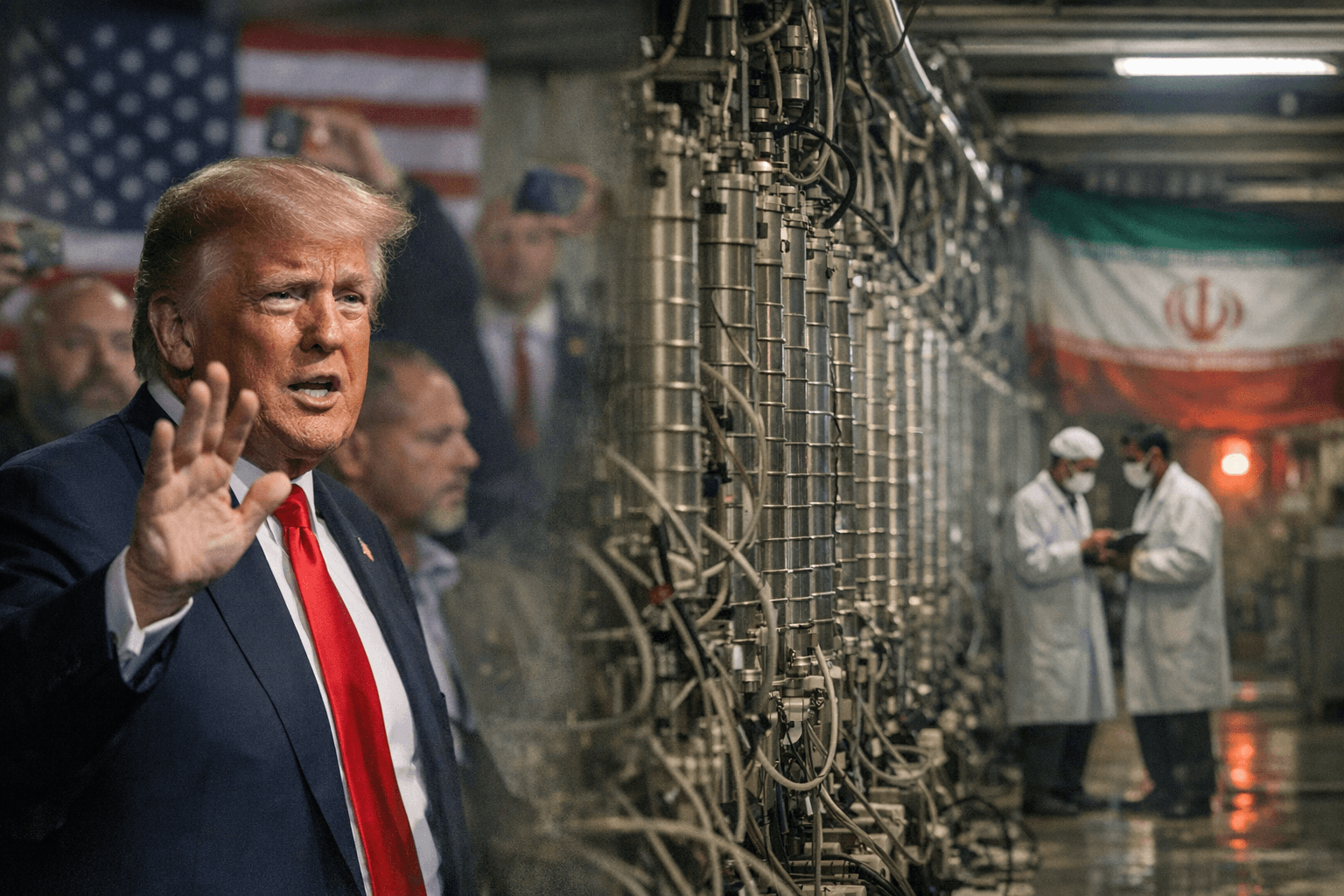
Asked about the roughly 970 pounds of near-bomb-grade enriched uranium that international inspectors say remains buried at two Iranian nuclear sites, President Trump offered a striking reply to Reuters: "That's so far underground, I don't care about that." He added, "We'll always be watching it by satellite." The comment came on the same day Trump also declared, for the second time in 24 hours, that Iran's nuclear problem had been solved, telling Reuters: "They won't have a nuclear weapon because they are incapable of that now."
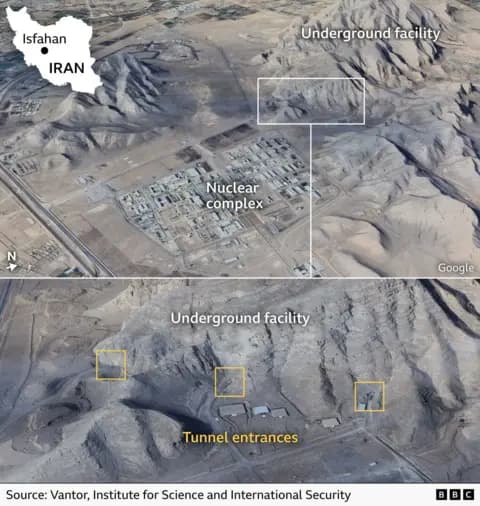
The International Atomic Energy Agency places the picture in sharper relief. When Israel launched its first attacks in June 2025, Iran held an estimated 440.9 kilograms of uranium enriched to 60 percent purity, a level well short of weapons-grade but a short technical step from it. By the IAEA's own yardstick, that stockpile, if enriched further to 90 percent, would provide the fissile explosive needed for roughly 10 nuclear weapons. IAEA Director General Rafael Grossi has confirmed that approximately half of that material is stored in an underground tunnel complex at Isfahan, with the remainder primarily at Natanz, two of the three sites the U.S. and Israel bombed during Operation Midnight Hammer in June 2025.
Trump's own intelligence apparatus offers a strikingly different baseline. Director of National Intelligence Tulsi Gabbard told lawmakers in a congressional hearing that "Iran's enriched uranium stockpile is at its highest levels and is unprecedented for a state without nuclear weapons." That testimony sits in direct tension with the president's dismissal. Satellite imagery of the Natanz nuclear complex taken in March 2026 showed no new damage at the facility or its tunnels, despite Trump's repeated assertions that his military strikes had "obliterated" Iran's nuclear program.
Analysts at the Royal United Services Institute in London note that tunnel entrances near the Isfahan nuclear complex have been backfilled, a move designed to prevent collapse from airstrikes and seal access points vulnerable to penetration munitions. "The hardening against attack demonstrates resilience," said senior non-proliferation researcher Darya Dolzikova. "This is a country that can rebuild if it wants to."
Iran's nuclear infrastructure extends beyond the sites already struck. Construction is ongoing at an underground facility near Natanz known as Pickaxe Mountain, buried up to 100 meters beneath a granite mountainside. The site was not targeted during last June's campaign, likely because it was not yet near completion. The IAEA has not been able to conduct inspections at any of the three bombed facilities since the strikes, leaving the accounting for the enriched material unverified by independent monitors.
Secretary of State Marco Rubio said on Tuesday that the United States had achieved its objectives, though he later couched the goal more carefully, saying the operation would make it "nearly impossible for Iran to have a nuclear weapon anytime in the near future." That hedging contrasts with Trump's flat declaration of success. The gap matters: if Trump publicly treats the problem as closed, the U.S. loses the coercive leverage it would need to press Iran into surrendering or neutralizing the stockpile through negotiation.
Most of America's closest allies greeted the Iran war with deep skepticism, which was on display at the G7 foreign ministers' gathering in late March. Rubio has since threatened to "re-examine" Washington's relationship with NATO after European allies declined to support the conflict, a posture that further narrows the coalition available to enforce any future nonproliferation demands.
Experts and former U.S. government officials say a military operation to physically secure Iran's uranium stockpile would be complex, risky, and lengthy, fraught with radiation and chemical dangers. The enriched material is believed to be housed in dozens of special cylinders across multiple dispersed sites. "There's always a chance that you miss something," said Eric Brewer, deputy vice president at the Nuclear Threat Initiative. "There's always a chance that you pinpoint the two locations, you think it's that, you go down there, and you only find half of what you expect."
At least 13 U.S. service members have been killed and approximately 200 wounded since the conflict with Iran began in late February 2026. Trump has also extended a deadline for Iran to reopen the Strait of Hormuz to April 6, threatening to strike Iranian power plants if it does not comply, even as he tells interviewers the nuclear crisis is behind him.
This article was produced by Prism’s automated news system from verified source data, official records, and press releases, then run through automated quality and moderation checks before publishing. The system is built and supervised by the people who set the standards it runs under. Read our full AI policy.
Did this article answer your question?


