Trump clashes with Hegseth over depleted missile stocks after Iran campaign
Trump’s Camp David clash with Pete Hegseth exposed a deeper warning: the Iran campaign may have drained missile stocks faster than Washington planned.
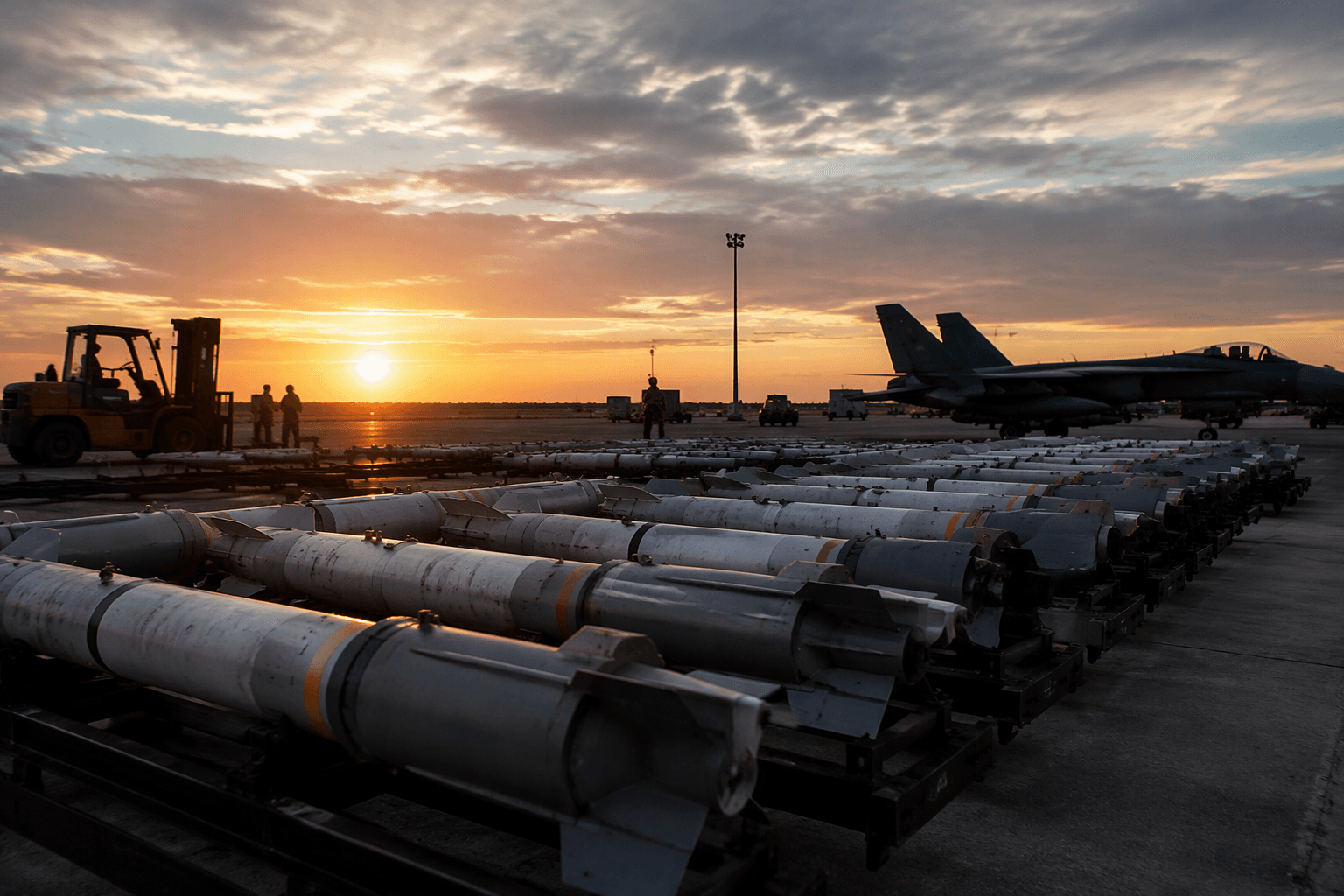
Donald Trump clashed with Defense Secretary Pete Hegseth at Camp David after frustration built over concerns that U.S. missile stocks had been depleted by the campaign against Iran. The fight put Terminal High Altitude Area Defense, or THAAD, interceptors and other long-range munitions at the center of a readiness question that goes well beyond one presidential dispute.
CNN said commanders were warning that stockpiles had become “dangerously low” after the U.S. military had used up nearly 80% of key missile interceptors. The Hill said the Army had expended “virtually all” of its Army Tactical Missile Systems and Precision Strike Missiles, and some estimates placed remaining THAAD interceptors at fewer than 278, with Patriot interceptors below 827. Those numbers turned an abstract debate over war planning into a concrete test of how much air and missile defense the United States can sustain after months of high-tempo operations.
Hegseth pushed back on the shortage narrative, telling CBS News that the claims were “manufactured” by the media. NBC News said the dispute followed an angry Trump call and prompted a Pentagon crisis meeting on weapons shortfalls, underscoring how quickly questions about munitions supply can move from intelligence and logistics channels into the White House.
The Pentagon had already been trying to accelerate replenishment. The Washington Post said on July 30 that the Defense Department was leaning on more than a dozen defense technology firms, including Silicon Valley start-ups, as Hegseth pressed for manufacturing at military scale. That push reflects a broader worry inside defense circles: interceptor production has not kept pace with consumption during the Iran campaign and related regional fighting.
The strategic stakes extend beyond the Middle East. CSIS and JINSA warned that 12 days of Israel-Iran fighting in June drove U.S. and Israeli munitions to dangerously low levels, raising concerns about how the United States would support Ukraine or deter China if another conflict escalated. Trump had said on March 4 that the country could fight wars “forever” with current munitions and described availability as “virtually unlimited,” a claim now colliding with the hard arithmetic of depleted stockpiles.
This article was produced by Prism’s automated news system from verified source data, official records, and press releases, then run through automated quality and moderation checks before publishing. The system is built and supervised by the people who set the standards it runs under. Read our full AI policy.
Did this article answer your question?