Trump confronts Supreme Court over tariff ruling, vows new legal path
President Trump called the court's tariff decision "unfortunate" and "disappointing" with justices seated in the front row and pledged to keep imposing tariffs under other authorities.
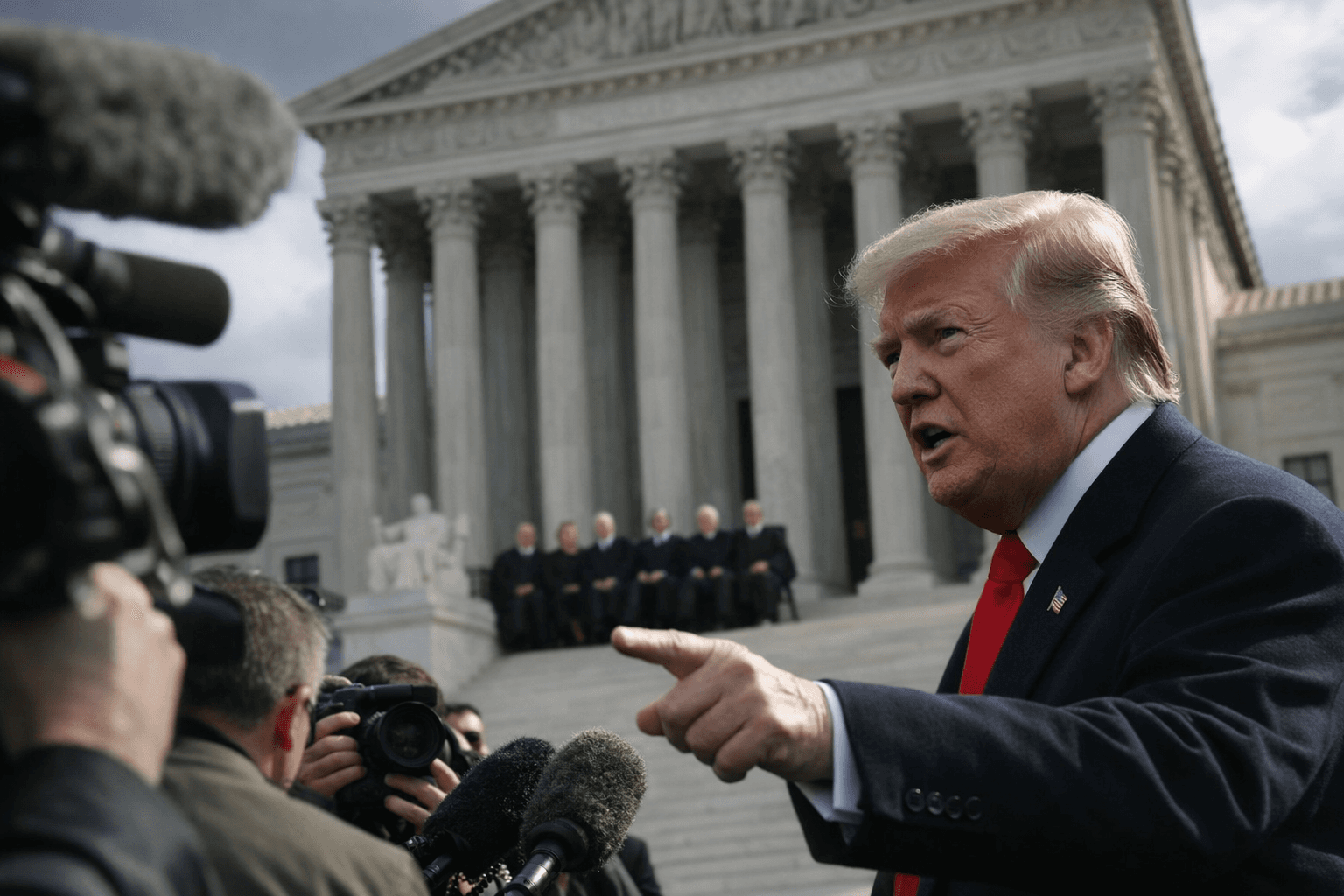
President Trump rebukes the Supreme Court from the State of the Union rostrum, calling its recent tariff ruling "unfortunate" and "disappointing" and telling the nation he will continue to impose trade barriers using alternative legal authorities without seeking new legislation from Congress. The justices sat in the front row as the remarks drew viral clips and a burst of online debate about the separation of powers and market implications.
The dispute follows a high court decision this month that curtailed the executive branch's broad unilateral tariff powers, a constraint that observers warned could limit rapid trade responses. In response, the White House signaled it will pivot to other statutory authorities and executive tools to maintain tariffs, leaving businesses, importers and exporters to brace for continued protectionist measures amid legal uncertainty.
Economic context sharpens the stakes. The last major round of unilateral tariffs applied in 2018 and 2019 targeted roughly $360 billion of Chinese imports and raised effective U.S. import barriers across several sectors. Those measures fed through to higher input costs for manufacturers and raised consumer prices on goods ranging from appliances to apparel. Markets and trade partners now face an uncertain mix of narrower judicial limits and a still-aggressive executive posture on trade policy.
The immediate operational impacts are tangible. Import-dependent firms must decide whether to hedge higher duties in contracts and inventory plans, while domestic producers that benefitted from prior tariffs face an unclear competitive landscape if the legal route changes the scope or timing of protections. Logistics and compliance departments for multinational firms are likely to see renewed legal and administrative work as agencies reinterpret which products fall under renewed orders and how quickly duties will be applied.
Policy analysts say the administration's declared pivot could rely on narrower statutes such as national security provisions or emergency economic powers that courts have treated differently from general tariff authority. Those statutes have their own legal risks and international trade consequences; using them more frequently could provoke retaliatory measures from trading partners and invite fresh litigation over executive reach.
The incident also deepens institutional tensions. The president's public rebuke of a bench that sat directly behind him in the chamber is an unusual display and raises questions about how the executive branch will test judicial boundaries going forward. For markets, the combination of constrained formal authority and an intent to press on creates a new form of policy uncertainty: tariffs are likely to persist, but businesses cannot reliably predict their legal basis, scope or duration.
Longer-term, renewed reliance on executive shortcuts risks embedding volatility into supply chains and investment decisions. Corporations weighing factory location, capital expenditures or sourcing strategies typically value predictable trade rules. If tariffs are implemented piecemeal via varying legal rationales, firms may accelerate diversification away from exposed supply lines or demand higher risk premia for investments tied to tradable sectors.
Viral footage of justices' reactions has made the exchange an immediate public spectacle, but the lasting impact will be measured in policy choices and economic flows: which legal authorities the administration invokes, how courts respond to those choices, and how businesses and trading partners adapt to a trade regime that remains assertive despite judicial constraints.
This article was produced by Prism’s automated news system from verified source data, official records, and press releases, then run through automated quality and moderation checks before publishing. The system is built and supervised by the people who set the standards it runs under. Read our full AI policy.
Did this article answer your question?

