Trump Defends $400 Million White House Ballroom, Cites Drone-Proof Roof and Bomb Shelters
Trump cited a drone-proof roof and bomb shelters to justify defying a federal judge's order halting construction on a $400 million White House ballroom.
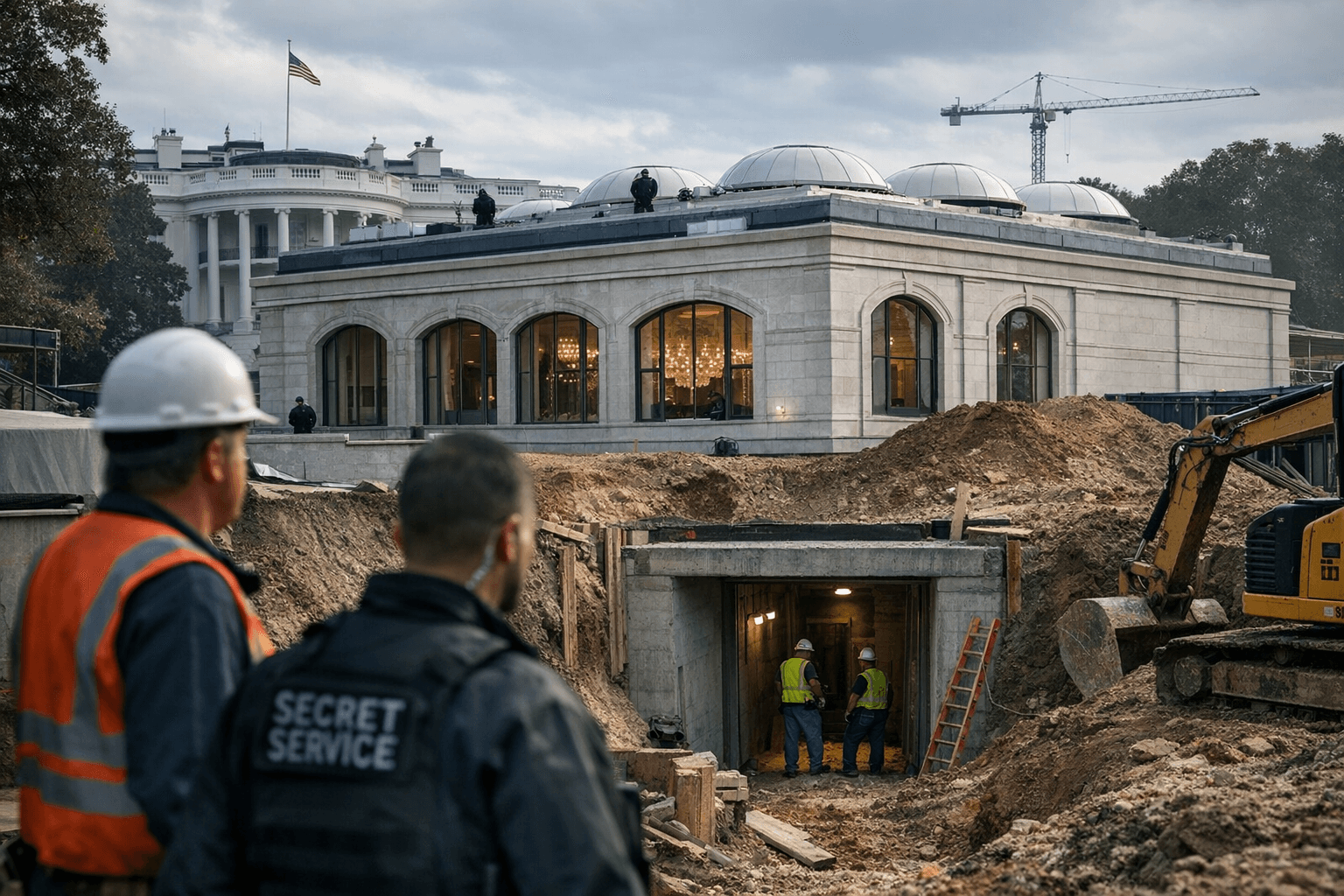
When U.S. District Judge Richard Leon ordered construction halted on the $400 million White House ballroom project March 31, President Trump didn't lean on constitutional authority or executive prerogative. He cited the roof.
Standing in the Oval Office, Trump described the structure as a fortress: a drone-proof ceiling, secure air-handling systems designed to neutralize airborne threats, bio-defense systems, hardened telecommunications, bomb shelters, and a hospital. "Bad things happen in the air if you have bad people," he said, casting what critics have called a vanity project as a national security installation. He also argued the project falls outside judicial reach because it carries no public price tag. "This is being financed privately. It's a donation," Trump said.
Judge Leon, a George W. Bush appointee on the U.S. District Court for the District of Columbia, rejected that logic in his 35-page opinion. He concluded that "no statute comes close to giving the President the authority he claims to have," and that Trump is the steward, not the owner, of the White House. "Unless and until Congress blesses this project through statutory authorization, construction has to stop!" Leon wrote, warning that above-ground work not in compliance with his ruling "is at risk of being taken down depending on the outcome of this case."
The ruling immediately created a legal opening that the administration moved to exploit. Leon carved out a narrow exception allowing work to continue for "the safety and security of the White House," the exact provision Trump and his allies cited as grounds to keep all construction active. That security framing is more than rhetorical cover: White House director of management and administration Joshua Fisher has confirmed the military is building a classified facility beneath the ballroom site, replacing the Presidential Emergency Operations Center that was dismantled when the East Wing came down. Trump himself acknowledged the scale of it in October 2025, telling reporters that "the ballroom essentially becomes a shed for what's being built under." The cost of that subterranean project is not included in the disclosed $400 million figure.
The ballroom has been escalating in both ambition and price since Trump announced it in the summer of 2025, initially priced at $200 million. That figure climbed to $300 million by October and reached $400 million in December. Lead architect Shalom Baranes presented elevation drawings to the National Capital Planning Commission in January 2026. At approximately 90,000 square feet, the planned structure is nearly double the size of the 55,000-square-foot Executive Mansion and designed to accommodate 999 guests. It would represent the most significant physical change to the White House complex since President Harry S. Truman added a balcony to the South Portico. The historic East Wing was already demolished by September 2025 to clear the site, despite Trump's earlier assurances that existing structures would remain intact.
The National Trust for Historic Preservation, which filed the lawsuit in December 2025, argues Trump pressed ahead without required approvals from the NCPC and the U.S. Commission of Fine Arts. Trust attorney Thaddeus Heuer told the court on March 17 that above-ground construction was just two weeks away. Carol Quillen, the organization's president and CEO, called the ruling "a win for the American people on a project that forever impacts one of the most beloved and iconic places in our nation." Trump labeled the Trust "a Radical Left Group of Lunatics" on social media.
Leon suspended enforcement of his injunction for 14 days, anticipating an appeal. Justice Department attorney Jacob Roth argued for the administration in court; a notice of appeal was filed within hours of the ruling. The NCPC, which received more than 9,000 pages of public comments critical of the project in March, was still scheduled to vote on it April 2, two days after the injunction. Spokesperson Stephen Staudigl said the judicial ruling does not affect that timeline. Alphabet, Google's parent company, donated $22 million toward the project as part of a 2021 lawsuit settlement. The National Park Service estimates completion by mid-2028.
Leon noted in his opinion that it is "not too late for Congress to authorize the continued construction," and reports indicate Speaker Mike Johnson's office has been contacted about whether a congressional vote could resolve the impasse. What happens to the structure already rising on the former East Wing site may depend on whether legislators act before an appellate court does.
This article was produced by Prism’s automated news system from verified source data, official records, and press releases, then run through automated quality and moderation checks before publishing. The system is built and supervised by the people who set the standards it runs under. Read our full AI policy.
Did this article answer your question?

