Trump Dismisses Iran Attack on U.S. Ships as Ceasefire Holds
Trump called Iran’s attack on U.S. ships “a trifle” as missiles and drones crossed the Strait of Hormuz, testing a cease-fire already under strain.
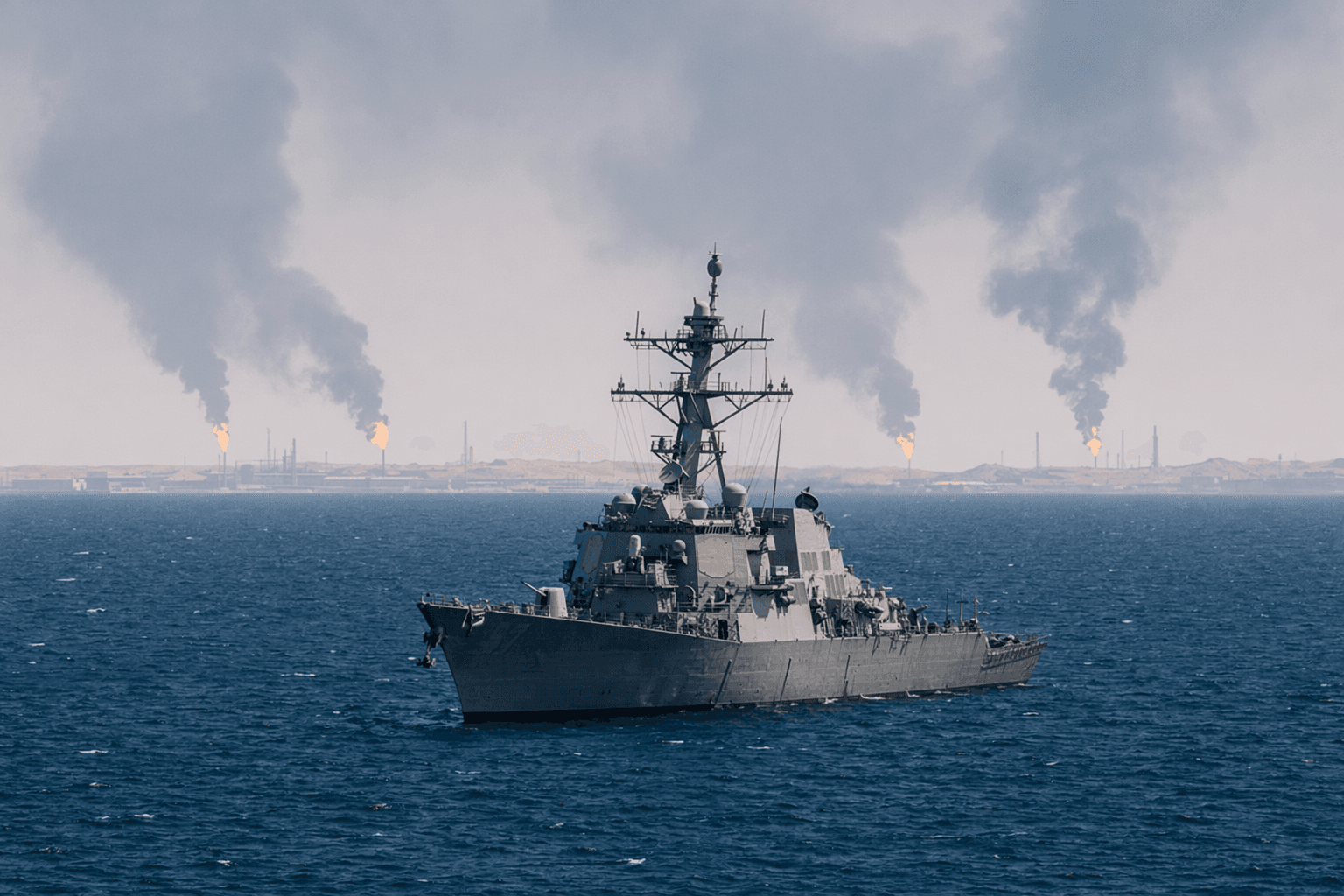
A volley of Iranian missiles, drones and small boats hit the world’s most sensitive shipping lane while President Donald Trump insisted the cease-fire still held, deepening the gap between White House rhetoric and the danger in the Strait of Hormuz.
U.S. Central Command said three U.S. Navy destroyers were transiting the strait when Iranian forces launched the attack late Thursday. The command said it intercepted the incoming threats, destroyed them, and then struck Iranian military facilities tied to missile and drone launch sites, command-and-control positions and surveillance nodes. No U.S. assets were hit.
Trump dismissed the exchange as “just a love tap” and “a trifle,” while saying the cease-fire remained in effect. He also warned Iran that it would face more forceful strikes if it did not quickly sign a nuclear deal. The administration had said the cease-fire began on April 8, after earlier U.S. and Israeli strikes on Iran.
What counts as a violation in this case is plain: live fire into U.S. vessels or at the corridor they use to pass through one of the narrowest and most strategically important waterways on earth. U.S. officials described the Strait of Hormuz as a vital global energy chokepoint, and the conflict has already driven fuel prices higher and rattled the wider economy.
The disruption has also reached commercial traffic. U.S. and allied reporting said Iran’s attacks and the American response had left hundreds of vessels effectively bottled up in the Persian Gulf, and only two merchant ships had passed through the newly guarded route at that point. The stakes extend well beyond naval signaling; they touch oil flows, insurance costs and the movement of cargo through the Gulf of Oman and into global markets.
Further signs of escalation came Friday, when the United Arab Emirates said its air defenses engaged missiles and drones originating from Iran. Iran’s parliament speaker and chief negotiator, Mohammad Bagher Qalibaf, said Tehran had not yet fully responded to the U.S. effort to reopen the waterway, underscoring how fragile the truce remained even as talks continued through intermediaries, including Pakistan.
For now, the cease-fire exists alongside active exchanges, retaliatory strikes and unresolved diplomacy. That combination has made the Strait of Hormuz less a post-conflict corridor than a live fault line, where one more miscalculation could widen a regional war that is already constraining ships, energy supplies and the world economy.
This article was produced by Prism’s automated news system from verified source data, official records, and press releases, then run through automated quality and moderation checks before publishing. The system is built and supervised by the people who set the standards it runs under. Read our full AI policy.
Did this article answer your question?


