Trump-era threats to judges and U.S. shipbuilding crisis deepen national risk
Threats against judges, a hollowed-out shipyard base and aging research on dogs expose three fronts of national risk. The common thread is whether the U.S. can keep vital systems working.
Federal judges are facing more than backlash. They are confronting a sustained campaign of online intimidation, doxxing, swatting-style harassment and violent threats that strikes at the core of the rule of law. The U.S. Marshals Service says it has opened 314 investigations involving 202 judges since October, a sign that the pressure is not abstract and not isolated.
That matters because judicial independence depends on judges being able to decide cases without fear that unpopular rulings will trigger personal punishment. When threats arrive in waves, the damage can reach beyond security protocols and into the daily functioning of democracy itself. Judges may still issue rulings, but the burden of constant alarm can reshape how they live, work and think about the risks of deciding hard cases.
When threats become part of the job
A March 2026 online forum hosted by Speak Up for Justice made clear how routine the hostility has become. Judges speaking there said the vitriol aimed at the bench now feels normalized, not exceptional. Bill Whitaker’s June 7, 2026 60 Minutes report reinforced that picture, with 26 federal judges from across the political spectrum describing a climate that has grown sharply more hostile.
Ana Reyes has become one of the most visible examples. She blocked the Trump administration from stripping protected status from Haitian immigrants and separately ruled against its ban on transgender people serving in the military. Those decisions put her in the crosshairs of public anger, and judges in similar positions say the response can arrive as a flood of threatening messages, online abuse and attempts to expose personal information.
That pattern is more than a security problem. Doxxing can make a judge’s home address, family details and routines public, while swatting can turn a digital threat into an armed emergency response. Even when no one is physically harmed, the intent is clear: to make unpopular rulings feel personally expensive and institutionally hazardous. In that sense, the attacks target not just the person in the robe but the independence of the court itself.
A shipbuilding base too weak for a great-power rivalry
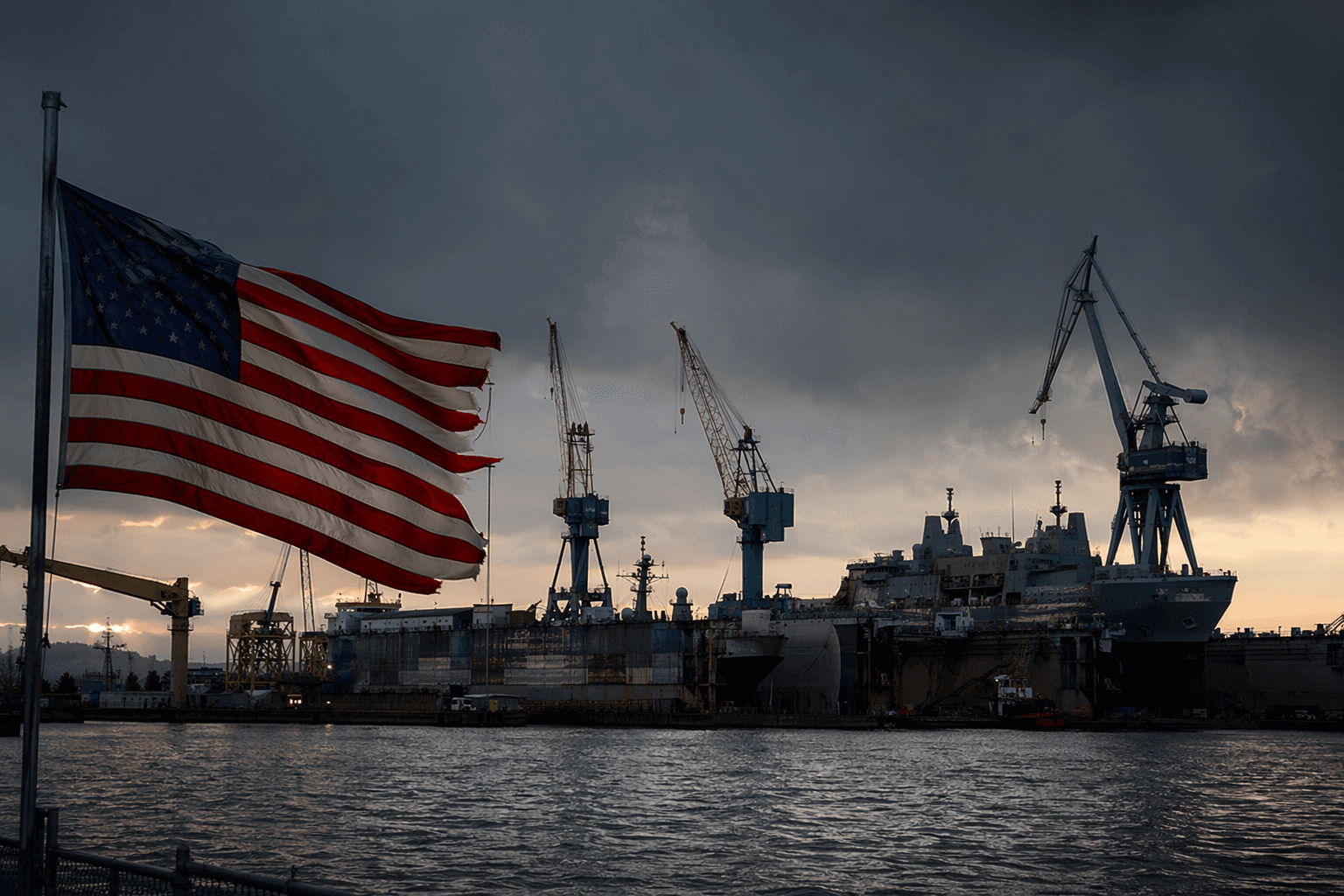
The same broad question of national resilience shows up in a very different arena: shipbuilding. CBS and 60 Minutes framed the issue starkly, saying China rolls out more than 1,000 cargo ships a year while the United States may build only about three. That gap is not simply an industrial statistic. It is a measure of how far the U.S. maritime base has slipped behind in an era when sea power and supply chains are central to national security.
The Center for Strategic and International Studies says rebuilding the maritime industrial base means restoring shipyards, mariners, logistics networks and commercial fleets that support U.S. naval strategy. Its warning is blunt: the U.S. naval shipbuilding enterprise has struggled to produce ships at the scale and speed demanded, even with bipartisan support from successive administrations and Congress. The problem is not a lack of rhetoric. It is a mismatch between strategic ambition and industrial capacity.
That has pushed lawmakers toward legislative responses such as the MAP and SHIPS Act, both aimed at rebuilding the foundation beneath American ship production. But policy by itself cannot instantly recreate a sector that has been eroded over decades. CSIS has also noted that recent U.S. efforts to curb China’s dominance have so far only temporarily shaken ordering behavior, without changing China’s market position. The result is a long game in which the United States is trying to repair a base that matters not only to commerce, but to deterrence.
The national-security stakes are easy to miss because shipbuilding sounds like a niche industrial concern. In reality, it is a test of whether the country can still make the physical things that underpin power. A weak shipbuilding ecosystem constrains naval readiness, complicates logistics and leaves the country more exposed in a competition that is already unfolding on the water.
What a dog study says about aging, health and resilience
The same day’s reporting also points to a quieter but important kind of national investment: science that may help people and animals age more healthfully. The Dog Aging Project, which began in 2020, is a nationwide long-term longitudinal study of aging in companion dogs supported by the National Institute on Aging and the Division of Aging Biology. By March 16, 2026, it had enrolled 51,000 dogs and counting, making it one of the largest efforts of its kind.
Nearly 1,000 dogs are in the project’s precision cohort, where researchers collect whole-genome sequences and annual biological samples including blood, hair, urine and feces. The project is also gathering broader behavioral and lifestyle data, including information about diet and exercise, and in some cases MRI scans of dogs’ brains. The scale matters because it gives researchers a chance to link biology, behavior and environment in the same animals over time.
Researchers at the University of Washington School of Medicine have said the same blood metabolites that predict mortality in dogs also predict mortality in humans. That finding strengthens the case for dogs as a model for aging research, especially because dogs share homes, neighborhoods, food environments, diseases and health care systems with people. They also age about 10 times faster than humans, which means researchers can observe meaningful changes in a fraction of the time.
The work has implications beyond longevity. The Dog Aging Project’s media reporting says a May 14, 2026 story found that more than 84% of dogs show signs of fear and anxiety, a reminder that health research is not only about lifespan but about quality of life. For communities, that broadens the value of the project: it can inform veterinary care, behavioral interventions and a deeper understanding of how stress and environment shape aging across species.
Why these three stories belong together
Taken together, the threats to judges, the decline in shipbuilding and the Dog Aging Project tell a single story about national capacity. One part is democratic: whether judges can rule without intimidation. One part is industrial: whether the country can build the ships it needs to compete and defend itself. One part is scientific and public health driven: whether research can translate animal data into better aging outcomes for people.
The common lesson is that institutions fail slowly before they fail all at once. Protecting courts, rebuilding maritime industry and investing in biomedical science are not separate ambitions. They are overlapping forms of national maintenance, and all three determine how well the country can withstand pressure when it comes.
This article was produced by Prism’s automated news system from verified source data, official records, and press releases, then run through automated quality and moderation checks before publishing. The system is built and supervised by the people who set the standards it runs under. Read our full AI policy.
Know something we missed? Have a correction or additional information?
Submit a Tip