Trump Extends Iran Deadline 10 Days as Markets Reel From War Fears
Trump pushed his Iran power plant strike deadline to April 6 as the S&P 500 posted its worst day since the war started and Brent crude hit $108.
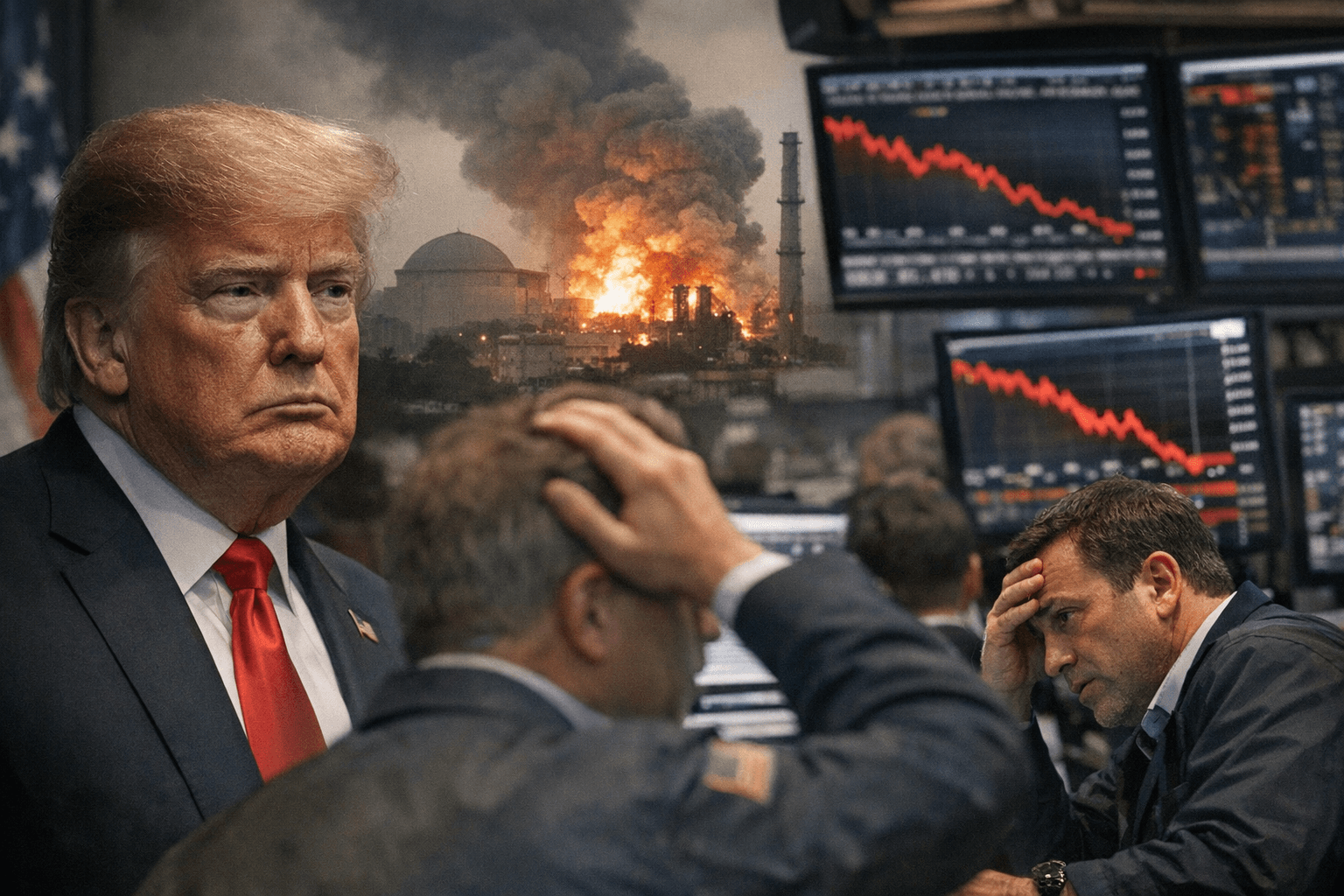
Just after U.S. stocks closed in the red on Thursday, President Trump posted on Truth Social that he was "pausing the period of Energy Plant destruction by 10 Days to Monday, April 6, 2026, at 8 P.M., Eastern Time," citing ongoing talks with Tehran. The move was the second deadline extension of the week, and it landed as Wall Street logged its worst session since the war began.
Trump had originally given Iran just 48 hours to reopen the Strait of Hormuz when he first threatened to strike Iranian energy sites, then pushed that deadline back five days to Friday, before extending it again Thursday. Special Envoy Steve Witkoff told Trump at the Cabinet meeting that Iran was "looking for an offramp" following the president's "powerful threat on Saturday," when Trump posted that he would "hit and obliterate" Iran's power plants "starting with the biggest one first" if the strait was not fully reopened within 48 hours.
Stocks fell sharply Thursday and oil prices rose as doubt took over on Wall Street about a possible end to the war. The S&P 500 slumped 1.7 percent for its worst day since January and is back on track for a fifth straight losing week. The price of Brent crude climbed to $108.01 a barrel, up roughly $38 from the approximately $70 level before the war began.
Earlier Thursday, Israel said it had killed Iranian naval commander Alireza Tangsiri in a "precise strike" in the port city of Bandar Abbas, accusing him of being responsible for efforts to close the strategically vital Strait of Hormuz. Alongside Tangsiri, the Israel Defense Forces said it had killed the head of the Navy Intelligence Directorate of Iran's Revolutionary Guard, Behnam Rezaei. U.S. Central Command later confirmed Tangsiri's death, with CentCom commander Adm. Brad Cooper adding that strikes on the Iranian navy would continue.
Speaking at a 90-minute televised Cabinet meeting earlier Thursday, Trump denied he was desperate for a deal to end the war, insisting Tehran was keen to come to the table despite Iran's cool response to an American peace proposal. At one point Trump told reporters that Tehran must negotiate or "we'll just keep blowing them away." He also said Iran was "begging to make a deal" and revealed that Tehran had allowed 10 oil tankers operating under a Pakistani flag to pass through the strait that week as a "present."
Using Pakistan as an intermediary, Washington delivered to Iran a 15-point ceasefire proposal, which includes the reopening of the Strait of Hormuz. Witkoff said at the Cabinet meeting that the U.S. had "strong signs" that peace was "a possibility," adding: "if a deal happens, it will be great for the country of Iran, for the entire region and the world at large." Iran's state media, however, quoted a senior security official saying Tehran had rejected the U.S. proposal and countered with five conditions of its own, including recognition of Iran's sovereignty over the Strait of Hormuz.
Two government-affiliated Iranian news agencies also reported that Iran's parliament is planning to formalize fees for ships passing through the strait, through which about one-fifth of the world's oil passes. Shipping in the waterway has ground to a virtual halt due to Iranian strikes on some vessels and threats of more from Tehran.
The market math behind the deadline is stark. Brent crude stood at roughly $70 before the war began, and corporate executives and energy traders are setting their own timetable for resolution. John Kilduff of Again Capital told a group of CFOs that traders see a roughly two-week window before oil prices spike even more sharply and industrial activity begins to be reined in globally. Michael Brown, senior research strategist at Pepperstone Group in London, put the stakes plainly: Iran may be hoping to get the U.S. to back down by roiling the world economy with its stranglehold on the strait, raising prices at the pump for drivers, prices in the grocery store for families, and costs for businesses the world over.
Meanwhile, a group of ships including the USS Tripoli drew closer to the Middle East carrying some 2,500 Marines, and at least 1,000 paratroopers from the 82nd Airborne have been ordered to the region. The new deadline of April 6 gives diplomats roughly ten more days to close a gap that, at the moment, looks very wide.
Know something we missed? Have a correction or additional information?
Submit a Tip