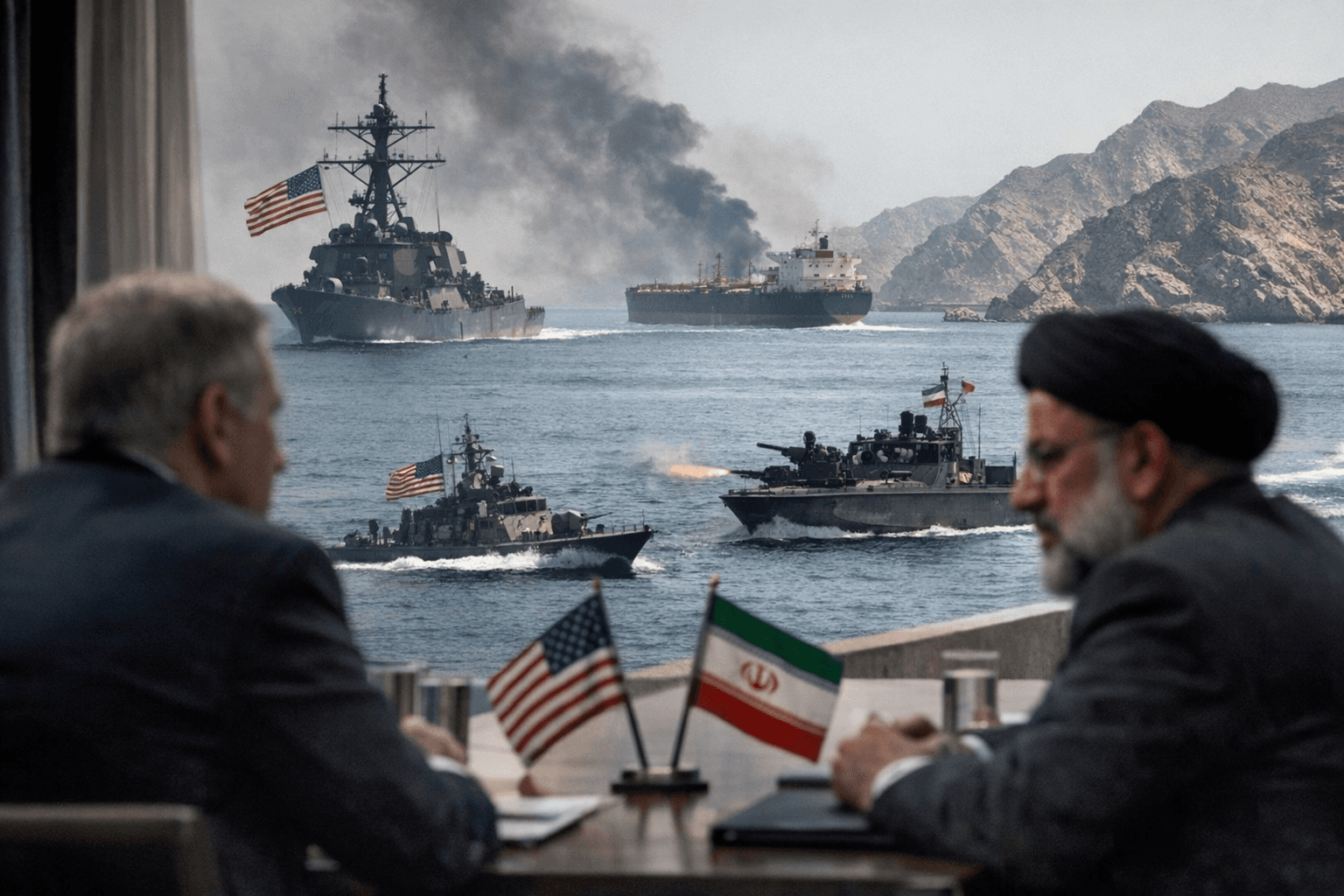
Trump floats Iran naval blockade after failed Islamabad peace talks
Failed Islamabad talks left Hormuz on edge as Trump threatened a naval blockade, jolting oil markets and raising war powers and law-of-war questions.
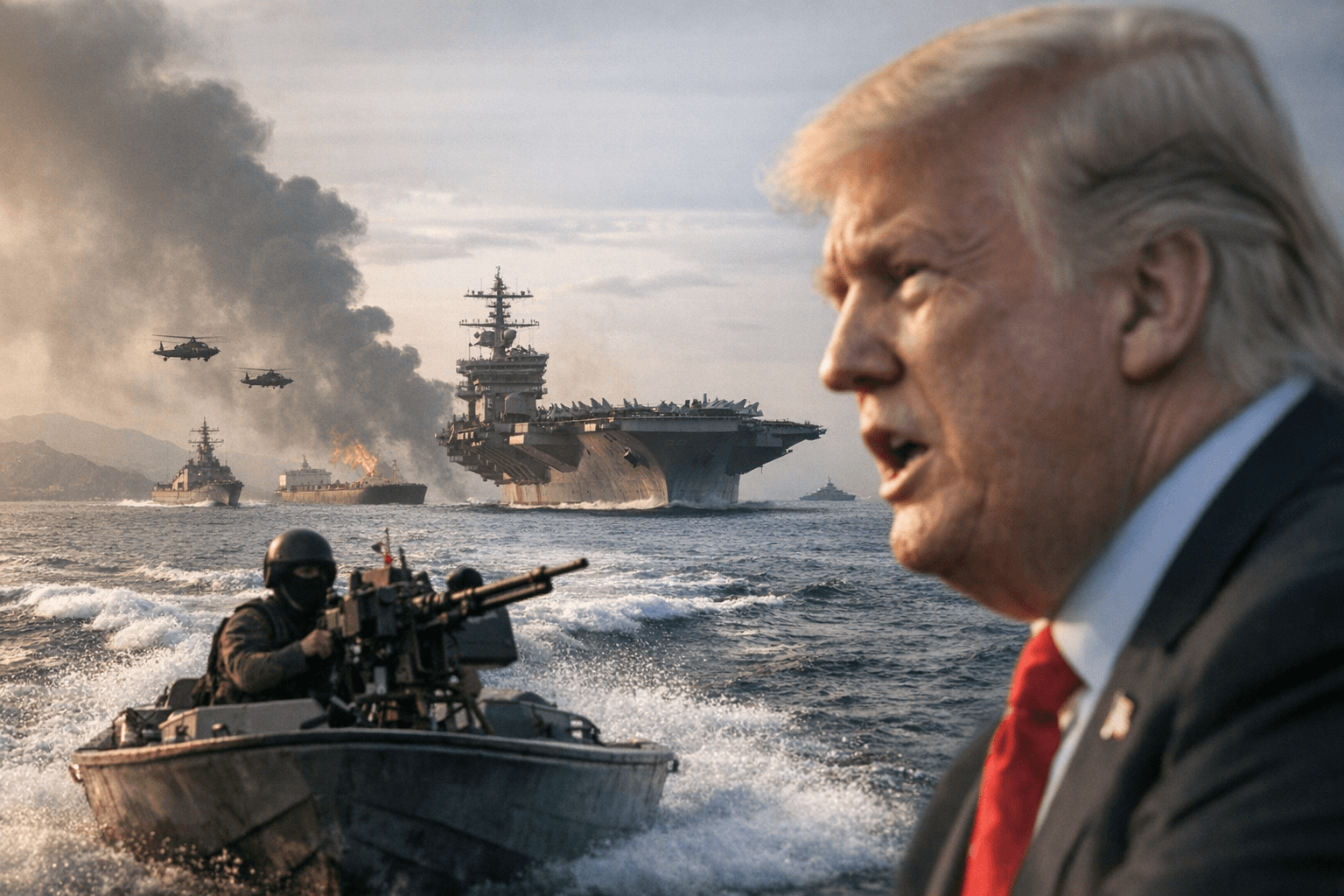
The collapse of the Islamabad peace talks put the Strait of Hormuz back at the center of a global crisis, with President Donald Trump floating a naval blockade just as oil markets, shipping insurers and U.S. commanders faced the prospect of a wider confrontation. The strait carries roughly 20 million barrels a day of crude and petroleum products, about a fifth of global consumption, so any move to choke it off would hit fuel prices, tanker routes and military risk almost immediately.
The face-to-face negotiations in Pakistan lasted roughly 21 to 24 hours and ended on April 12 without a deal. Vice President J.D. Vance led the U.S. delegation, joined by Steve Witkoff and Jared Kushner, while Iran sent Parliament Speaker Mohammad Bagher Ghalibaf and Foreign Minister Abbas Araghchi. Pakistan had brokered a two-week ceasefire before hosting the talks, but the sides left without agreement. Vance said afterward, “We leave here with a very simple proposal, a method of understanding that is our final and best offer. We will see if the Iranians accept it.”
Trump used the failed diplomacy to raise the stakes further. In a Truth Social post, he wrote, “We’re now starting the process of clearing out the Strait of Hormuz ... as a favor to Countries all over the World, including China, Japan, South Korea, France, Germany, and many others.” In remarks reported by the New York Post, he added, “We’re loading up the ships,” a line that sounded less like rhetoric than a warning that U.S. forces were being positioned for action. He also shared commentary arguing that the United States could “out-blockade Iran,” signaling a willingness to treat the strait as a military problem rather than a diplomatic one.
That posture has immediate legal and political consequences. Maritime law specialists say a declared blockade is classically treated as an act of war and must meet strict requirements, including effective enforcement and rules for neutral shipping. Public threats to strike civilian infrastructure also raise law-of-war concerns. Inside Washington, more than 70 Democrats had already called for Trump’s removal or invocation of the 25th Amendment after his Iran rhetoric, while most Republicans stayed quiet. The United Nations warned of a risk of wider war and urged compliance with international law.
The economic fallout is already visible. Brent and West Texas Intermediate briefly surged above $100 to $110 a barrel earlier in the crisis before easing on news of the ceasefire talks. Lloyd’s List intelligence has said hundreds of ships were stranded in the Gulf region, and war-risk insurance had already been curtailed, pushing owners to reroute or wait. If diplomacy keeps failing and Trump turns blockade talk into policy, the next shock could arrive first in tanker lanes, then in household energy bills, and finally in the legal and political cost of a war that starts under the banner of reopening a sea lane.
Sources:
Know something we missed? Have a correction or additional information?
Submit a Tip