Trump Gave Iran 48 Hours to Open Hormuz or Lose Its Power Grid
Trump threatened to obliterate Iran's power plants unless Tehran reopened the Strait of Hormuz, as Iran warned it would strike U.S. energy infrastructure in response.
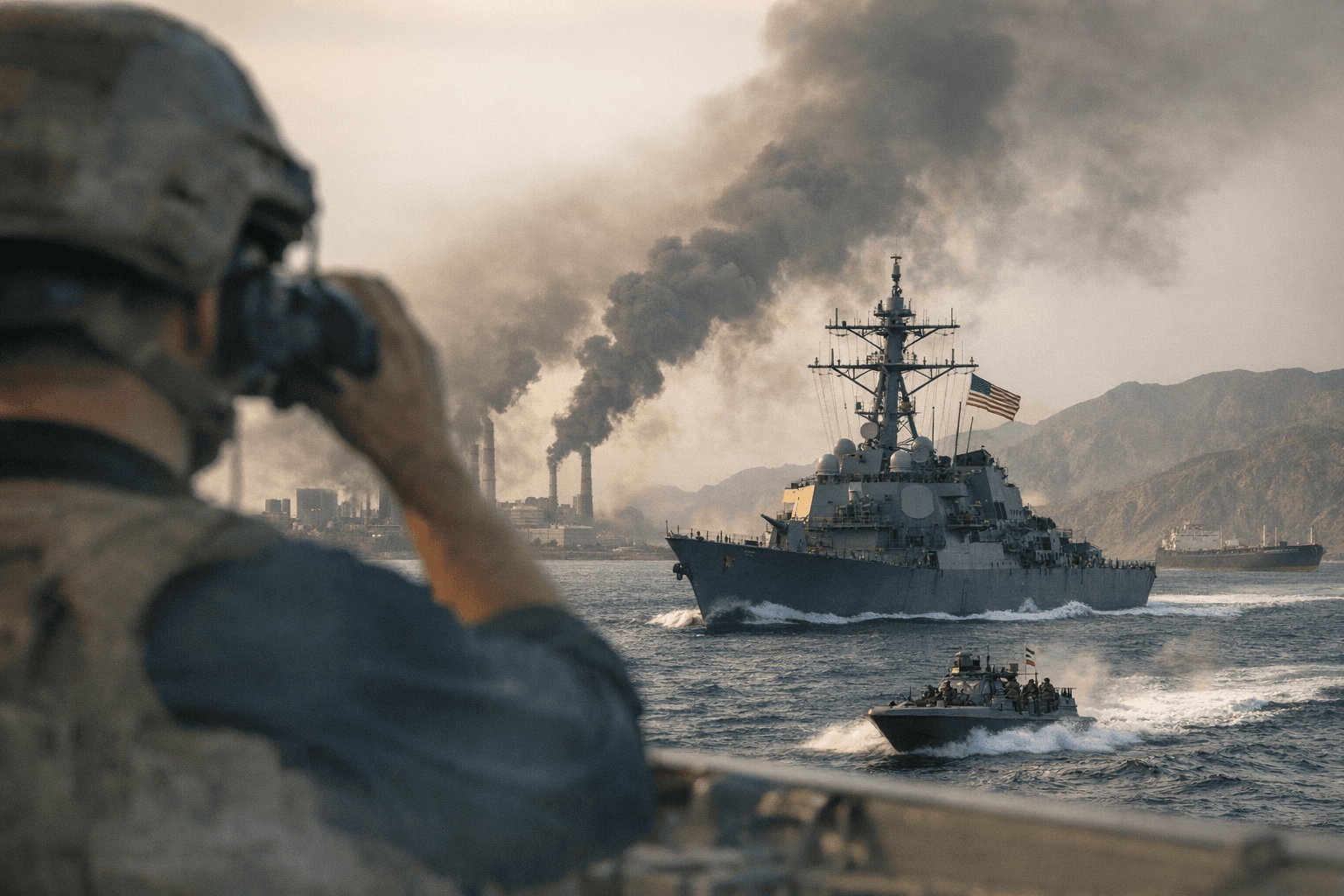
President Donald Trump posted a stark 48-hour ultimatum on Truth Social, threatening to destroy Iran's power infrastructure unless Tehran immediately reopened the Strait of Hormuz, the chokepoint through which roughly one-fifth of the world's crude oil flows. Iran's military command responded by threatening to strike American energy, technology and desalination facilities across the region.
"If Iran doesn't FULLY OPEN, WITHOUT THREAT, the Strait of Hormuz, within 48 HOURS from this exact point in time, the United States of America will hit and obliterate their various POWER PLANTS, STARTING WITH THE BIGGEST ONE FIRST!" Trump wrote, in the capitalized prose that has become his signature on the platform.
The ultimatum represented a jarring reversal. Just a day earlier, Trump had spoken of "winding down" the conflict with Iran. The Saturday post abandoned that framing entirely in favor of an explicit countdown to strikes on civilian infrastructure.
Iran's military operational command, Khatam Al-Anbiya, answered swiftly through Fars news agency. "Following previous warnings, if Iran's fuel and energy infrastructure is violated by the enemy, all energy, information technology and desalination infrastructure belonging to the US and the regime in the region will be targeted," the statement read. The threat encompasses American military and Gulf partner facilities, underscoring how rapidly an exchange of infrastructure strikes could destabilize the entire region.
The ultimatum arrived against a backdrop of widening military activity. Iranian missiles struck cities in southern Israel, including one near the country's main nuclear research center. Iranian media also reported strikes on a passenger terminal in the southern port of Bushehr and on an empty passenger ship near Kharg Island, the hub through which Iran loads nearly all its oil exports. Iranian media further claimed that U.S. and Israeli forces struck the Shahid Ahmadi-Roshan enrichment complex at Natanz on Saturday morning; technical experts found no radioactive leaks and nearby residents were not at risk. Israel said it was unaware of any such strike, and the head of the International Atomic Energy Agency said the agency was investigating.
Iran's missile capabilities showed their limits elsewhere. An attempted strike on a joint U.S.-British base at Diego Garcia, more than 2,500 miles away in the Indian Ocean, failed. The farther Iran fires, the less reliable its missiles become, a constraint that shapes but does not eliminate the threat calculus.
U.S. Marines and heavy landing craft continued moving toward the region. Israel signaled that its own strikes on Iran would "increase significantly" in the coming days. Trump also publicly accused NATO allies of cowardice for their reluctance to join any effort to reopen the strait, though some allies indicated they were open to participation. Japan said it was willing to consider mine-sweeping operations.
Traffic through the Strait of Hormuz has been largely limited since early March. The resulting energy price shocks are fueling inflation in the United States at a politically sensitive moment: congressional elections in November leave Trump with little margin to absorb an economic backlash from a prolonged closure of the world's most consequential oil corridor.
Kharg Island now sits at the center of the strategic calculus. If Washington moves to strike Iranian energy infrastructure or considers a ground seizure of the island, the global oil market faces a disruption with no modern precedent.
Know something we missed? Have a correction or additional information?
Submit a Tip