Trump halts threatened tariffs after Davos Greenland-Arctic framework
Trump says a framework with NATO leader Mark Rutte ends tariff plans, but details on Greenland sovereignty and Arctic security remain unclear.
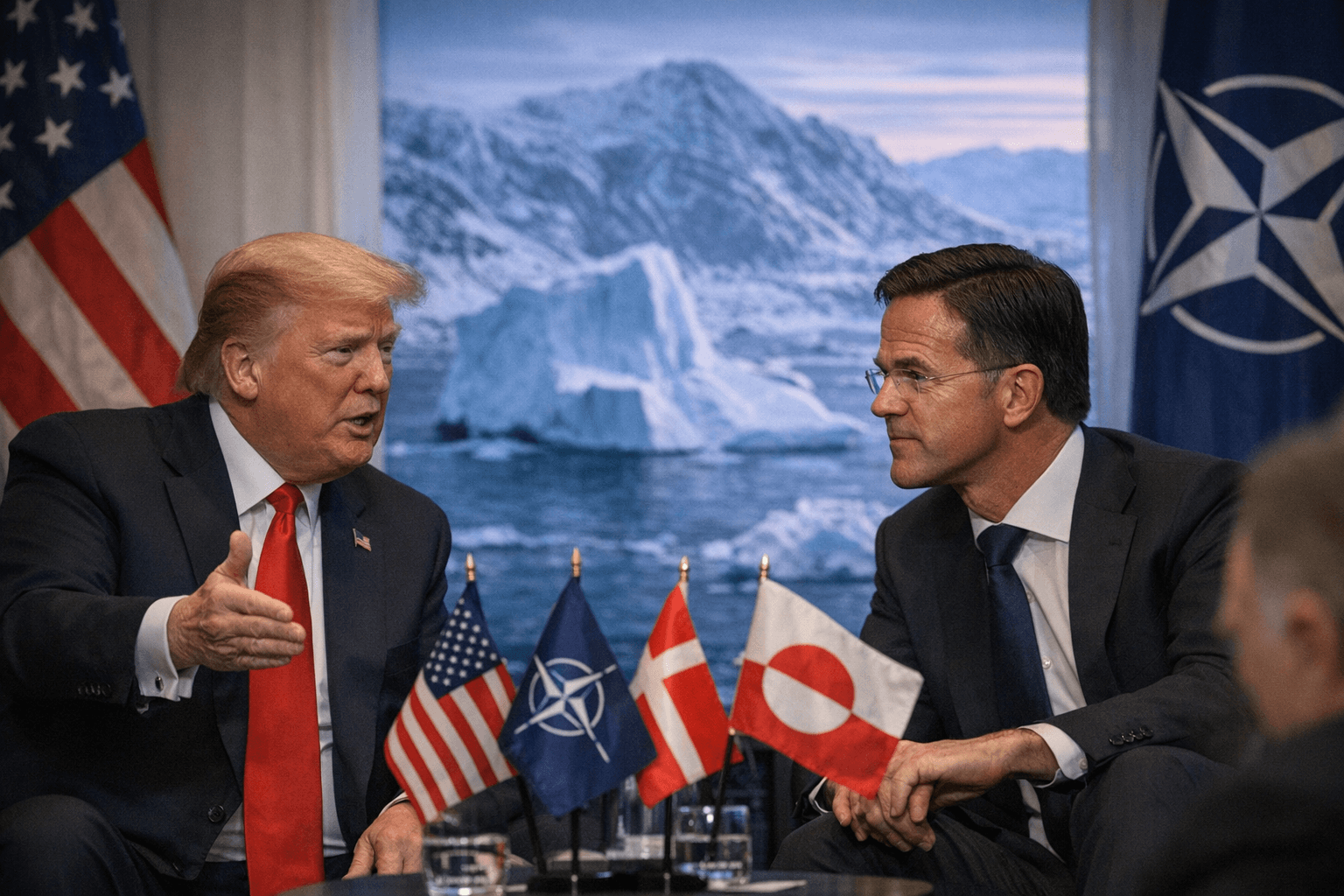
President Donald Trump announced at the World Economic Forum in Davos that he would not proceed with tariffs set to take effect Feb. 1 after he and NATO leader Mark Rutte agreed on what he called "the framework of a future deal with respect to Greenland and, in fact, the entire Arctic Region," and added that "based upon this understanding, I will not be imposing the Tariffs that were scheduled to go into effect on February 1st." The move abruptly defused a confrontation that had risked one of the sharpest ruptures in transatlantic relations in decades.
The tariff threat had targeted exports from eight European countries and prompted anxiety among allies about both trade repercussions and broader alliance cohesion. Trump framed the Davos outcome as a diplomatic solution focused on security and resources, saying in brief remarks that the framework addressed "security and minerals and everything else." Reports said the talks also touched on the "Golden Dome" missile-defense concept, described as a multilayered, $175 billion system intended to place weapons in space, but the president and Rutte provided no public specifics on ownership or governance arrangements for Greenland.
When asked about the prospect of acquiring Greenland, a Danish territory with a separate political status and aspirations for greater self-rule, Trump told reporters, "We probably won't get anything unless I decide to use excessive strength and force, where we would be frankly unstoppable. But I won't do that, OK?" He later added, "I don't have to" and "I don't want to use force." Several outlets identified Rutte as the NATO counterpart with whom Trump met; Rutte said only that they had "basically discussed how can we implement the president’s vision on protecting, yes, Greenland but not only Greenland, the whole Arctic."
Denmark reacted by urging private diplomacy and respect for legal and political norms. Denmark’s Foreign Minister Lars Løkke Rasmussen said what is "crucial for us is that we get to end this with respect for the integrity and sovereignty of the kingdom (of Denmark) and the right of the Greenlandic people to self‑determination." Russia signaled indifference, with President Vladimir Putin quoted by state news agencies as saying, "What happens in Greenland is of absolutely no consequence to us."
The announcement raises immediate policy and institutional questions. The United States has broad presidential authority over tariffs, but using tariffs as leverage against allies strains alliances and can trigger retaliatory measures that require careful management by trade and defense institutions. The framework's vagueness leaves open how competing legal claims, Greenlandic autonomy and Danish sovereignty would be reconciled, and whether any formal transfer of control or rights is contemplated.
For NATO, the episode tests alliance cohesion at a moment when Arctic security is ascending on strategic agendas because of new shipping lanes, resource extraction and great power competition. If the framework envisions shared security architectures or basing agreements, it will require coordination across member governments and parliamentary consent in some capitals, and it could reshape domestic political debates over defense spending, alliance commitments and regional economic interests.
The Davos exchange capped a familiar pattern in this administration of high-stakes ultimatums followed by abrupt reversals. Diplomats and defense officials in Washington, Copenhagen and allied capitals are expected to resume private talks to translate the asserted framework into concrete timelines, legal commitments and mechanisms that safeguard Greenlandic political rights while addressing U.S. and allied security concerns.
This article was produced by Prism’s automated news system from verified source data, official records, and press releases, then run through automated quality and moderation checks before publishing. The system is built and supervised by the people who set the standards it runs under. Read our full AI policy.
Did this article answer your question?

