Trump launches Shield of the Americas, vows lethal action against cartels
Trump convened more than a dozen regional leaders at Doral, signed a proclamation creating the Americas Counter‑Cartel Coalition and pledged coordinated military action against cartels.
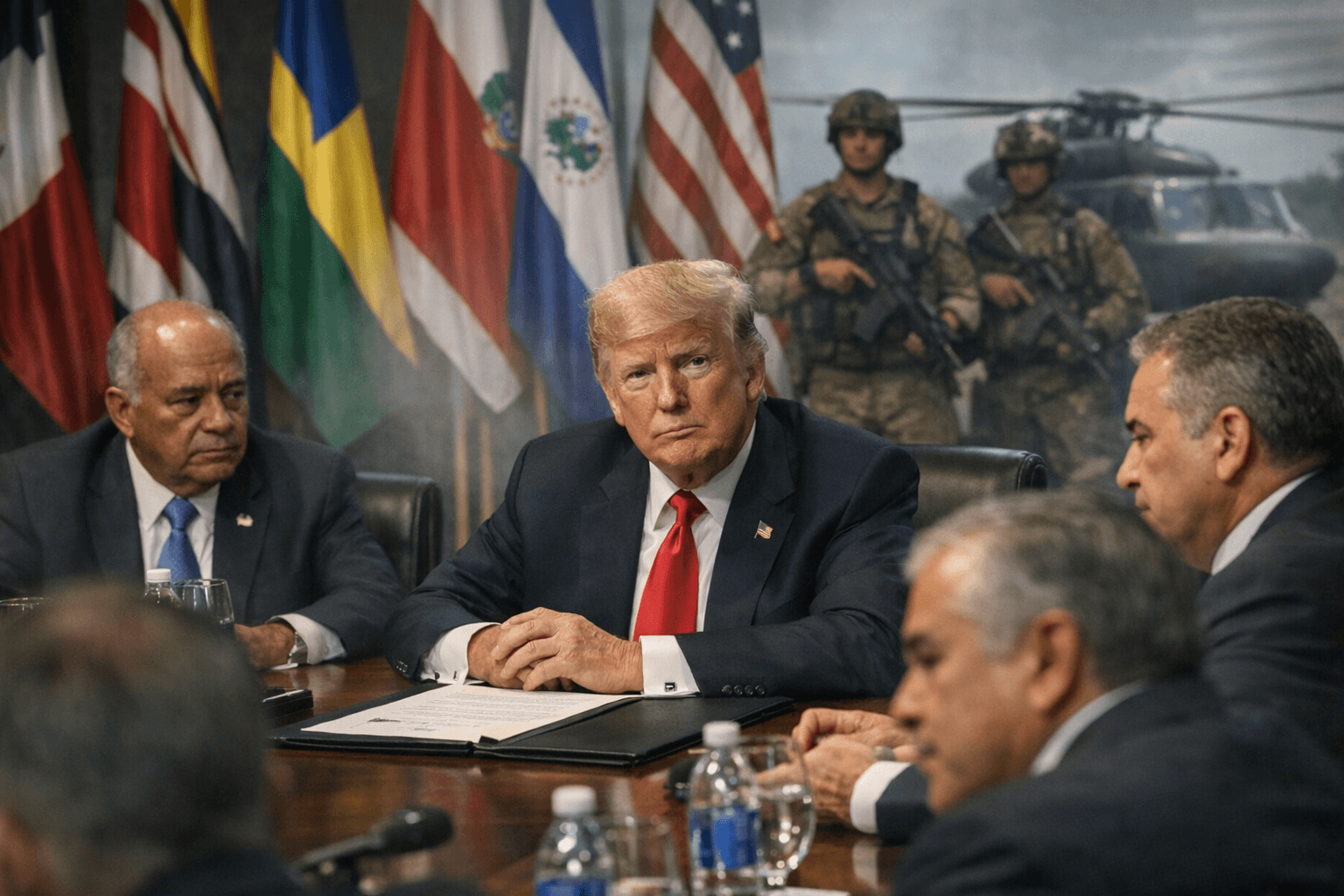
President Donald J. Trump convened more than a dozen Latin American leaders at his Trump National Doral resort and signed a proclamation formally launching the Americas Counter‑Cartel Coalition, pledging to mobilize partner militaries and deploy lethal force against transnational drug cartels.
Onstage Mr. Trump framed the effort as a new hemispheric doctrine, saying, "As these situations in Venezuela and Cuba should make clear, under our new doctrine, and this is a doctrine, we will not allow hostile foreign influence to gain a foothold in this hemisphere." He repeatedly urged military solutions, saying, "The only way to defeat these enemies is by unleashing the power of our militaries," and telling partners, "We have to use our military. You have to use your military."
The White House described the coalition as a group of likeminded governments committed to stopping foreign interference, narco‑terrorist gangs and mass illegal migration. Secretary of State Marco Rubio attended, and administration officials said select summit events would be livestreamed on official digital platforms. Attendance included high profile rightwing leaders, among them Argentina's Javier Milei, El Salvador's Nayib Bukele and Ecuador's Daniel Noboa, while top leadership from Mexico and Brazil was notably absent.
Mr. Trump pushed an expansive operational vision: training and mobilizing partner militaries to locate and eliminate cartel networks, and using "amazing weaponry" he said could end the threat if partners identified targets. The summit language and onstage proclamations did not, however, include a published annex on rules of engagement or legal limits of cross border operations; an official roster of signatory nations and the proclamation text remain the primary documents that will determine how the new coalition functions.
The summit also produced an immediate personnel shift. Department of Homeland Security Secretary Kristi Noem, who confirmed she would attend, told staff via email that her last official day at DHS would be March 31 and that, "In my new role, I will be able to build on the new partnerships and national security expertise I forged over my time as Secretary of Homeland Security." The president said he would nominate Senator Markwayne Mullin to replace her as homeland security secretary.
The Americas Counter‑Cartel Coalition marks a sharp U.S. tilt toward militarized responses in the hemisphere and a diplomatic alignment with rightwing leaders. The approach, which Mr. Trump has dubbed the "Donroe Doctrine," explicitly links counter‑cartel operations to a broader effort to push back on rival powers perceived to be extending influence in the region. Mr. Trump additionally raised concerns about Chinese activity in strategic zones, reflecting a geopolitical frame that ties organized crime to great power competition.
Legal and diplomatic questions are immediate. A coalition committed to "lethal military force" raises sovereignty and international law issues, including when and how partner governments will authorize foreign troops on their soil and whether operations will observe human rights safeguards. The proclamation signed at Doral will determine the coalition's legal contours, and regional capitals will need to reconcile domestic law and political risk with Washington's operational ambitions.
The Shield of the Americas summit thus formalizes an aggressive new U.S. posture in Latin America, shifting the hemisphere toward coordinated security operations whose legality and long term effectiveness will depend on the unambiguous details of the proclamation and the willingness of regional governments to cede operational control.
This article was produced by Prism’s automated news system from verified source data, official records, and press releases, then run through automated quality and moderation checks before publishing. The system is built and supervised by the people who set the standards it runs under. Read our full AI policy.
Did this article answer your question?

