Trump-Linked Lobbying Firm Signed Deal With Accused Libyan Warlord's Forces
A firm tied to Trump officials contracted to lobby for Libyan commanders facing human rights abuse allegations, raising accountability concerns in Washington.
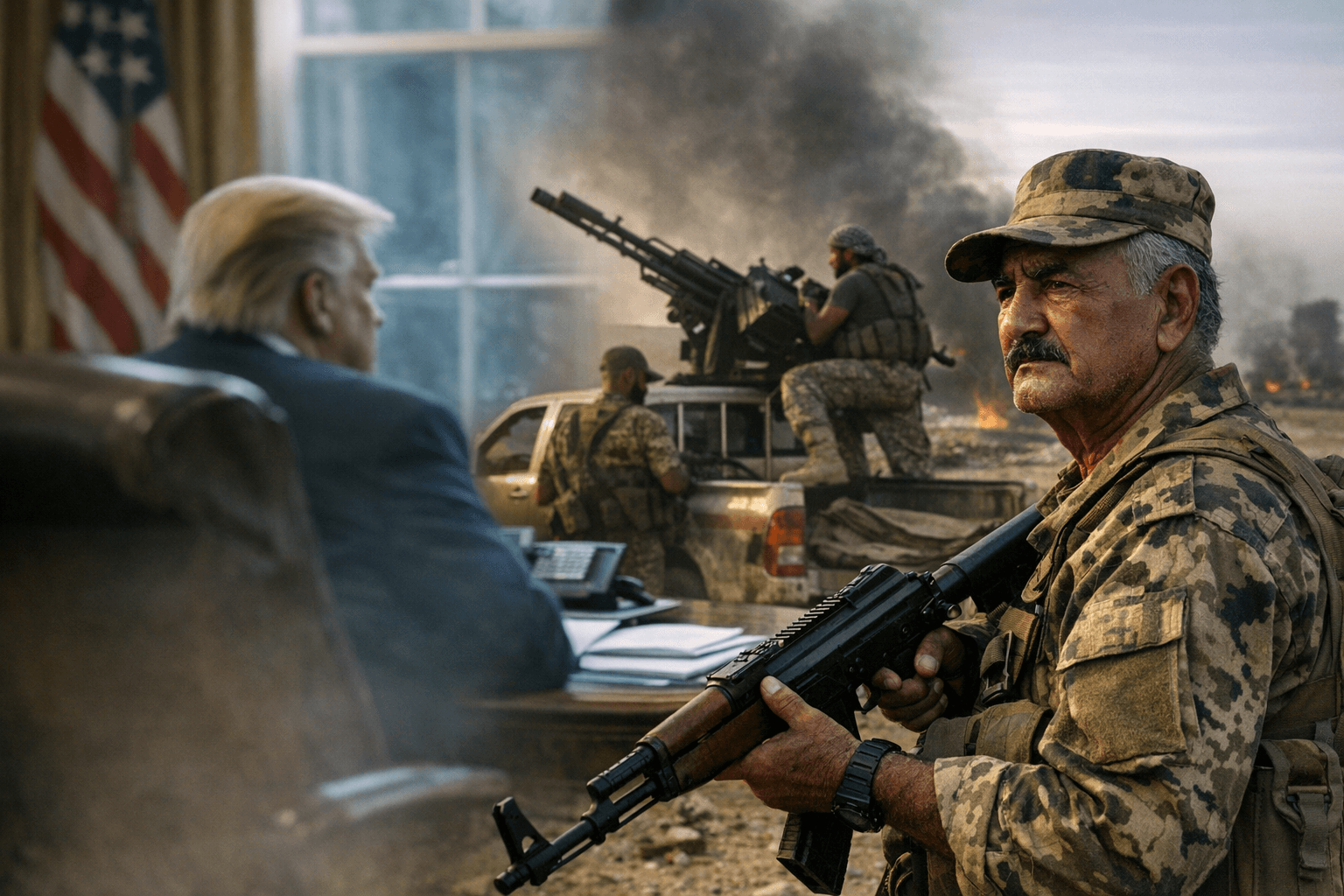
A lobbying firm with direct ties to Trump administration officials signed a contract to represent commanders of the Libyan Arab Armed Forces, a militia network whose leadership faces credible accusations of human rights abuses, federal disclosure records show.
The agreement, registered under the Foreign Agents Registration Act, tasks the firm with advancing the interests of LAAF-affiliated commanders inside Washington's corridors of power at a moment when Libya remains fractured by competing armed factions and international interference.
The Libyan Arab Armed Forces, commanded by Khalifa Haftar, has been implicated by United Nations investigators and human rights organizations in a range of alleged abuses, including unlawful killings, detention without trial, and obstruction of humanitarian operations. Haftar's forces control significant territory in eastern Libya and have waged years of military campaigns that drew condemnation from Western governments, even as they simultaneously courted those same governments for legitimacy and weapons.
The decision by a Trump-linked firm to formalize that courtship in Washington represents a striking convergence of commercial lobbying interests and contested foreign military power. Firms registered under FARA are legally permitted to advocate for foreign principals, including governments and military factions, provided they disclose their activities to the Justice Department. Disclosure, however, does not equal endorsement, and critics argue that high-profile Washington representation launders the reputations of actors who would otherwise face diplomatic isolation.
The timing carries additional weight. The Trump administration has shown a pattern of warmer engagement with strongman-aligned governments and military actors in the Middle East and North Africa, a posture that distinguishes it sharply from the human rights conditions that previous administrations attached to diplomatic recognition and security cooperation. Lobbying firms with personnel drawn from that administration's ranks are uniquely positioned to exploit those relationships.
Libya has had no stable central government since the 2011 NATO-backed uprising that toppled Muammar Gaddafi. Two rival administrations currently claim authority over the country, one recognized internationally and based in Tripoli, the other backed by Haftar and seated in the east. The LAAF has received documented military support from Russia, the United Arab Emirates, and Egypt, making it one of the most externally resourced factions in the conflict.
For Washington lobbying, the contract represents a lucrative frontier. Resource-rich but diplomatically isolated clients are willing to pay premium rates for access to administration officials, congressional staff, and think-tank networks that can shift how a foreign actor is perceived and treated in U.S. policy circles.
Watchdog organizations that track foreign influence operations have flagged the registration. The core concern is not the legality of the arrangement, which complies with disclosure requirements, but its effect: normalizing Washington's engagement with a military commander accused of directing forces responsible for civilian harm.
The practical impact on U.S.-Libya policy remains uncertain. But the contract signals that LAAF commanders are investing seriously in their American standing, and they have hired people with the right address books to pursue it.
This article was produced by Prism’s automated news system from verified source data, official records, and press releases, then run through automated quality and moderation checks before publishing. The system is built and supervised by the people who set the standards it runs under. Read our full AI policy.
Did this article answer your question?