Trump makes Warsh his own bet on the Fed's economic future
Trump has tied his economic fate to Kevin Warsh, making inflation, rates and market swings a verdict on the president’s own Fed pick.

By installing Kevin Warsh at the Federal Reserve and embracing him at the White House, Donald Trump turned the next phase of inflation and interest-rate politics into a direct test of his own economic judgment. Jerome Powell could be blamed for high mortgage rates and a sluggish housing market; Warsh cannot. He is Trump’s pick, and the political credit or blame now runs straight back to the president.
Warsh was sworn in on Friday, May 22, 2026, with Supreme Court Justice Clarence Thomas administering the oath in Washington. The ceremony carried the feel of a political rally, with cabinet members and senior aides crowding the White House as Trump publicly said he wanted Warsh to be “totally independent” and to do a great job. Warsh, for his part, cast himself as leading a “reform-oriented” Fed. His four-year term runs through May 21, 2030.

That matters because the economic backdrop is already punishing households. The Bureau of Economic Analysis said headline PCE inflation was 3.5% year over year in March 2026, with core PCE at 3.2%. The University of Michigan’s final May consumer survey showed sentiment at an all-time low, while 57% of consumers spontaneously said high prices were eroding their finances. Year-ahead inflation expectations rose to 4.8%, a sign that households still see price pressure as a daily reality, not a fading memory.
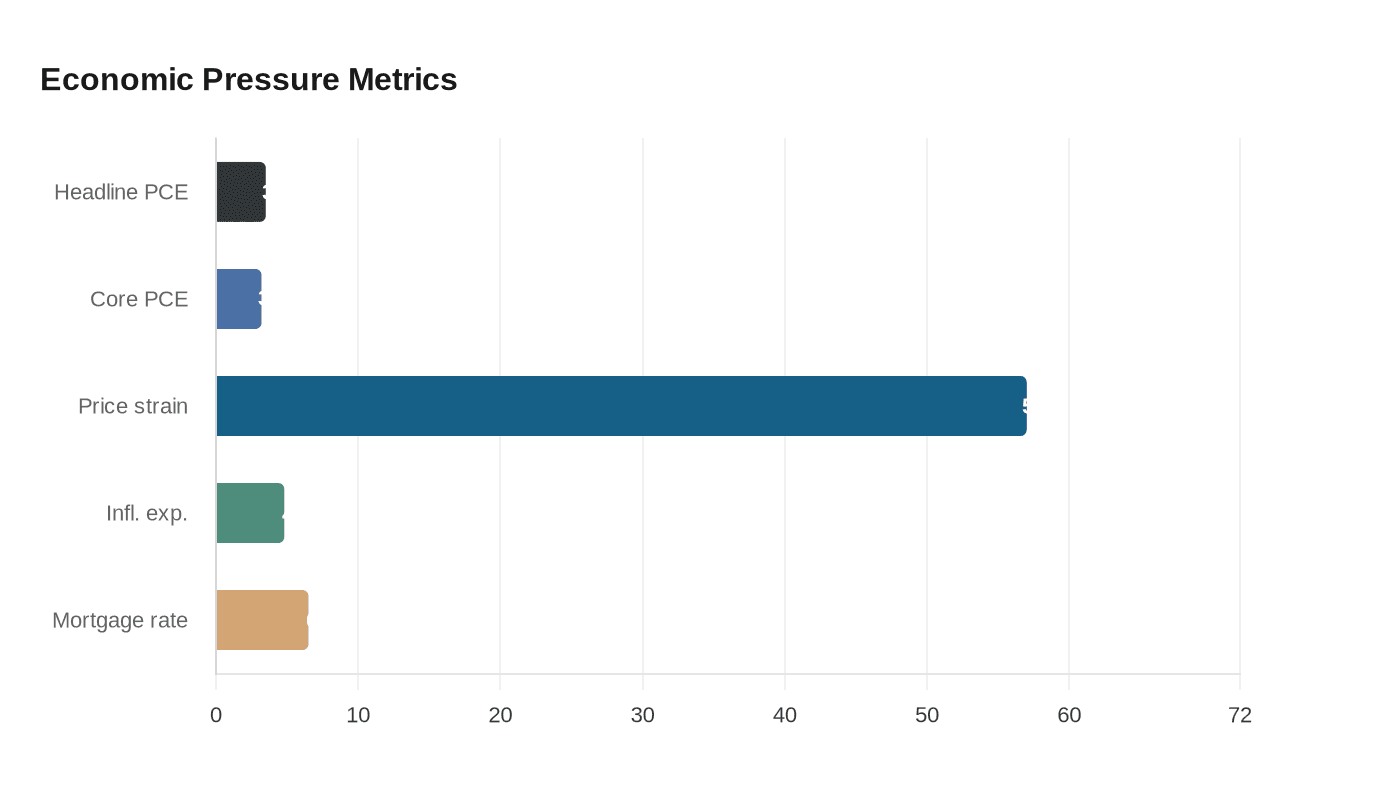
The pain is visible at the kitchen table and in the housing market. Mortgage rates have remained around 6.5%, keeping the 30-year fixed loan well above the levels that once powered a housing boom. Home sales and refinancing have stayed sluggish, even as investors have largely assumed the Fed will stay on hold through much or all of 2026. For families trying to buy a house, that means monthly payments stay elevated. For retirees and workers with 401(k)s, it means every shift in the Fed’s path can ripple through bond prices, stock valuations and savings balances.
Gasoline is adding to the strain. AAA and other trackers put the national average regular gas price near $4.55 a gallon in mid-May, far above prewar norms, as crude hovered near $100 a barrel. That keeps the cost of commuting, deliveries and household budgets under pressure, and it gives Trump little room to argue that affordability has improved.
The political risk is now unmistakable. If inflation stays hot, Trump’s party could face the midterm fallout. If Warsh responds with sharper rate moves, Trump may dislike the cure even if it helps the diagnosis. Either way, the Fed’s next chapter is no longer just Warsh’s burden. It is Trump’s wager, and the country will read the result in mortgage bills, grocery receipts and retirement statements.
This article was produced by Prism’s automated news system from verified source data, official records, and press releases, then run through automated quality and moderation checks before publishing. The system is built and supervised by the people who set the standards it runs under. Read our full AI policy.
Did this article answer your question?

