Trump Moves to Strip Away a Core American Promise
The Supreme Court heard arguments in Trump v. Barbara, a case that could deny citizenship to 255,000 babies born annually on American soil under a Trump executive order.
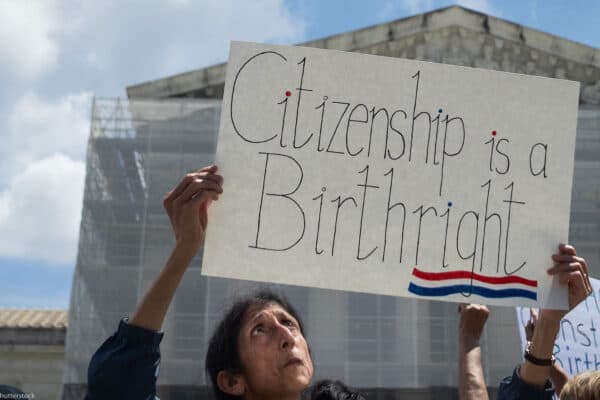
Padma Lakshmi was four years old when she boarded a Pan Am flight alone from Chennai to Elmhurst, Queens, beginning the journey she has described as "living proof of the best America there is." In the decades since, she has built a television career around documenting what immigrant communities have added to the American table, traveling from Texas border towns to Washington's Afghan American neighborhoods to capture how their cuisines became the country's own. The families she has filmed carry a story the nation's highest court formally considered: whether children born on American soil to immigrant parents are actually Americans.
The Supreme Court heard oral arguments in Trump v. Barbara, a constitutional challenge to Executive Order 14160, which President Trump signed on his first day back in the White House in January 2025. The order directs federal agencies to deny citizenship to children born in the United States if neither parent holds citizenship or lawful permanent residency, sweeping in babies born to mothers on student visas, H-1B work permits, or DACA protection, as well as those with undocumented parents.
If the order takes effect, the practical consequences would begin within 30 days for every delivery room in America. Right now, a birth certificate grants a newborn automatic access to a Social Security number, Medicaid eligibility, and the full range of federal support that follows. Under the administration's implementation guidance, passport applications for children born after the rule's effective date would require "original proof of parental citizenship or immigration status." The Social Security Administration would cross-check parental records against its own database, a system the agency has acknowledged contains potentially millions of inaccurate immigration entries.
The stakes for newborns extend far beyond paperwork. Medicaid covers 40 percent of all births in the United States each year. Without established citizenship, access to well-child visits, immunizations, and early intervention services would become legally uncertain from delivery forward. "If you say, 'Well, we don't know if the baby is a citizen,' it is highly questionable whether babies will then have Medicaid, SNAP, WIC, any access to these critical programs at the most vulnerable time in any of our lives," said children's health advocate Bruce Lesley.
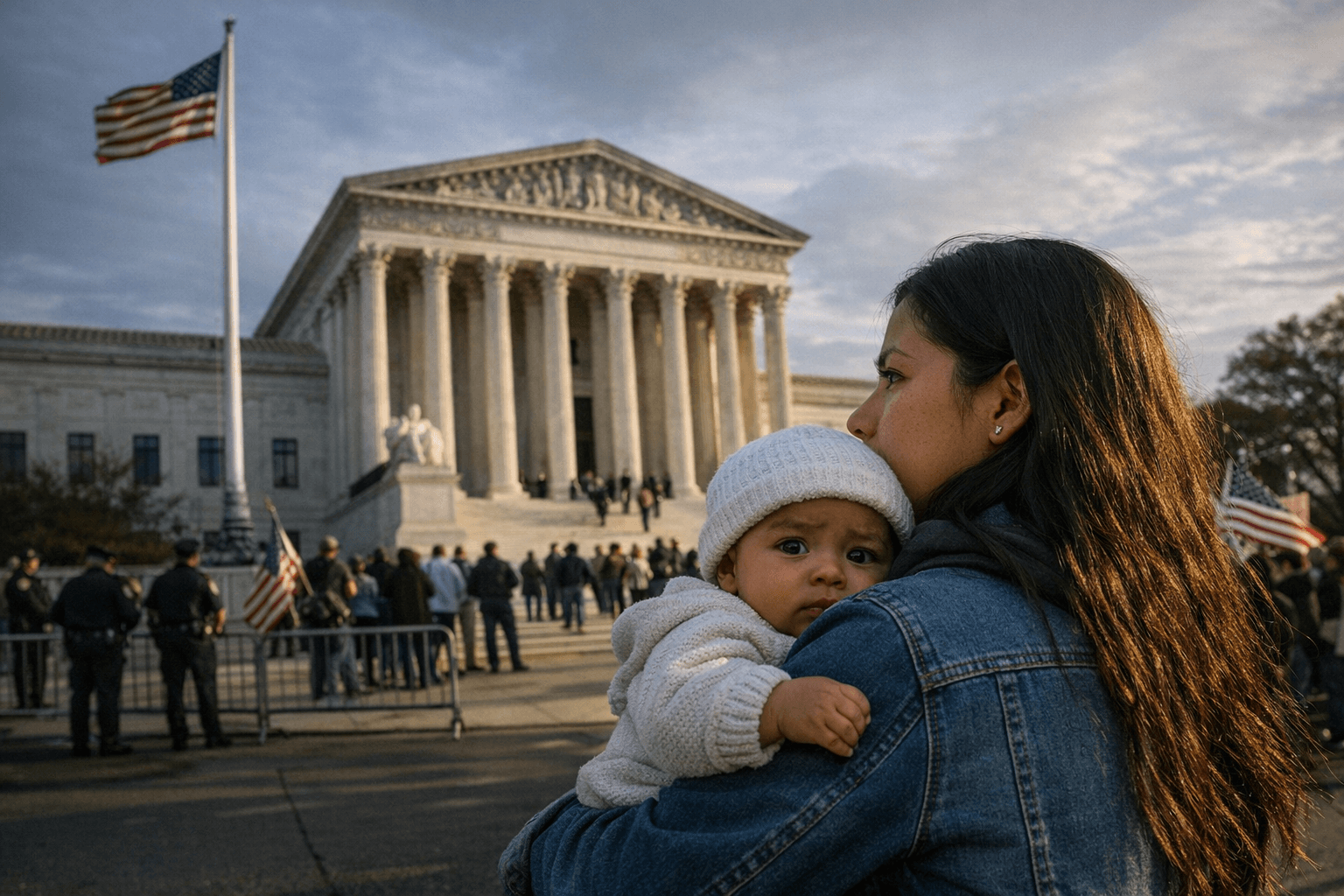
The Migration Policy Institute projects that 255,000 babies would be denied citizenship each year under the rule, roughly 7 percent of all U.S. births. The ACLU, which brought the class-action lawsuit on behalf of plaintiff Barbara, a Honduran woman who uses only her first name out of fear for her safety, estimates roughly 5 million U.S.-born children would be affected over the next two decades.
Every federal court to review the executive order has blocked it. U.S. District Judge John Coughenour, a Reagan appointee, called it "blatantly unconstitutional" when he issued the first restraining order in January 2025. The legal precedent supporting that conclusion runs to 1898, when the Supreme Court ruled in United States v. Wong Kim Ark that birthright citizenship covered children of Chinese immigrants, with Justice Horace Gray writing for a 6-2 majority that the decision "affirms the ancient and fundamental rule of citizenship by birth within the territory." That ruling reinforced the 14th Amendment, ratified in 1868 specifically to overrule Dred Scott v. Sandford, the 1857 decision that had denied citizenship to Black Americans.
During an earlier round of the litigation, Justice Brett Kavanaugh pressed Solicitor General D. John Sauer with a barrage of implementation questions: Would hospitals have to change how they process newborns? Would state governments build new verification systems? Sauer answered that "Federal officials will have to figure that out essentially." The Supreme Court's ruling, expected later in the term, will determine whether they ever have to.
Sources:
Know something we missed? Have a correction or additional information?
Submit a Tip