Trump nominates Michelle Steel as ambassador to South Korea
Trump picked Michelle Steel for a post left vacant for over a year, a signal on South Korea at a tense moment for North Korea, trade and Japan ties.
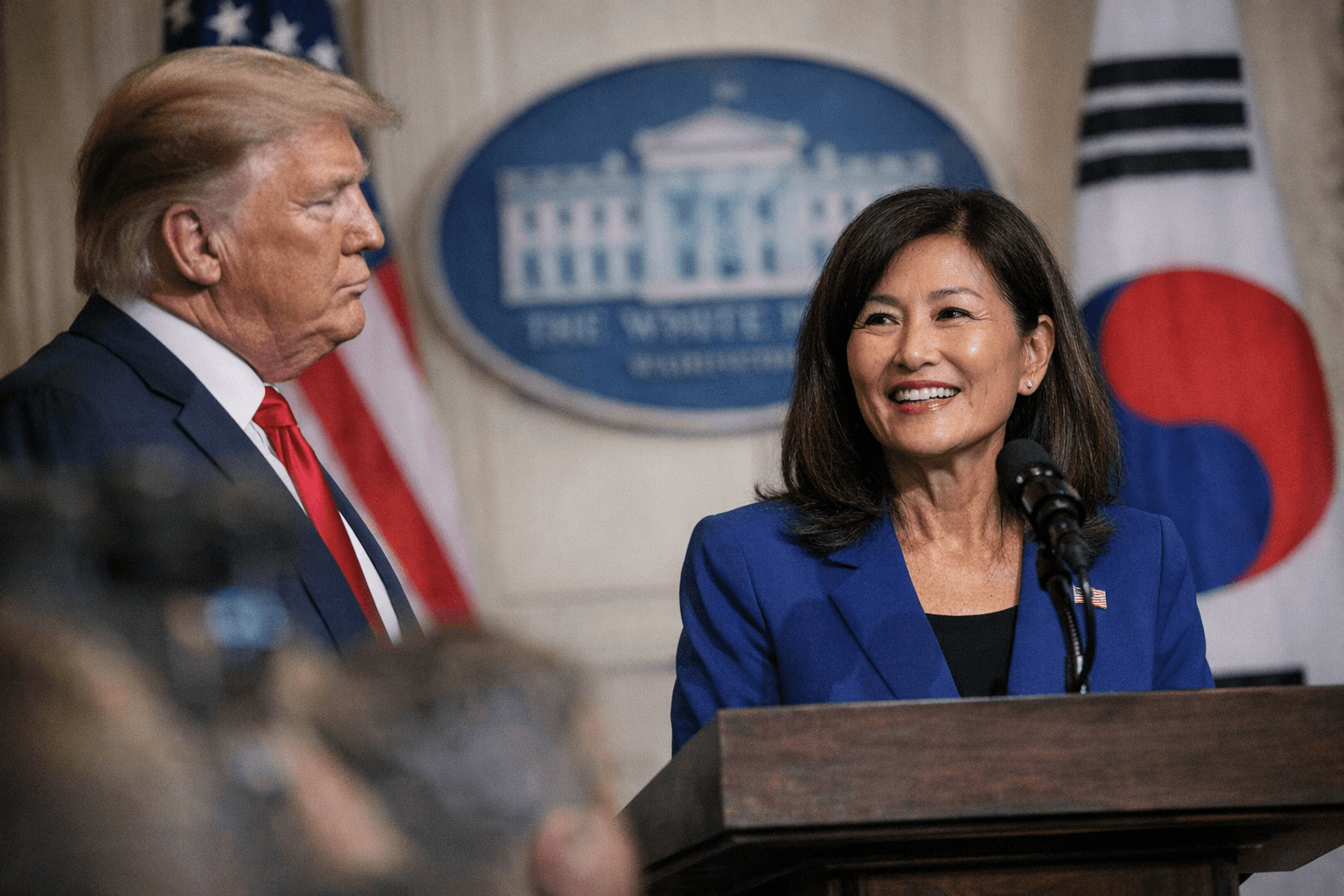
Donald Trump turned to Michelle Steel for one of Washington’s most sensitive Asian posts, nominating the former California congresswoman to serve as ambassador to South Korea and finally moving to fill a vacancy that had lingered through much of his second term. The White House announced the choice on Monday, and the decision immediately carried more weight than a routine personnel move: South Korea is a core U.S. ally, and the absence of a Senate-confirmed envoy had become a visible sign of drift at a time when security coordination, trade tensions and regional alignment all remain under strain.
Steel, who lost her 2024 reelection bid to Democrat Derek Tran, would bring both political loyalty and a rare personal connection to Seoul. Born in Seoul on June 21, 1955, she came to the United States in 1975 with her mother and younger sisters, later earned a B.B.S. from Pepperdine University and an M.B.A. from the University of Southern California in 2010, and built her political career in California before entering Congress. She served on the California State Board of Equalization from 2007 to 2015, then on the Orange County Board of Supervisors from 2015 to 2021, including as chair from 2017 to 2020. In the House, where she served from January 3, 2021, to January 3, 2025, she also sat on the Republican whip team.
If confirmed, Steel would become only the second Korean American to serve as U.S. ambassador to South Korea, after Sung Kim. That background gives the nomination symbolic force, but the real question in Washington and Seoul is whether it will also change the tempo of diplomacy. South Korean media have framed the vacancy as an obstacle to communication between the two allies, and the new appointment could help restore a more direct channel as the United States tries to manage North Korea, maintain pressure on trade disputes and keep Seoul and Tokyo aligned on shared security goals.
The post had been handled by acting officials after the last ambassador departed. Joseph Yun was appointed Chargé d’Affaires ad interim at U.S. Embassy Seoul on January 10, 2025, and Y. Kevin Kim later served as the State Department’s senior bureau official for East Asian and Pacific Affairs until October 15, 2025. By March 11, 2026, the American Foreign Service Association’s tracker showed Trump had appointed 75 ambassadors in his second term, 69 of them political or other appointees, underscoring how heavily he has leaned on allies and appointees to staff the diplomatic corps. Steel’s nomination, which still requires Senate confirmation, now tests whether Seoul is getting more than a placeholder and whether Washington is prepared to treat the alliance as a strategic priority rather than an overdue assignment.
This article was produced by Prism’s automated news system from verified source data, official records, and press releases, then run through automated quality and moderation checks before publishing. The system is built and supervised by the people who set the standards it runs under. Read our full AI policy.
Did this article answer your question?

