Trump orders federal push for psychedelic research, clinical trials
Trump ordered a federal push into ibogaine and other psychedelics, setting up a clash with Schedule I drug law and a $50 million research gamble.
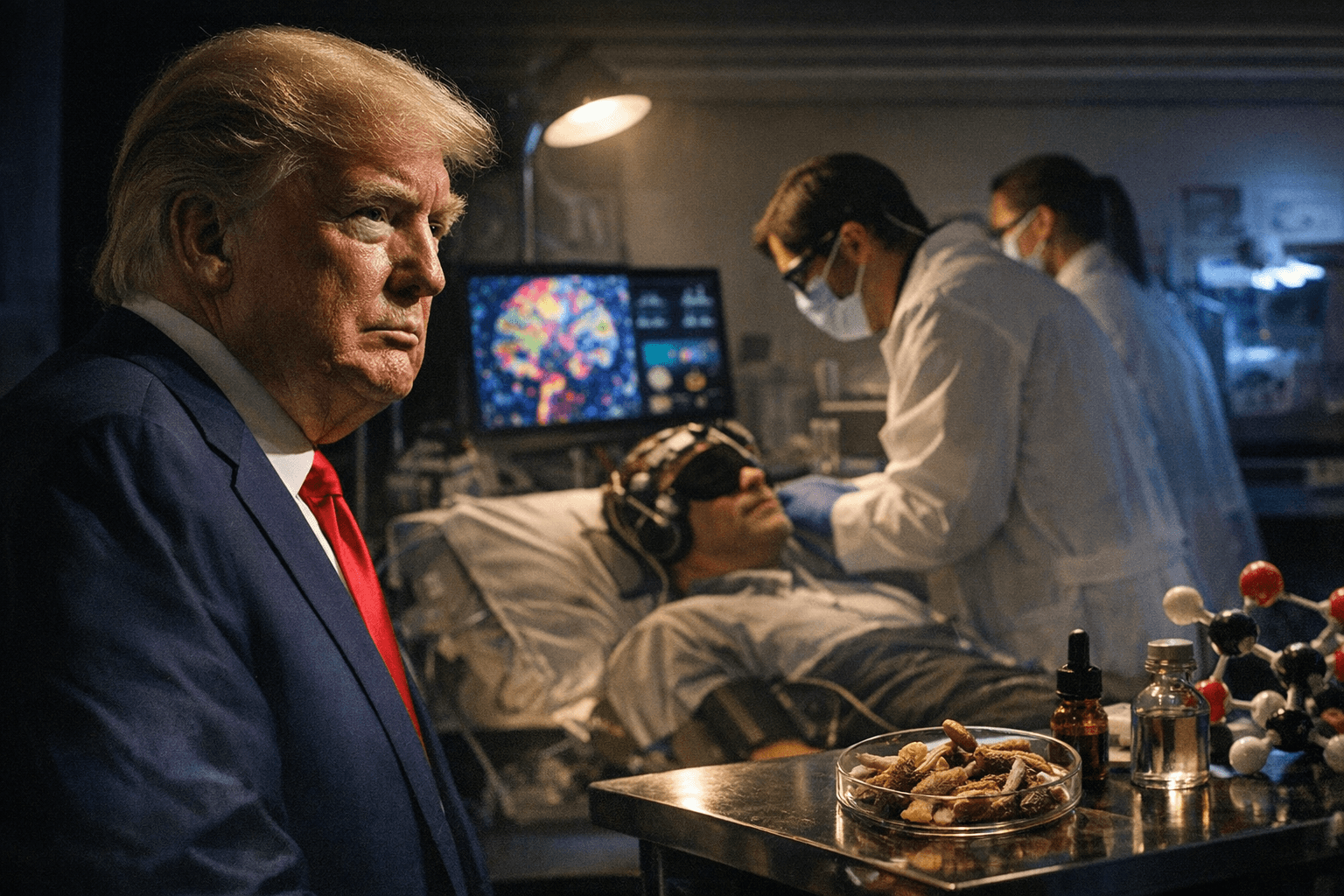
Donald Trump moved the federal government toward a new psychedelic research agenda on Thursday, even as ibogaine remains a Schedule I drug under federal law, a classification that says it has no accepted medical use and a high potential for abuse. The White House said the push would expand research and clinical trials for ibogaine, psilocybin and LSD, and Trump said the effort would “dramatically accelerate” access to medical research and treatment, with a “tremendous impact” if the drugs prove effective.
The administration said the changes could open the way for reclassification after successful clinical trials. Reuters reported that Trump said the United States would dedicate $50 million to federal research into ibogaine, a compound derived from a West African shrub and long associated with hallucinogenic effects, while CBS News reported that the White House does not plan to reclassify ibogaine for medical use at this time.
The Food and Drug Administration is also preparing national priority vouchers for three psychedelics, the first time it has used that fast-track tool for any psychedelic drug. Federal officials said the steps were meant to clear the way for the first human trials of ibogaine in the United States, a sign that the administration wants to move the compound from fringe treatment to regulated study.
The policy shift has been championed by Health Secretary Robert F. Kennedy Jr. and fits into the administration’s Make America Healthy Again agenda. Trump appeared at the White House with Kennedy, conservative podcaster Joe Rogan and Marcus Luttrell, the former Navy SEAL and “Lone Survivor” figure, who told Trump the treatment “absolutely changed my life for the better.” Veteran groups and psychedelic advocates have pushed for ibogaine as a possible treatment for post-traumatic stress disorder and opioid addiction, even as safety concerns have shadowed the drug for years.
Those risks remain substantial. The Associated Press has reported that ibogaine can trigger potentially fatal heart problems. CBS News said the White House move is intended to expand federal funding for research into its effectiveness for PTSD and traumatic brain injuries, especially among veterans who have traveled to unregulated clinics, often in Mexico or the Caribbean, because the drug is illegal in the United States.
Texas has already authorized $50 million for ibogaine research, CBS News reported, underscoring how state officials and parts of the veteran community are pressing ahead faster than Washington has in the past. The immediate test is whether federal agencies can build a credible medical case for a drug long treated as contraband, and whether the promise of clinical evidence can survive the legal and safety barriers that still define ibogaine policy.
Know something we missed? Have a correction or additional information?
Submit a Tip