Trump orders push for quantum computer, warns of cyber risks
The White House set a 2028 quantum-computer target while ordering faster defenses for encryption that quantum machines could eventually crack.

The White House moved to accelerate the race for a powerful quantum computer while also tightening preparations for the cyber risks that machine could create. The dual push put Washington squarely behind rapid quantum development, with China framed as a strategic rival and 2028 set as the target for a system strong enough to drive quantum-enabled scientific discovery.
President Donald Trump issued the quantum order on June 22, 2026, alongside a second directive titled Securing the Nation Against Advanced Cryptographic Attacks. Michael Kratsios, the director of the White House Office of Science and Technology Policy, said, “We believe this can happen by 2028.” The administration said the effort would update the National Quantum Strategy, reconstitute the National Quantum Initiative Advisory Committee and expand the Quantum Counterintelligence Protection Team.
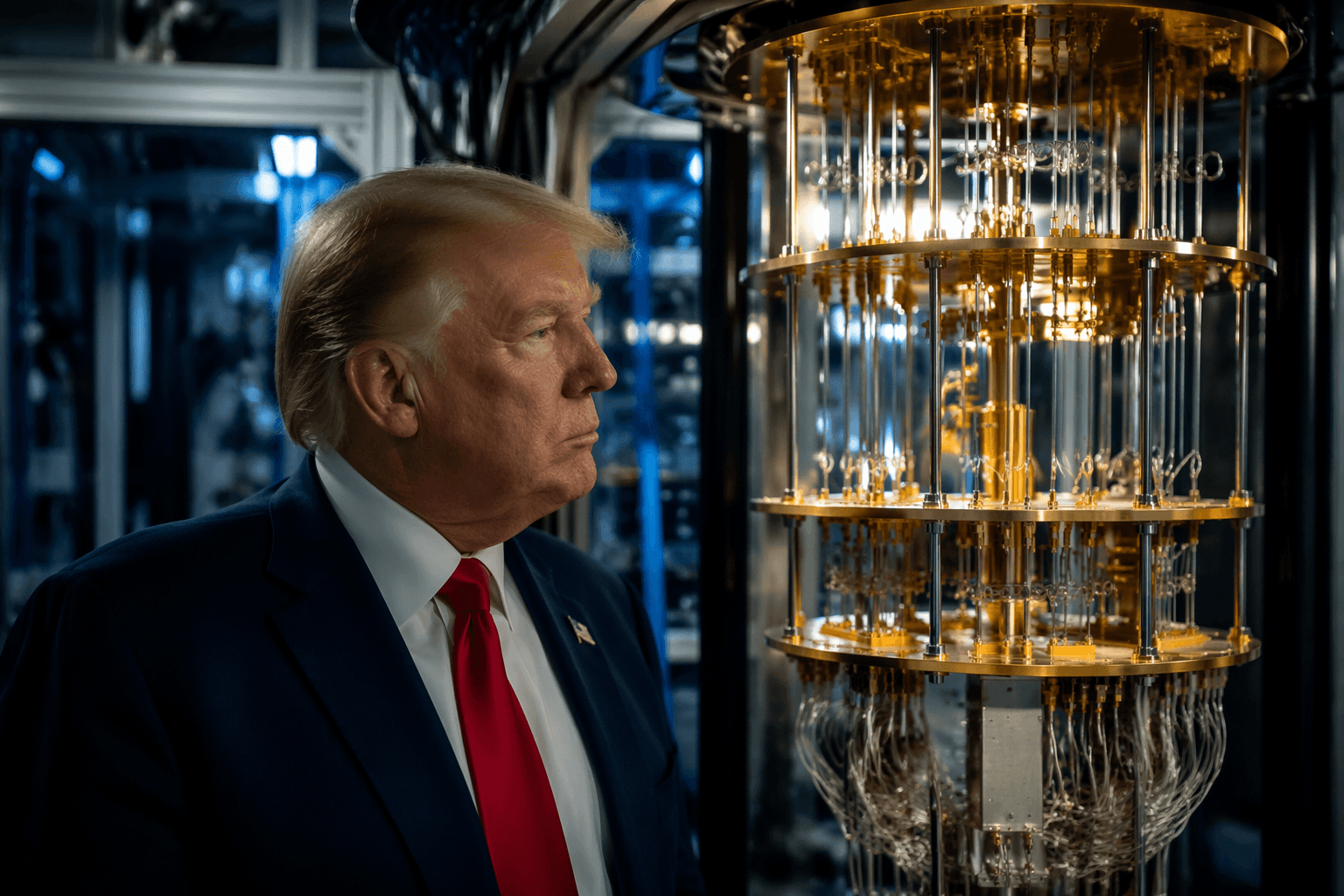
The White House also said the plan would direct the Department of Commerce, the Department of Energy and NASA to prepare plans for quantum-enabled sensors and networks over the next five years. Beyond the lab bench, the order was designed to reach supply chains and the workforce, with promises of stronger domestic manufacturing, apprenticeships and new development institutes. For tech companies, research labs and defense contractors, the message was clear: federal demand for quantum hardware and related components may quicken.
The security side of the order was just as consequential. NIST finalized the first three post-quantum cryptography standards in August 2024 and said organizations should start applying them now, because quantum machines could someday undermine current encryption. The standards, published as Federal Information Processing Standards 203, 204 and 205 on August 13, 2024, are based on CRYSTALS-Kyber, CRYSTALS-Dilithium and SPHINCS+, and are mandatory for federal systems. NIST has said the algorithms are ready for immediate use, making the government’s quantum push part of an already-underway migration to quantum-resistant security, not a substitute for it.
The White House pointed back to Trump’s 2018 signing of the National Quantum Initiative Act as the foundation for the current strategy and said he doubled federal investment in quantum information science and technology research and development that year. The Department of Energy has separately set a similar 2028 goal for a first-of-its-kind scientific instrument capable of meaningful scientific calculations. Taken together, the orders read as both a serious industrial policy bet and a deadline that will test whether the United States can build quantum hardware fast enough while protecting the encryption that underpins government, business and national security.
This article was produced by Prism’s automated news system from verified source data, official records, and press releases, then run through automated quality and moderation checks before publishing. The system is built and supervised by the people who set the standards it runs under. Read our full AI policy.
Know something we missed? Have a correction or additional information?
Submit a Tip