Wearable hydration trackers promise real-time data, but accuracy concerns grow
Hydration wearables can quantify sweat in real time, but the science says composition alone is not enough and real-world accuracy still lags the marketing.
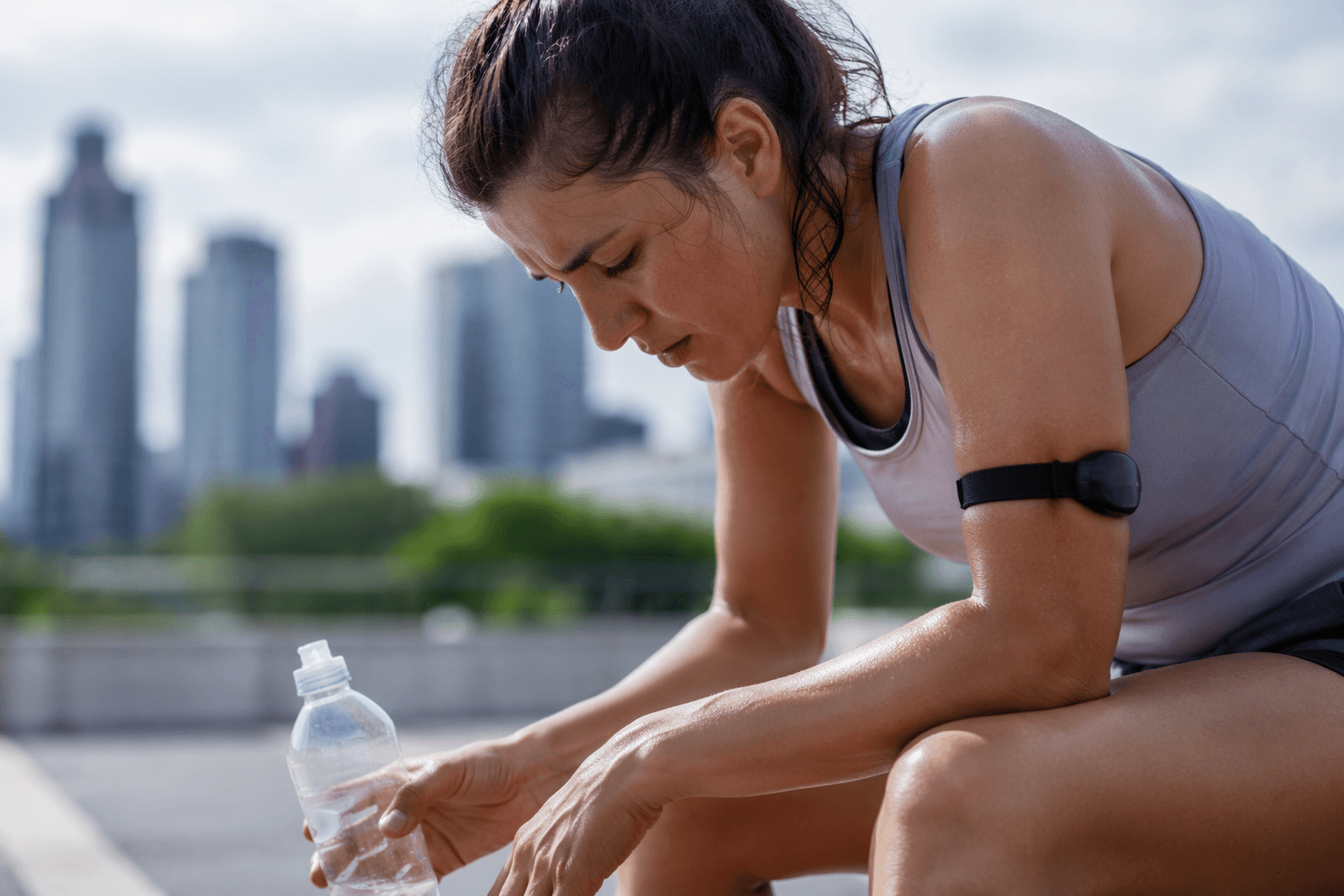
Hydration trackers are selling certainty in a category that still looks more experimental than settled. The newest devices can measure sweat loss, sodium loss, and sweat rate as you move, but reviews say the hard part is not collecting the data. It is proving that the numbers stay accurate outside controlled tests and that consumers, athletes, and employers know how to use them.
What these devices actually measure
At their core, wearable hydration systems are sweat analyzers, not direct hydration meters. The strongest point in their favor is that sweat can be gathered non-invasively and continuously, which makes it appealing for monitoring fluid loss in exercise, hot environments, and work settings. But the 2025 Lab on a Chip review is blunt about the main limitation: sweat composition alone does not tell the full story, because sweat rate varies across people and even within the same person as conditions change.
That is why the best systems try to measure both what is in sweat and how fast it is leaving the body. The review says flow-rate measurement is crucial for standardizing interpretation, while impedance-based and capacitive methods can be affected by changing ionic content in sweat. More discrete techniques can be reliable, but they come with tradeoffs in size, application, and compatibility with other sensors. In other words, the engineering challenge is not just miniaturization. It is turning a biologically messy fluid into a stable data stream.
Why the evidence is still mixed
A 2025 JMIR mHealth and uHealth scoping review by Nazim A. Belabbaci, Raphael Anaadumba and Mohammad Arif Ul Alam examined wearable hydration-monitoring technologies, including their capabilities, limitations, accuracy, reliability, and commercial products. The review found that the field has moved beyond prototypes, but it also underscored the lack of clear design guidelines and the need to compare devices against established benchmarks.
The broader scientific literature points to the same tension. Sweat sensing is attractive because it is non-invasive and can support real-time, continuous monitoring, but Nature and related reviews note that only a few validation studies have been run in uncontrolled environments. Changing sweat rate and ionic content can complicate measurements, which means a device may look persuasive in the lab and much less robust in the field.
There is also a bigger scientific reason for caution: sweat is not a simple substitute for blood or urine. Researchers are studying sweat for electrolytes, metabolites, hormones, stress markers, drugs, and environmental toxins, which hints at a much broader sensing market. But that same breadth is a reminder that a sweat signal can be informative without being definitive. The technology can be useful without being medically conclusive.
Why the market is growing anyway
The commercial momentum is real. Global Market Insights estimated the wearable sweat analysis device market at $59.2 million in 2024 and projected growth to $1.1 billion by 2034, with North America as the largest market. That forecast reflects rising demand for personalized health monitoring, sports science tools, and non-invasive diagnostics, along with advances in flexible electronics, microfluidics, and electrochemical sensing.
Heat risk gives the category an unusually serious use case. The CDC says outdoor and indoor workers exposed to extreme heat may face occupational heat stress and heat-related illness, while OSHA says employers should provide cool water and, for work lasting two hours or more, access to fluids that contain electrolytes. CDC guidance also tells employers to train workers to recognize symptoms of heat illness and to use prevention measures rather than relying on thirst alone. That means hydration tech is entering a market where the goal is not just better workouts. It is also avoiding dangerous heat-related illness.
How the main products are positioning themselves
Nix is the clearest example of the category’s shift from lab curiosity to consumer product. The company markets a hydration biosensor for athletes, service members, and laborers, with real-time fluid and electrolyte-loss monitoring that syncs to a smartphone, watch, or bike computer. Its retail listing shows a price of $189 and recommends the device for workouts of 45 minutes or longer, a clue that its sweet spot is structured training, not casual daily wear.
hDrop takes a similar approach but leans harder into reusability. The company says its sensor tracks hydration, sweat rate, and sodium loss in real time, and the product page describes it as reusable with a rechargeable battery that can deliver up to 120 hours of active use per charge. Its pitch is straightforward: continuous sweat testing for people who want to reduce guesswork around fluid and electrolyte replacement.
FLOWBIO frames the same problem as personalized decision support. Its sensor measures real-time fluid and sodium loss during exercise, and the company says its app turns those measurements into personalized hydration recommendations. The pitch is aimed most directly at structured athletes, especially cyclists, runners, and triathletes who already train with power, pace, and heart-rate data.
Who actually benefits, and when
The strongest use cases are the ones where sweat loss is large, repeated, and consequential. Endurance athletes, outdoor workers, service members, and laborers in hot environments have the most to gain because they are dealing with prolonged exertion, high heat, and real risk if hydration slips. In those settings, a sweat sensor can be a useful addition to a broader heat-safety plan.
The weaker case is everyday consumer wellness, where the device may add precision theater more than medical insight. If the data is not interpreted alongside heat exposure, exercise intensity, symptoms, and basic cues such as urine output, a glossy app can create false confidence. The best reading of this technology is therefore cautious: it can improve hydration strategy, but it cannot replace judgment, and it should never be treated as a standalone medical verdict.
Wearable hydration trackers are not meaningless. They are simply earlier in their evolution than the marketing suggests. The devices work best as tools for narrowing uncertainty in hot, high-output settings, and worst when they are sold as if sweat numbers alone can solve hydration for everyone.
This article was produced by Prism’s automated news system from verified source data, official records, and press releases, then run through automated quality and moderation checks before publishing. The system is built and supervised by the people who set the standards it runs under. Read our full AI policy.
Know something we missed? Have a correction or additional information?
Submit a Tip