Trump Plans to Pay All DHS Employees During Record Government Shutdown
Trump announced plans to pay all DHS workers as a record 48-day partial shutdown leaves thousands of FEMA, Coast Guard, and cybersecurity employees without paychecks.
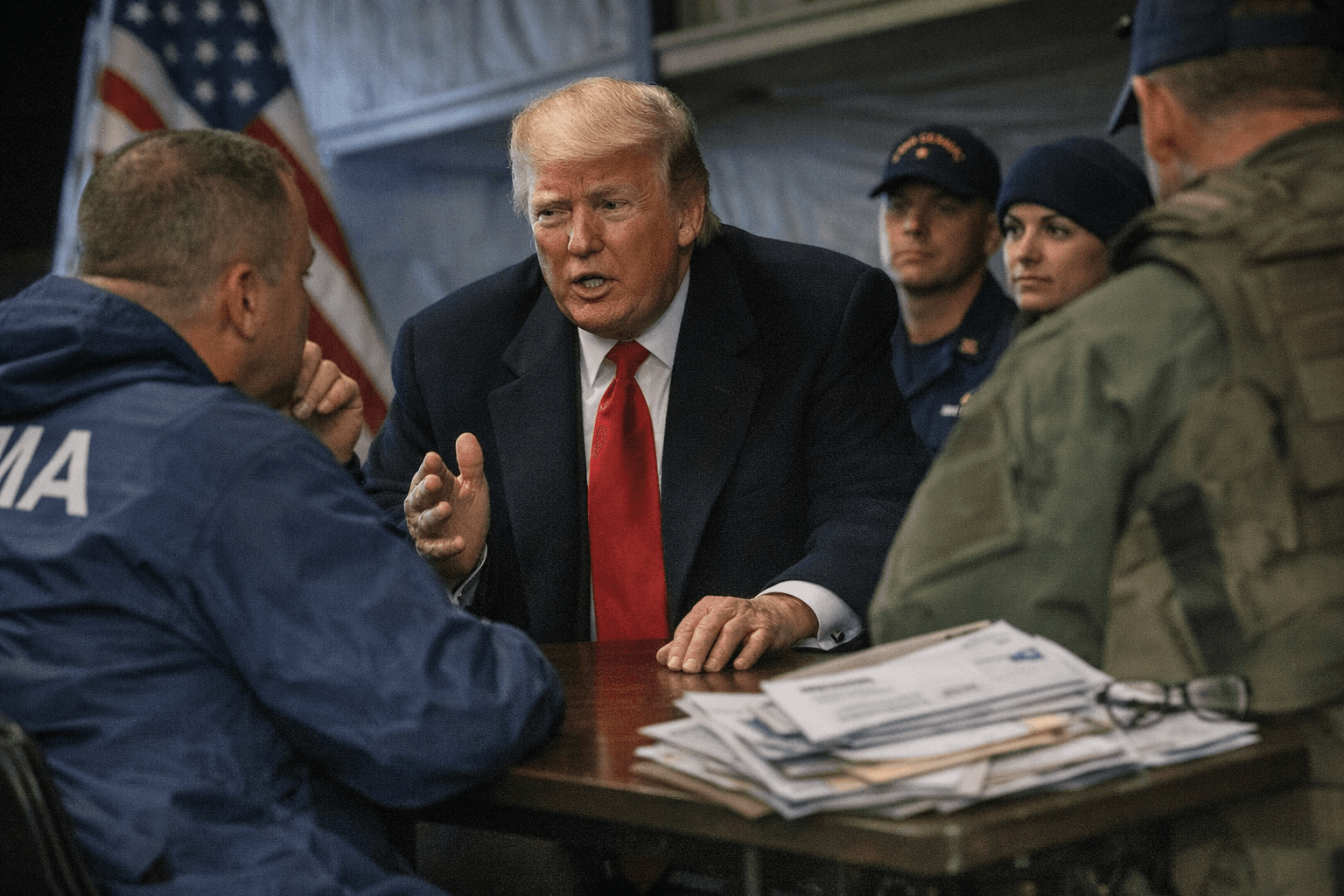
Forty-eight days into the longest partial government shutdown in the Department of Homeland Security's history, President Donald Trump announced Thursday he would bypass Congress for the second time in a week, pledging to sign an executive order covering the full remaining workforce still going without pay.
"I will soon sign an order to pay ALL of the incredible employees at the Department of Homeland Security," Trump posted on Truth Social. "Help is on the way for our Brave and Patriotic Public Servants who have continued to work hard, and do their part to protect and defend our Country."
The announcement came after a patchwork of previous relief measures left thousands of essential workers still unpaid. Immigration and Customs Enforcement, Customs and Border Protection employees, and active-duty Coast Guard members were already receiving paychecks, and Trump had signed an executive order the previous week covering TSA agents. But the new intervention was expected to apply to other non-law enforcement employees at the department, including many employees at the Federal Emergency Management Agency, U.S. Coast Guard civilians, and the agency responsible for coordinating federal cybersecurity efforts.
The human cost inside FEMA alone illustrated how fractured the relief had been. About 10,000 FEMA workers were being paid because their wages come out of the non-lapsing Disaster Relief Fund, but at least 4,000 FEMA employees remained furloughed or working without pay.
The most visible disruption had already played out at the nation's airports. More than 60,000 TSA employees, including approximately 50,000 transportation security officers who perform security functions at domestic airports, had not been receiving pay due to the shutdown. As more agents called out from work, there was increasing frustration for air travelers confronted by long waits at some airport security lines, though those bottlenecks were beginning to clear as agents received backpay after Trump's earlier executive order.
The central question hovering over Thursday's announcement was how, exactly, it would work. The source of the funding was not immediately clear, and the White House did not respond to requests for comment on the matter. An executive order cannot appropriate new money; that power rests with Congress. The blueprint from the prior TSA order offered a clue: the White House instructed DHS to redirect and adjust existing funding accounts within the department to cover wages, a maneuver that legal scholars have warned may not withstand sustained scrutiny if Congress does not eventually ratify the spending.
Trump's announcement came a day after House Speaker Mike Johnson of Louisiana and Senate Majority Leader John Thune of South Dakota announced a plan to end the shutdown. The Senate passed a bill by unanimous consent during a pro forma session that would fund all of DHS except ICE and portions of CBP, but the House did not take action on the measure, meaning the shutdown would continue at least through the coming days. Most lawmakers from both chambers were away on recess until the week of April 13.
Trump set a June 1 deadline for Republicans to fund ICE and CBP through a party-line, filibuster-proof reconciliation budget package. Senate Minority Leader Chuck Schumer placed the blame for the delay elsewhere. "The deep division and dysfunction among House Republicans is needlessly extending the DHS shutdown and hurting federal workers who are missing another paycheck," Schumer said.
Democrats had opposed funding DHS' immigration enforcement operation following two deadly shootings by federal agents in Minneapolis earlier this year. They had used the shutdown as a strategy to negotiate against the administration's deportation agenda, which had resulted in the removal of thousands of migrants but also the fatal shooting of two Americans.
For the workers waiting on relief, the executive order represented at best a stopgap, with congressional appropriations the only durable solution. Until both chambers agree on a funding path, the legal durability of any White House pay directive remains an open question, and the workers carrying out border security, disaster response, and airport screening remain caught between a divided Congress and a president testing the outer bounds of executive spending authority.
This article was produced by Prism’s automated news system from verified source data, official records, and press releases, then run through automated quality and moderation checks before publishing. The system is built and supervised by the people who set the standards it runs under. Read our full AI policy.
Did this article answer your question?

