Trump posts Macron message and threatens 200% tariffs on French wine
Trump published a private Macron text and escalated a Greenland dispute by threatening broad European tariffs, provoking swift condemnation and EU countermeasures.
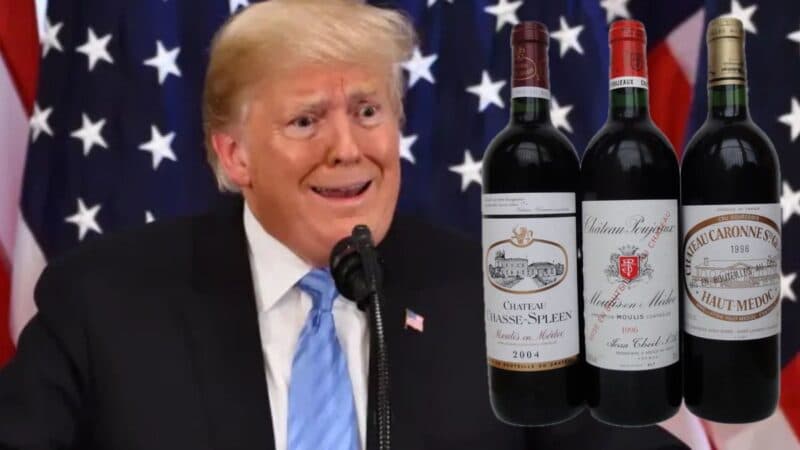
President Donald Trump escalated a transatlantic confrontation by publishing what he said was a private text from French President Emmanuel Macron and by threatening punitive tariffs on European goods, including an explicit 200% levy on French wine and champagne. The move intensified diplomatic friction over Greenland and prompted European leaders to convene emergency talks to coordinate a response.
Trump posted a screenshot of the exchange on his Truth Social account and announced plans for sweeping duties he said would pressure Europe into a deal over Greenland. He signaled a phased program of tariffs beginning Feb. 1, with an initial 10% on goods from eight countries, Denmark, Norway, Sweden, France, Germany, the United Kingdom, the Netherlands and Finland, rising to 25% on June 1 and remaining until Washington secured a Greenland agreement. In a more pointed threat, Trump said, “I’ll put a 200% tariff on his wines and champagnes, and he’ll join, but he doesn’t have to join.”
The posting revealed elements of a message attributed to Macron that proposed hosting a G7 meeting in Paris and suggested inviting Russia “on the sidelines,” while also proposing to include Ukraine and Denmark in consultations about transatlantic disagreements over Greenland. The message included the line, “I do not understand what you are doing on Greenland.” A source close to Macron described the exchange as authentic; neither president provided a full dated record of the conversation. The Kremlin said it had not received any invitation to such talks.
European capitals reacted sharply. Macron, speaking at the World Economic Forum in Davos, condemned the tariff threats as beyond acceptable statecraft, calling the United States’ “endless accumulation” of new tariffs “fundamentally unacceptable” and saying Europe would not “give in to bullies.” He also posted on X that “tariff threats are unacceptable and have no place in this context.” Leaders of the affected nations convened an emergency summit in Brussels and issued a joint statement decrying the decree as a threat to transatlantic relations and a risk of a damaging downward spiral. European officials signaled they were preparing countermeasures, including possible use of the EU’s anti-coercion instrument.

The episode raises acute policy and institutional questions on both sides of the Atlantic. A U.S. president’s unilateral announcement of tariffs through social media bypasses customary interagency trade procedures and risks running afoul of World Trade Organization norms, setting up legal and political challenges. For Europe, the incident tests the utility of new tools designed to deter coercive economic measures and the political will to employ retaliation that could widen trade fallout.
Domestically, the move is likely to sharpen partisan and regional cleavages. Tariffs hitting a broad set of manufactured goods and steep levies on French wine would affect exporters and import-reliant businesses in different states unevenly, potentially mobilizing industry groups and voters in affected districts. For France and other EU members, the dispute strengthens incentives for a coordinated diplomatic and trade response and could reshape relations with Washington beyond the immediate Greenland dispute.
Absent transparent records of the exchange and with key claims contested, the incident leaves unresolved questions about diplomatic norms, the limits of executive trade power, and the consequences for ordinary consumers and producers on both sides of the Atlantic. The coming days will test institutional safeguards and the capacity of allied governments to respond without escalating a broader economic clash.
This article was produced by Prism’s automated news system from verified source data, official records, and press releases, then run through automated quality and moderation checks before publishing. The system is built and supervised by the people who set the standards it runs under. Read our full AI policy.
Did this article answer your question?

