Trump Predicts War With Iran Ends Soon Despite Fresh Strikes, Hormuz Blockade
Trump predicted Operation Epic Fury would wrap up in 2-3 weeks as Iran launched fresh strikes hours before his national address and U.S. gas prices crossed $4 a gallon.
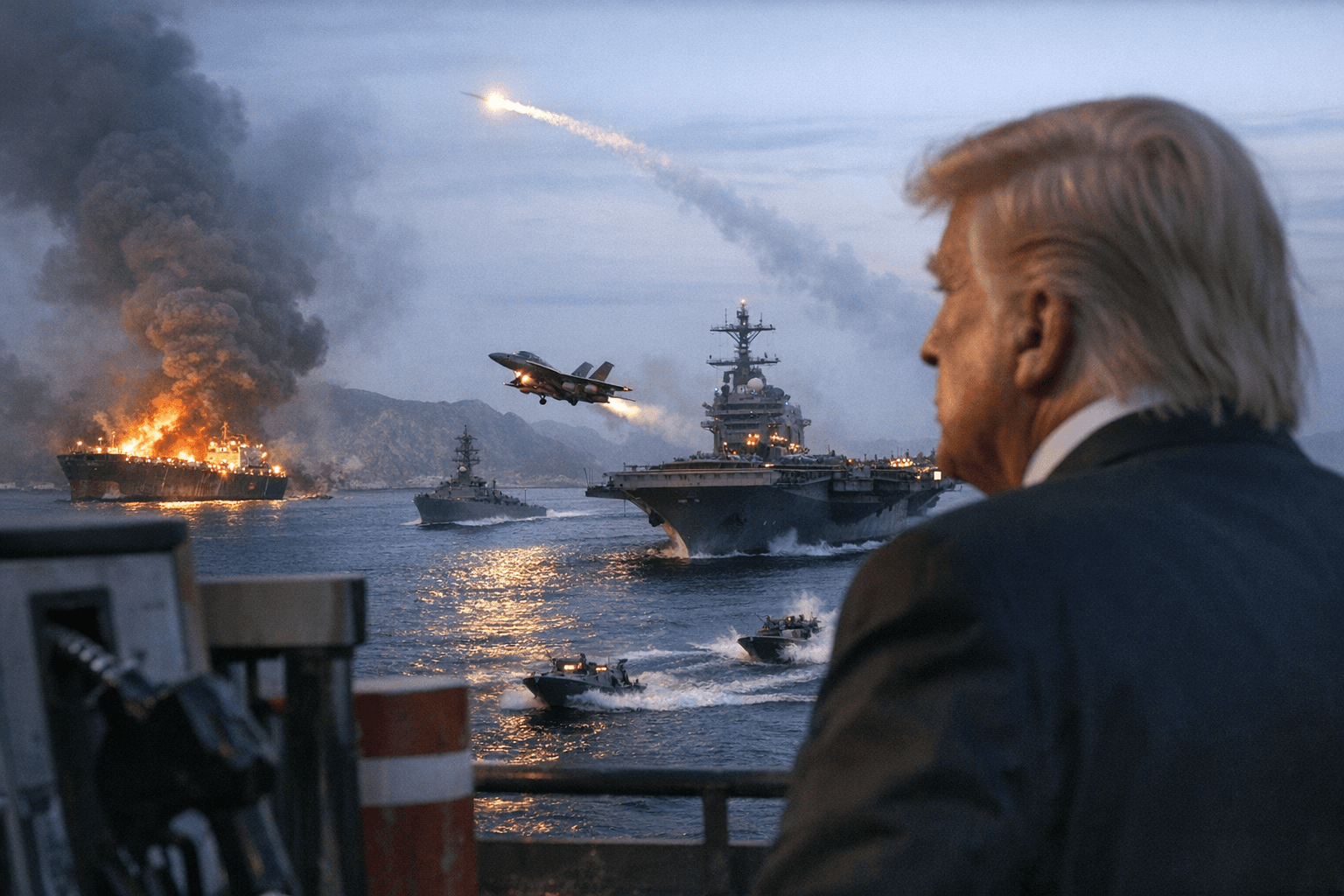
President Donald Trump predicted the U.S.-Iran war would be "finished" within two to three weeks even as Iran announced new strikes on American and Israeli targets just hours before he was scheduled to address the nation, and Tehran's blockade of the Strait of Hormuz pushed gas prices past $4 a gallon nationwide for the first time since 2022.
Trump's optimism came with a notable concession embedded inside it. White House Press Secretary Karoline Leavitt told reporters that reopening the Strait of Hormuz was not a "core objective" of Operation Epic Fury, the joint U.S.-Israeli military campaign launched earlier this year that struck hundreds of targets across Iran, including facilities linked to Supreme Leader Ali Khamenei's compound, government ministries, and military installations stretching from Tehran to the country's southern coast. The administration effectively signaled it was prepared to declare victory with the world's most consequential oil shipping lane still under Iranian control.
Trump put a harder edge on that position in a Truth Social post, warning he would consider Iran's reported ceasefire request only after Tehran reopened the strait, and setting an April 6 deadline. "Until then, we are blasting Iran into oblivion," he wrote. Iran's Foreign Ministry denied making any ceasefire offer. On gas prices, Trump was dismissive: "They'll drop when we leave, when it's over," he told CBS News in a phone interview Tuesday.
The economics around that claim are contested. Nobel Prize-winning economist Paul Krugman warned that crude prices could surge to $150 per barrel, with a path to $200 not out of the question, if the Hormuz blockade persists beyond a ceasefire. Roughly a quarter of the world's oil travels through the strait. In response, the administration said it had lifted some sanctions on Russian oil, provided insurance for tankers operating in the strait, and coordinated the release of 400 million barrels of oil reserves, though those measures have not reversed the price spike.
Iran showed no sign of standing down ahead of Trump's address. Tehran launched new missile and drone strikes against U.S. and Israeli targets on April 1, with Israel's military identifying 10 missile launches in a single barrage that sent sirens across Tel Aviv on the first night of Passover. A Kuwait-flagged crude oil tanker, the Al-Salmi, was struck by an Iranian drone off the coast of Dubai, sustaining damage to its hull and raising the risk of an oil spill. Kuwait's military separately reported it was responding to "hostile missile and drone attacks" on its own territory. Iranian-backed Houthi rebels in Yemen, who had stayed out of the fighting until recently, fired their third barrage of ballistic missiles toward Israel.
Britain moved to organize a diplomatic response. Prime Minister Keir Starmer announced that 35 nations had signed a statement committing to restore maritime security in the strait, and the U.K. would host a virtual conference this week to coordinate both diplomatic and eventual naval options. Starmer acknowledged that keeping the strait open after fighting ends "will not be easy."
Trump, meanwhile, sharpened his rhetoric toward NATO allies who declined to join the operation, posting "Go get your own oil" on Truth Social and raising the possibility of U.S. withdrawal from the alliance entirely. France had expressed openness to leading a multinational task force in the strait once combat subsides, while Secretary of State Marco Rubio told G7 partners in France last Friday that Washington would need allied help policing the waterway after the war concludes, even if it did not need them for the fighting itself.
The April 6 deadline for Iran to reopen the strait or face strikes on its power plants, oil wells, and Kharg Island represents the sharpest ultimatum yet in a conflict that has so far produced unrelenting exchanges on both sides, with no formal ceasefire framework in place.
This article was produced by Prism’s automated news system from verified source data, official records, and press releases, then run through automated quality and moderation checks before publishing. The system is built and supervised by the people who set the standards it runs under. Read our full AI policy.
Did this article answer your question?


