Trump presses ahead with 25% tariffs on European cars
A 25% tariff on European cars threatened higher U.S. prices, tighter dealer supplies and fresh retaliation risk as markets hit German automakers hard.
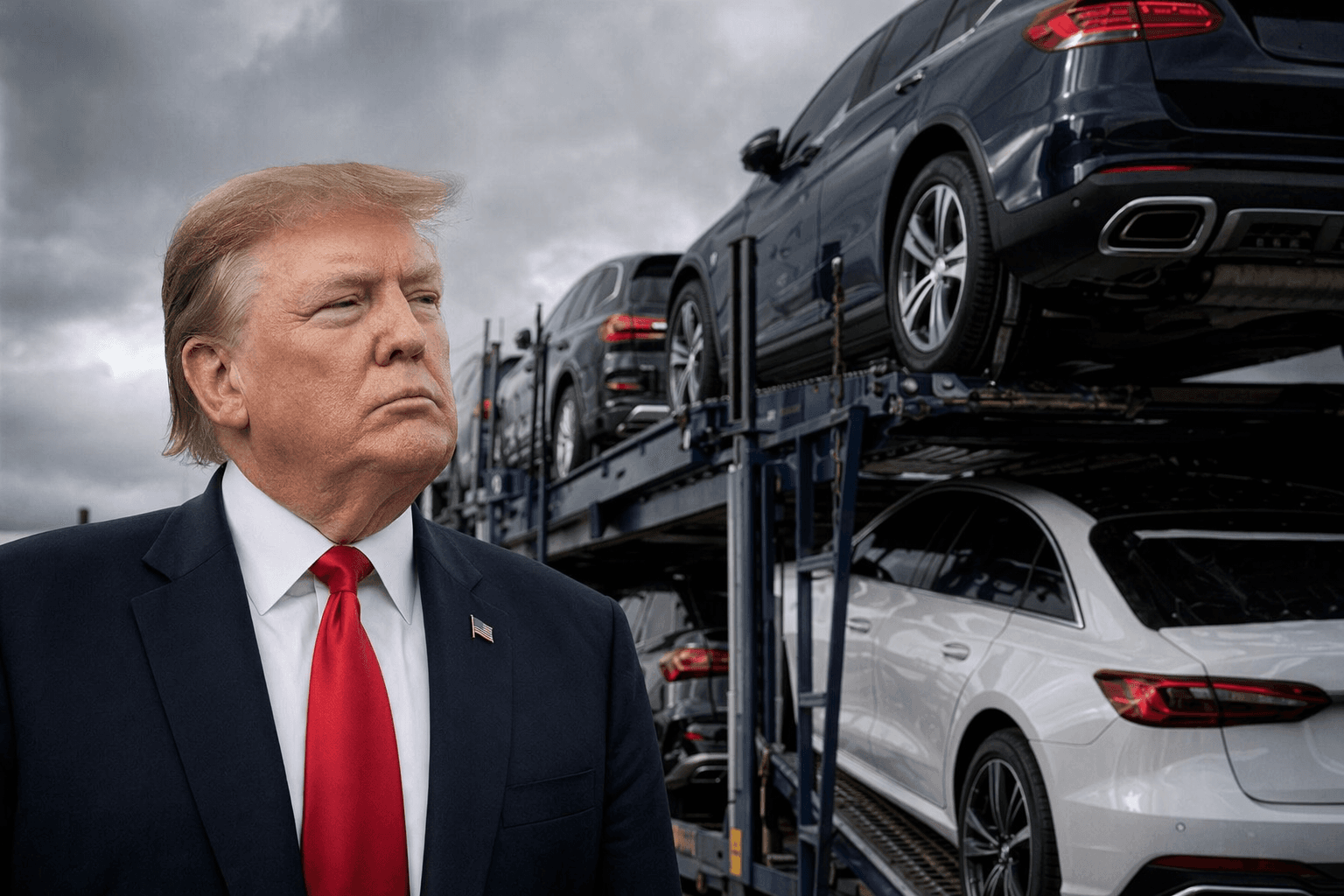
A 25% tariff on European cars threatened to push up U.S. showroom prices, squeeze dealership inventories and deepen pressure on an auto industry already exposed to trade shocks. The Trump administration pressed ahead with the plan even as it raised the odds of retaliation from Brussels that could land on American exporters next.
Donald Trump said on Friday, May 2, 2026, that he would lift duties on European Union auto imports to 25% from 15% the following week, arguing that the bloc had not complied with last summer’s trade deal. U.S. Trade Representative Jamieson Greer said he had spoken over the weekend with EU and German trade officials to explain the administration’s position, and made clear the White House intended to follow through. The tariffs had not yet been formally adopted as of Monday afternoon, but the direction was unmistakable.
The European Commission rejected Trump’s characterization and said it would keep its options open if Washington breached the agreement. That leaves the transatlantic fight poised to widen beyond luxury cars and into a broader clash over industrial policy, jobs and market access. The EU and United States struck a political trade agreement in 2025, later reflected in a joint statement, and officials in Brussels have said they are implementing their side while reserving the right to respond if Washington acts inconsistently.
The immediate market impact was sharp. Shares in Porsche, BMW, Mercedes-Benz and Volkswagen fell 2% to 3%, while the pan-European automobiles and parts index dropped 2.3% as of 1046 GMT. That selloff underscored how quickly a tariff threat can feed into expectations for weaker vehicle demand, thinner margins and, eventually, lower production and employment. An institute estimate cited by Reuters put the cost to Germany at nearly 15 billion euros, or about $17.58 billion, in output.
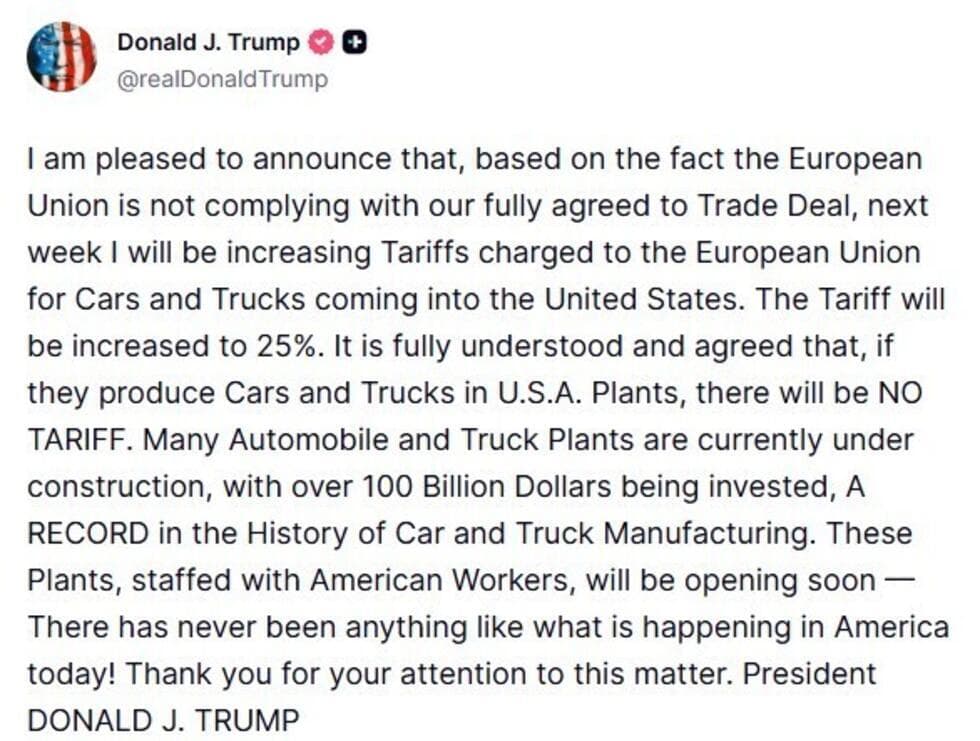
Germany’s automotive lobby, the VDA, called for urgent de-escalation and immediate talks, arguing that the U.S.-EU trade agreement had to be upheld by both sides and that Europe should finally ratify its side of the deal. The timing added diplomatic strain: EU Trade Commissioner Maros Sefcovic was scheduled to meet Greer in Paris on Tuesday, May 6, on the eve of a G7 trade ministers meeting. The talks come against a wider backdrop of tense U.S.-EU relations, including disputes tied to the war in Iran and Europe’s reluctance to help force open the Strait of Hormuz.
Trump’s tariff push also arrived alongside another pressure point, with the administration separately saying it planned to remove 5,000 U.S. troops from Germany after Chancellor Friedrich Merz criticized the United States in the Iran-related talks. For automakers, suppliers and workers on both sides of the Atlantic, the tariff threat now looks less like a narrow trade measure than the next escalation in a fight that could reshape prices, production and exports well beyond the European luxury segment.
This article was produced by Prism’s automated news system from verified source data, official records, and press releases, then run through automated quality and moderation checks before publishing. The system is built and supervised by the people who set the standards it runs under. Read our full AI policy.
Did this article answer your question?

