Trump Push to Link DHS Funding to SAVE Act Stalls Negotiations on Capitol Hill
Trump told Republicans "don't make any deal on anything" at a Memphis event, kicking off a 38-day DHS shutdown standoff that Senate Majority Leader John Thune called flatly "not realistic."
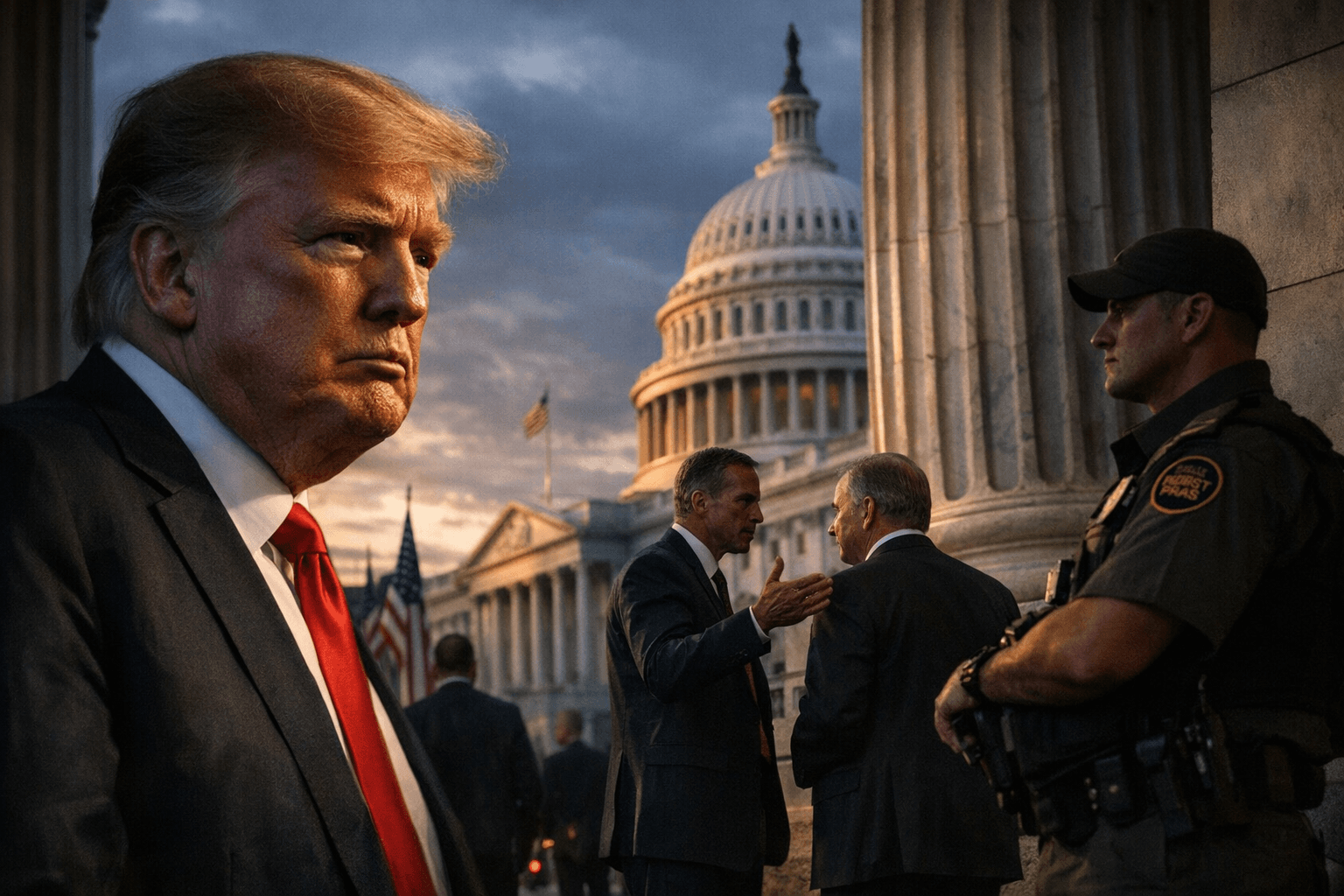
President Trump rebuffed suggestions from Republican lawmakers and his own aides about how to end the Department of Homeland Security shutdown, instead adding a demand that has likely extended the six-week-long stalemate. Speaking at a roundtable in Memphis, Tennessee on Monday, Trump instructed his party to hold the line. "I'm suggesting strongly to the Republican Party, don't make any deal on anything," he said, calling the SAVE America Act "the most important thing we can have." He went further, saying the bill's voter ID and proof-of-citizenship provisions should be "welded in" to any DHS funding agreement.
The reaction on Capitol Hill was swift and nearly uniform. Senate GOP leader John Thune told reporters that it is "not realistic" to tie DHS funding to passing the voting bill. Sen. Roger Marshall of Kansas offered a gentler version of the same verdict: "I agree with the goal, the objective, but it's much easier said than done."
The ramp-up in talks over DHS funding came as the shutdown began wreaking havoc at some airports. As TSA workers continue to go without pay, staffing issues have worsened, creating long security lines and prompting the administration to send ICE agents to more than a dozen locations to help ease the burden. More than 400 TSA officers have quit since the shutdown began.
The arithmetic in the Senate makes Trump's demand even harder to execute. It takes 60 votes to pass DHS funding, as well as the SAVE America Act. Neither bill has that support. The SAVE Act, which would require proof of citizenship to register to vote and photo ID to cast a ballot, has consumed Senate floor time for nearly a week as Republicans have tried to find a path around the filibuster threshold. Senate Majority Leader Thune has been explicit that the votes simply are not there.
Senate Minority Leader Chuck Schumer said the president "is trying to sabotage negotiations" after a deal was within reach to fund all of DHS except for ICE. "The SAVE Act does not have the votes to pass this chamber, and Democrats will fight it every step of the way," he said. Democrats have conditioned their support on a series of enforcement reforms, including a ban on racial profiling, judicial warrants before agents enter private property, and prohibitions on immigration enforcement at medical facilities, schools, churches, polling stations, and courts.
An emerging "off-ramp" that some Republicans have supported would fund TSA and the non-controversial agencies within DHS now, while leaving ICE for a separate bill. Sen. John Kennedy of Louisiana told colleagues publicly that "we ought to accept the Democrats' offer to open everything up but ICE," before using the filibuster-proof budget reconciliation process to fund immigration enforcement without Democratic support. He added a note of caution: "a lot of people are talking about it, but the only person that counts is our majority leader." Thune expressed openness to the concept, telling reporters, "there are lots of ideas swirling right now," and adding that "we aren't taking any options off the table."
The proposal would fund almost all of DHS while leaving ICE and deportation operations for a separate filibuster-proof bill, in which Republicans would also try to pass pieces of the SAVE America Act. It is not entirely clear how that would work, as the Senate reconciliation process has strict budgetary rules, but it could ease at least one of Trump's demands and unlock talks to end the partial shutdown.
The funding standoff also played out against a personnel change at the top of DHS. The Senate confirmed Markwayne Mullin's nomination to lead the Department of Homeland Security. The Oklahoma Republican was chosen by Trump to replace Kristi Noem. The Senate voted 54-45 to confirm Mullin. Two Democrats, John Fetterman of Pennsylvania and Martin Heinrich of New Mexico, supported his confirmation. Sen. Rand Paul of Kentucky, the chairman of the Senate Homeland Security committee, voted against Mullin after clashing with him at his hearing and questioning whether a man with "anger issues" could set a good example for ICE and Border Patrol agents.
At his confirmation hearing, Mullin indicated that agents will be required to secure judicial warrants to enter homes and businesses, marking a key change from DHS' previous position. Democrats have made clear that their opposition to funding DHS is about policy, not personnel. They insist they will not provide the crucial 60-vote threshold unless Republicans agree to add restrictions on ICE and Border Patrol agents.
Schumer said "both sides are talking in a serious way," a tone that marked a stunning turnaround from just 24 hours earlier, when Trump publicly trashed a Thune proposal to fund the entire department except for ICE. Sen. Katie Britt of Alabama, chair of the Senate Appropriations Homeland Security Subcommittee, told reporters as she returned to the Capitol from a White House meeting that Republicans feel they have a path to ending the Homeland Security shutdown, which had reached its 39th day. Whether that path survives the math of 60 votes and Trump's election-bill demands remains the central test of the next 72 hours.
This article was produced by Prism’s automated news system from verified source data, official records, and press releases, then run through automated quality and moderation checks before publishing. The system is built and supervised by the people who set the standards it runs under. Read our full AI policy.
Did this article answer your question?

