Trump Pushes SAVE Act, Vows to Block All Other Legislation Until Passed
Trump vowed to block all legislation until the Senate passes the SAVE America Act, but Thune says the votes simply aren't there.
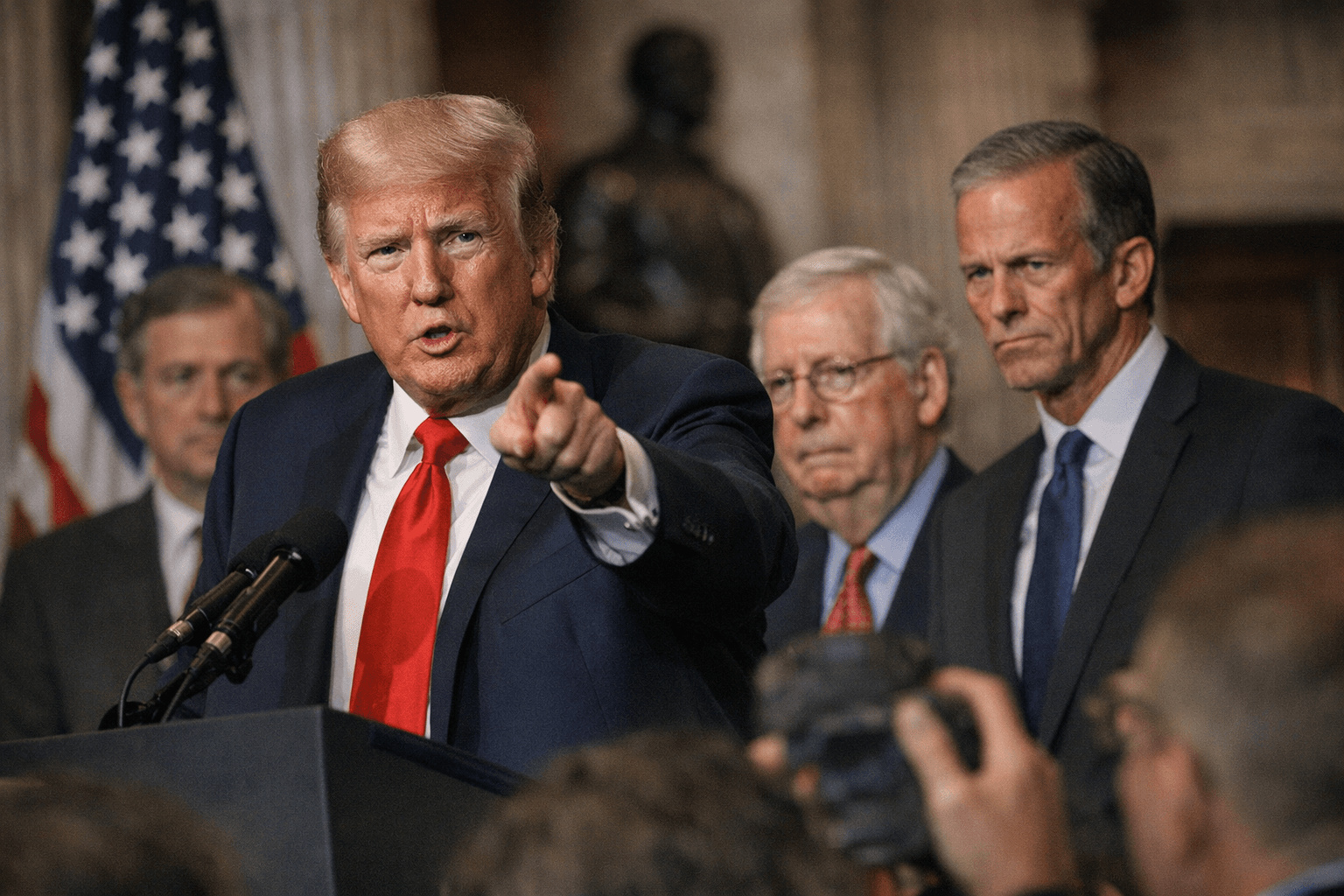
Scott Pressler was still on Fox & Friends Weekend when President Donald Trump pulled out his phone Sunday morning. By the time the segment ended, Trump had posted a Truth Social ultimatum that stopped Washington cold: no more signed legislation until the Senate delivers the Safeguard American Voter Eligibility (SAVE) America Act to his desk.
"It must be done immediately. It supersedes everything else. MUST GO TO THE FRONT OF THE LINE," Trump wrote, calling the measure "an 88% issue with ALL VOTERS." He demanded the bill without compromise: "NOT THE WATERED DOWN VERSION. GO FOR THE GOLD: MUST SHOW VOTER I.D. & PROOF OF CITIZENSHIP: NO MAIL-IN BALLOTS EXCEPT FOR MILITARY – ILLNESS, DISABILITY, TRAVEL: NO MEN IN WOMEN'S SPORTS: NO TRANSGENDER MUTILIZATION FOR CHILDREN!"
The bill passed the House by a vote of 218 to 213 on February 11, 2026. Only one Democrat, Henry Cuellar, voted with Republicans. The SAVE America Act requires individuals to provide documentary proof of U.S. citizenship when registering to vote and requires photo identification to vote in federal elections. According to research from the Brennan Center for Justice, over 21 million voting-eligible citizens do not have ready access to documentary proof of citizenship such as a passport or birth certificate.
Trump's ultimatum lands against a wall of arithmetic in the Senate. Republicans hold a 53-47 vote majority in the upper chamber, and Democrats have vowed to oppose the bill. Senate Minority Leader Chuck Schumer said the threat of gridlock does not change Democrats' stance. "If Trump is saying he won't sign any bills until the SAVE Act is passed, then so be it: there will be total gridlock in the Senate," he said. "Senate Democrats will not help pass the SAVE Act under any circumstances."
The procedural path Trump prescribed, a talking filibuster, has drawn particular skepticism from Senate Majority Leader John Thune. A talking filibuster would force Democrats to speak continuously on the Senate floor to delay a vote on the bill, but if they cede the floor, Republicans could circumvent the need for a 60-vote majority and pass the measure with just 51 votes. Thune has nonetheless been direct about the numbers. "The votes aren't there, one, to nuke the filibuster, and the votes aren't there for a talking filibuster," Thune said. "It's just a reality. And I'm a person who has to deliver, sometimes, the not-so-good news that the math doesn't add up."
Absent a rules change to modify how it would work, Thune warned, a "talking filibuster" like the one being floated could quickly become a "monthslong" process that eats up valuable Senate floor time with no guaranteed outcome. Thune said his staff could not find any "piece of legislation in history" that has been passed by grinding out a legislative win through voting to table dozens or scores of dilatory amendments and waiting out days or weeks of floor debate.
There are other bills that could potentially come up that would be stalled by Trump's refusal to sign legislation. If Congress were to approve any additional supplemental funding for the conflict in Iran, that would also require Trump's signature. So too would a key piece of bipartisan affordable housing legislation making its way through the Senate.
A White House official said Monday that Trump's threat to withhold his signature on legislation does not apply to any potential funding solution that lawmakers reach to fund the Department of Homeland Security, parts of which have been shut down since February 14 amid a funding fight over Immigration and Customs Enforcement.
Critics argue the broader stakes reach well beyond a procedural standoff. Opponents say the bill threatens voting access for 146 million Americans who don't have a passport, millions who can't easily access a birth certificate, rural voters, voters of color, voters with disabilities, and survivors of climate disasters. Proponents counter that the measure targets a genuine vulnerability in election integrity. Senators Mike Lee of Utah and Rick Scott of Florida argue the talking filibuster is the best way to pass the SAVE Act and stave off what they and Trump warn could be massive fraud in the 2026 midterm elections.
Trump called the SAVE Act his "No. 1 priority" at an issues conference with House Republicans and warned in Florida that passing the bill is critical to helping Republicans keep control of Congress in November. "It will guarantee the midterms. If you don't get it, big trouble," he said. Whether Thune can produce that outcome on the current math remains a separate question entirely.
This article was produced by Prism’s automated news system from verified source data, official records, and press releases, then run through automated quality and moderation checks before publishing. The system is built and supervised by the people who set the standards it runs under. Read our full AI policy.
Did this article answer your question?

