Trump Religious Liberty Panel Eyes Hotlines, Exemptions, and Christian Nationalist Shift
Trump’s religious liberty panel is moving toward a report that could recast church-state rules, from school prayer to federal funding and exemptions.

President Donald Trump’s Religious Liberty Commission is nearing a final report after a year of hearings, and the ideas circulating inside it reach far beyond classic religious-liberty disputes. Among the proposals under discussion are a federal hotline with a recorded message saying there is no separation of church and state, expanded exemptions for faith-based conduct, and broader access to public money for religious groups.
Trump created the commission by executive order on May 1, 2025, and the White House said it would advise the White House Faith Office and the Domestic Policy Council on executive and legislative action. The Justice Department says the panel is housed there. Dan Patrick is serving as chair and Ben Carson as vice chair, alongside members including Cardinal Timothy Dolan, Bishop Robert Barron, Rabbi Meir Soloveichik and Ryan T. Anderson. The commission’s docket has spanned public education, the military, antisemitism in the private sector, health care and religious liberty history, with hearings running from June 16, 2025, through a final session on April 13, 2026.
The draft ideas now surfacing show how aggressively some commissioners want to redraw the line between private faith and public authority. One commissioner has pushed for a Presidential Medal of Freedom for a baker who refused to make a wedding cake for a same-sex couple. Another has urged Justice Department intervention in disputes involving Amish parents in New York and Catholic nuns objecting to hospice-related gender identity requirements. That list goes well beyond protecting religious exercise in court; it points toward a federal government more willing to bless religious objections in schools, workplaces and health care settings, even when those objections collide with generally applicable rules.
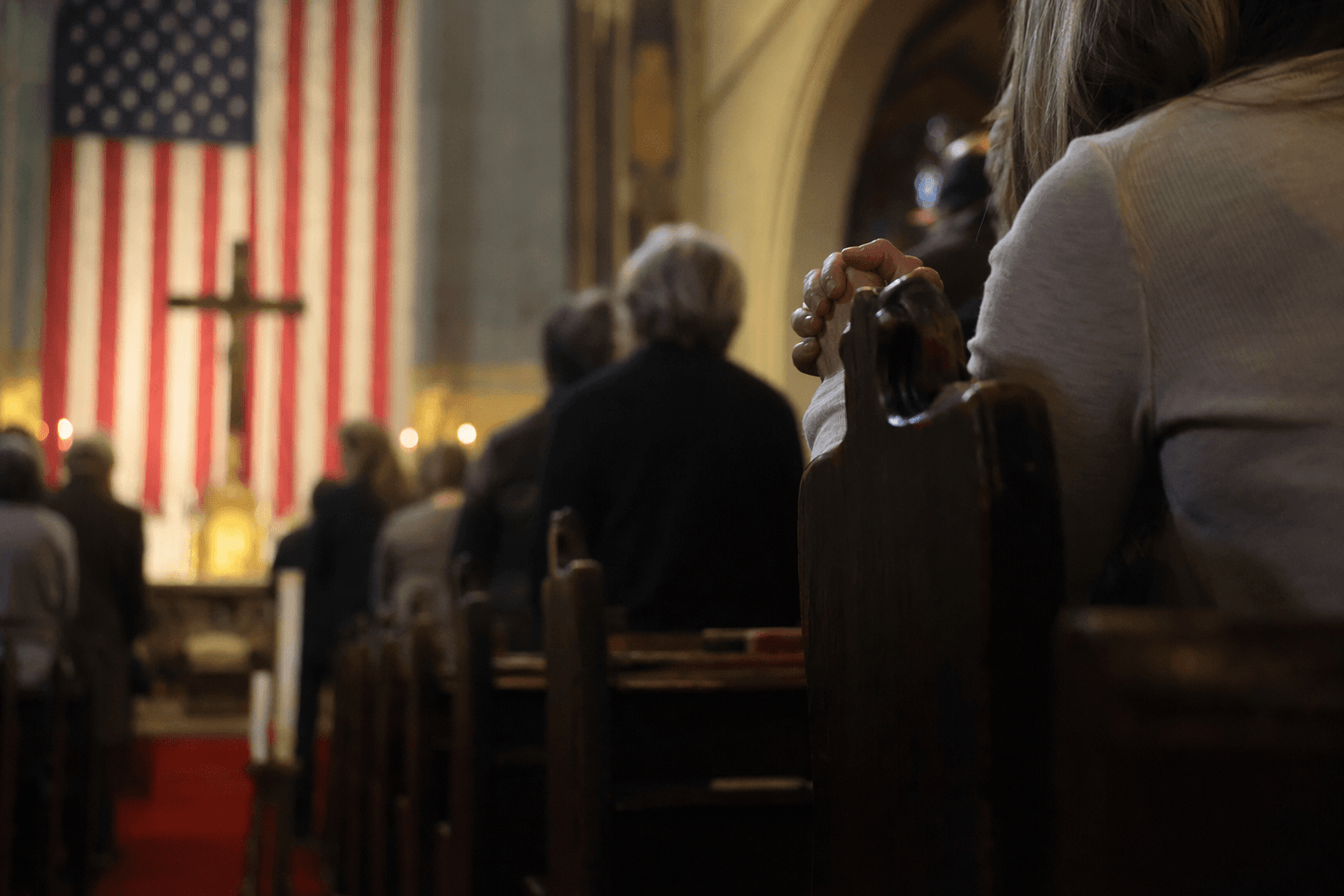
That is where the constitutional stakes sharpen. For generations, First Amendment doctrine has required government to stay neutral between religion and nonreligion, and to avoid establishing a preferred faith. A hotline message declaring there is no separation of church and state would signal a direct break with that framework, replacing neutrality with an affirmative constitutional theory that treats religion as a dominant public force. If the commission’s vision prevails, public schools could face wider religious expression mandates, faith-based organizations could gain easier access to taxpayer dollars, and health and labor policy could absorb more categorical exemptions.
The commission’s own materials show how central those fights are. A draft FAQ explicitly asks about the “wall of separation between church and state,” and the Justice Department says a draft report will be posted for 15 days of public comment before virtual meetings to finalize it. Trump already moved on one part of the agenda in September 2025, when he announced new Education Department guidance intended to protect prayer in public schools. Now a multifaith coalition that includes Interfaith Alliance, Muslims for Progressive Values, the Sikh American Legal Defense and Education Fund and Hindus for Human Rights has sued, arguing the panel violates the Federal Advisory Committee Act because its membership is not balanced. The final report could become the blueprint for a broader Christian nationalist turn in federal policy.
This article was produced by Prism’s automated news system from verified source data, official records, and press releases, then run through automated quality and moderation checks before publishing. The system is built and supervised by the people who set the standards it runs under. Read our full AI policy.
Know something we missed? Have a correction or additional information?
Submit a Tip