Trump Requests Record $1.5 Trillion Defense Budget, Largest in U.S. History
Trump's $1.5T defense request is the largest post-WWII single-year increase, offset by $73B in domestic cuts targeting NIH and heating assistance.
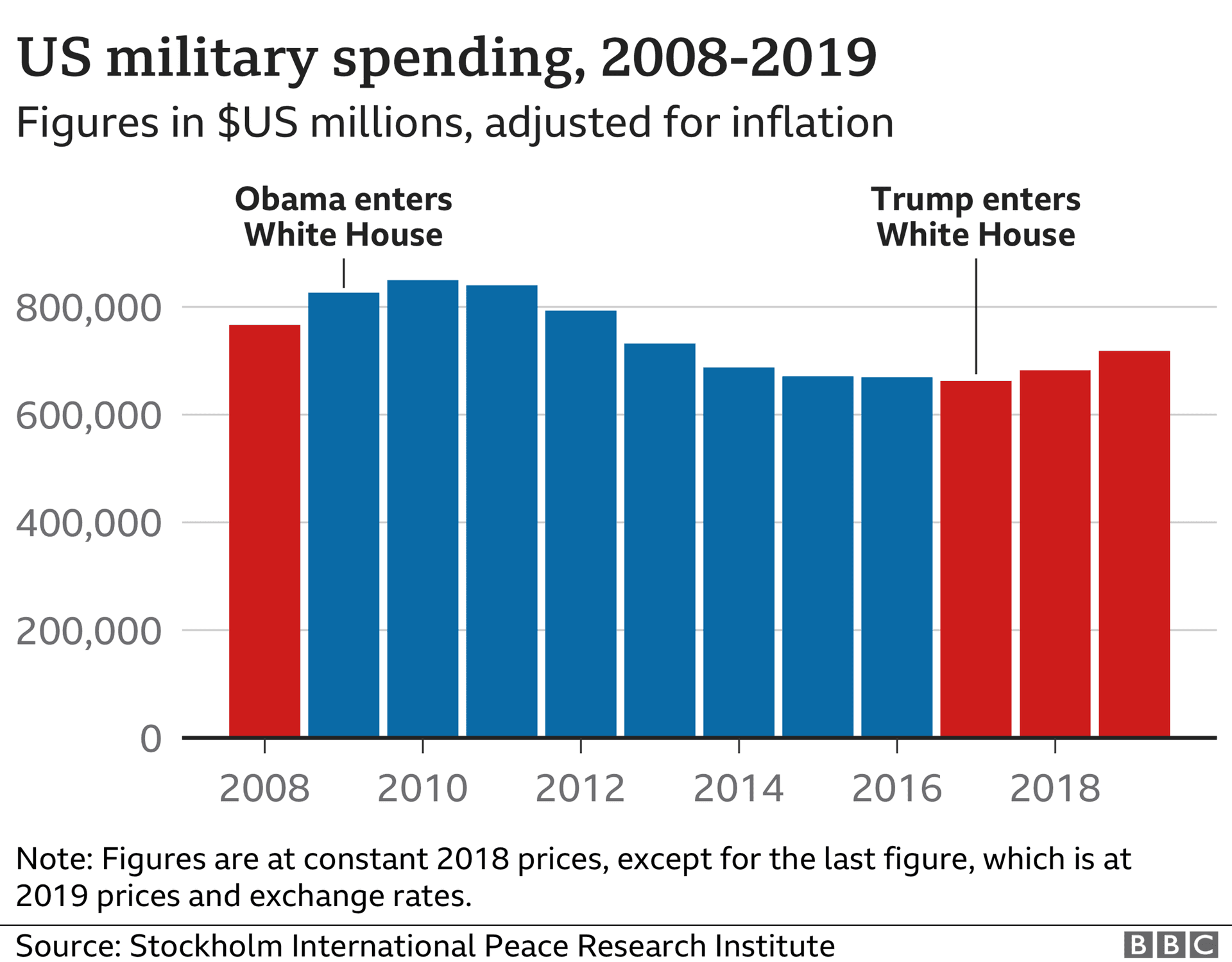
The $1.5 trillion defense budget President Trump formally requested Friday is the largest single-year increase in U.S. military spending since World War II, according to the Committee for a Responsible Federal Budget, and would push the Pentagon's share of GDP from roughly 3% to nearly 5% for the first time since the early 2000s wartime peak.
The 92-page White House document splits the total into two parts: a $1.15 trillion base defense budget, the first time that figure has crossed $1 trillion and a 28% increase from FY2026, and a separate $350 billion intended to move through budget reconciliation, where Republicans can advance legislation without Democratic votes. By comparison, Trump originally sought $892.6 billion for FY2026; the total crossed $1 trillion only after a $150 billion supplemental was added later.
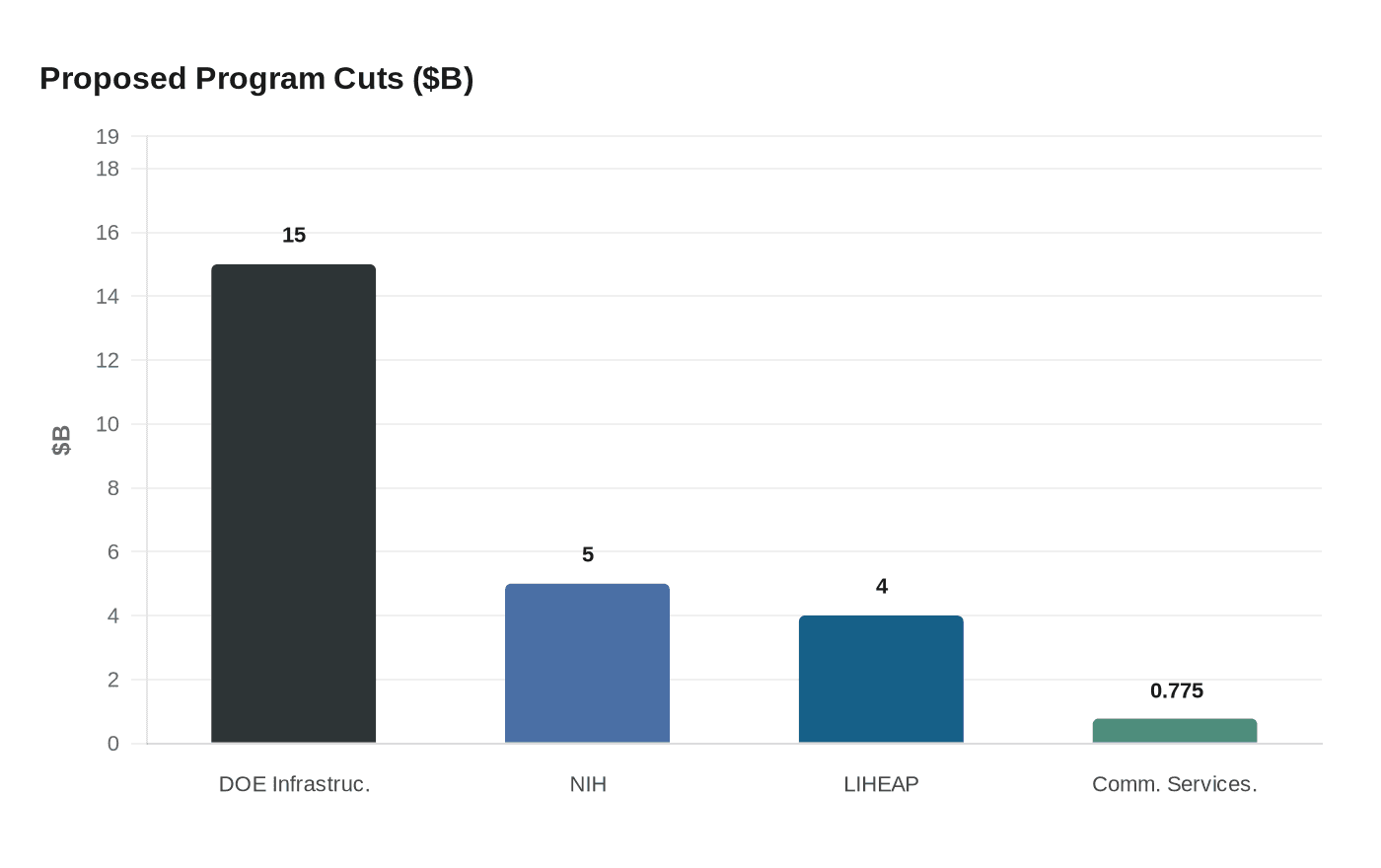
To partially offset the increase, the budget imposes $73 billion in nondefense cuts, a 10% reduction achieved in part by shifting program responsibilities to states. The NIH would lose $5 billion. The Low Income Home Energy Assistance Program, which Congress rejected eliminating last year, would be cut entirely at $4 billion. The Community Services Block Grant faces a $775 million reduction, and $15 billion in Biden-era Department of Energy infrastructure funding would be canceled alongside more than $1 billion for climate and clean energy research. FEMA and the Cybersecurity and Infrastructure Security Agency also face reductions.
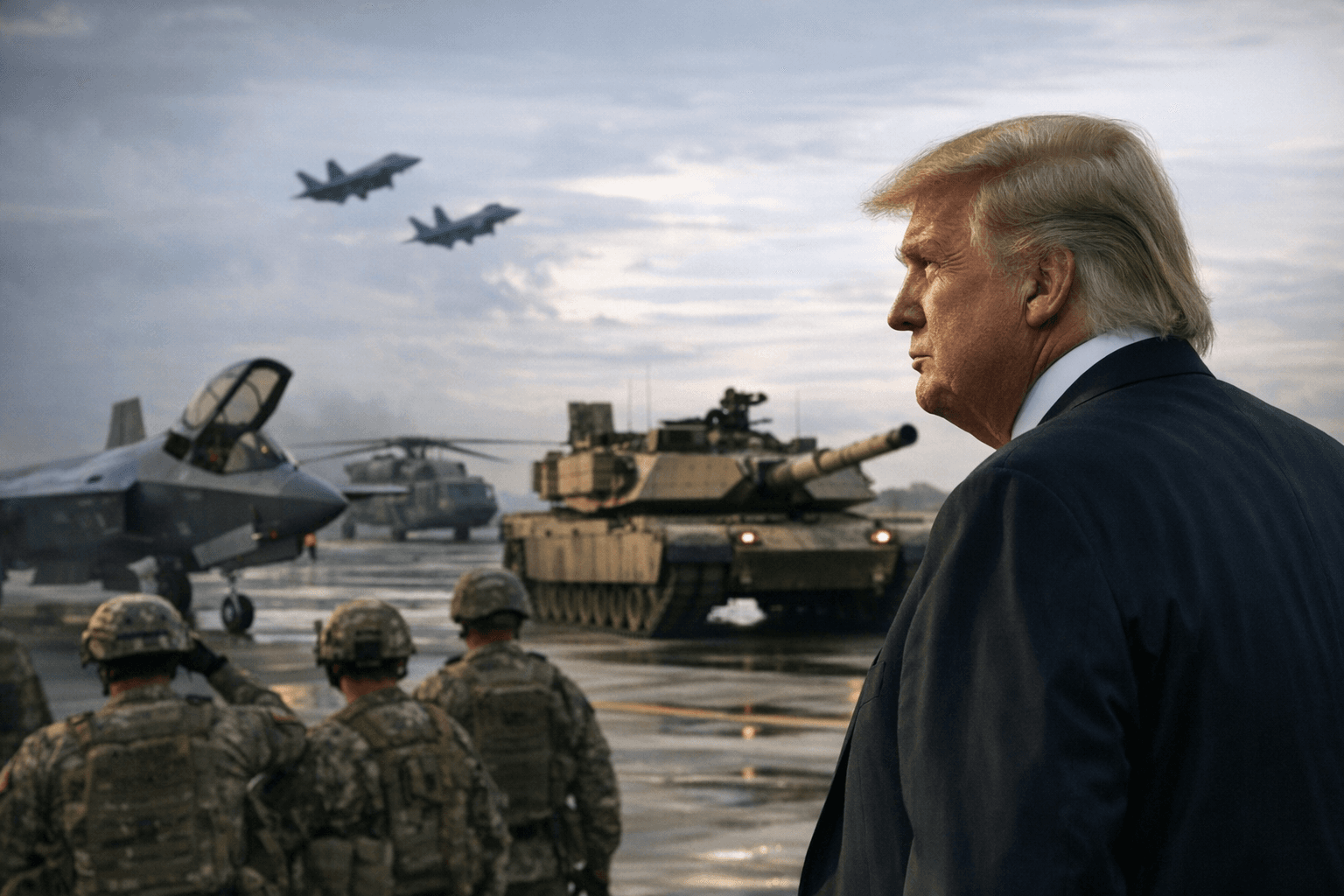
Military investments include $65.8 billion for naval ships and munitions depleted in the U.S.-led war against Iran, $17.5 billion for the "Golden Dome" space-based missile defense shield, Virginia-class submarine procurement from General Dynamics and Huntington Ingalls Industries, and a 5 to 7% pay raise for all uniformed personnel. The Pentagon separately proposed a $200 billion supplemental to cover direct costs of the Iran conflict.
The fiscal implications are substantial. The CRFB estimates the plan adds $5.8 trillion in defense spending through 2036 and $6.9 trillion to the national debt once interest costs are factored in. The national debt has already surpassed $39 trillion, with annual deficits running near $2 trillion. The Congressional Budget Office projects debt held by the public will climb from 101% of GDP today to 120% by 2036, eclipsing the post-World War II record.
OMB Director Russell Vought wrote in the budget's preface that it "builds on the President's vision by continuing to constrain non-defense spending and reform the Federal Government." Trump was more direct at a White House event: "We're fighting wars. We can't take care of day care."
Congressional reaction split along party lines. Sen. Roger Wicker of Mississippi and Rep. Mike Rogers of Alabama, chairs of the Senate and House Armed Services Committees, jointly endorsed the proposal, saying "America is facing the most dangerous global environment since World War II." Sen. Patty Murray of Washington, the top Democrat on the Senate Appropriations Committee, called it "morally bankrupt," while Rep. Brendan Boyle of Pennsylvania, ranking member on the House Budget Committee, declared it "America Last."
The budget carries no legal weight on its own; Congress may reject it entirely and often does. Trump's FY2026 blueprint sought roughly a one-fifth cut to nondefense spending, but Congress largely held that line flat. A more granular defense breakdown is expected April 21.
This article was produced by Prism’s automated news system from verified source data, official records, and press releases, then run through automated quality and moderation checks before publishing. The system is built and supervised by the people who set the standards it runs under. Read our full AI policy.
Did this article answer your question?