Trump says Apple will work with Intel on US chip production
Trump said Apple would work with Intel on U.S. chips, but which chips, how many and how fast remain unresolved.
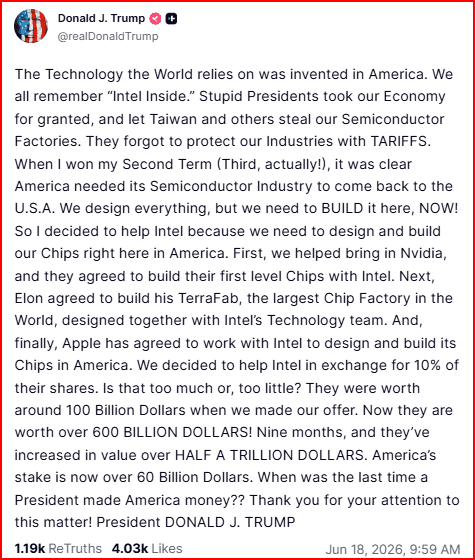
Donald Trump said in a Truth Social post that Apple had agreed to work with Intel to design and build chips in the United States, but the companies did not immediately confirm the arrangement. The claim raised the stakes for U.S. industrial policy while leaving the most important details unanswered: which chips would move, how much production would shift, and when any factory work would begin.
The reported deal would matter most if it reached beyond political symbolism and into actual manufacturing. Reuters reported on June 18 that Intel had already reached a preliminary deal to make some chips for Apple after more than a year of discussions, according to a Wall Street Journal report cited in the story. That would mean more than a simple design partnership. In practical terms, working with Intel could involve chip architecture, manufacturing runs, packaging and long-term production planning inside the United States.
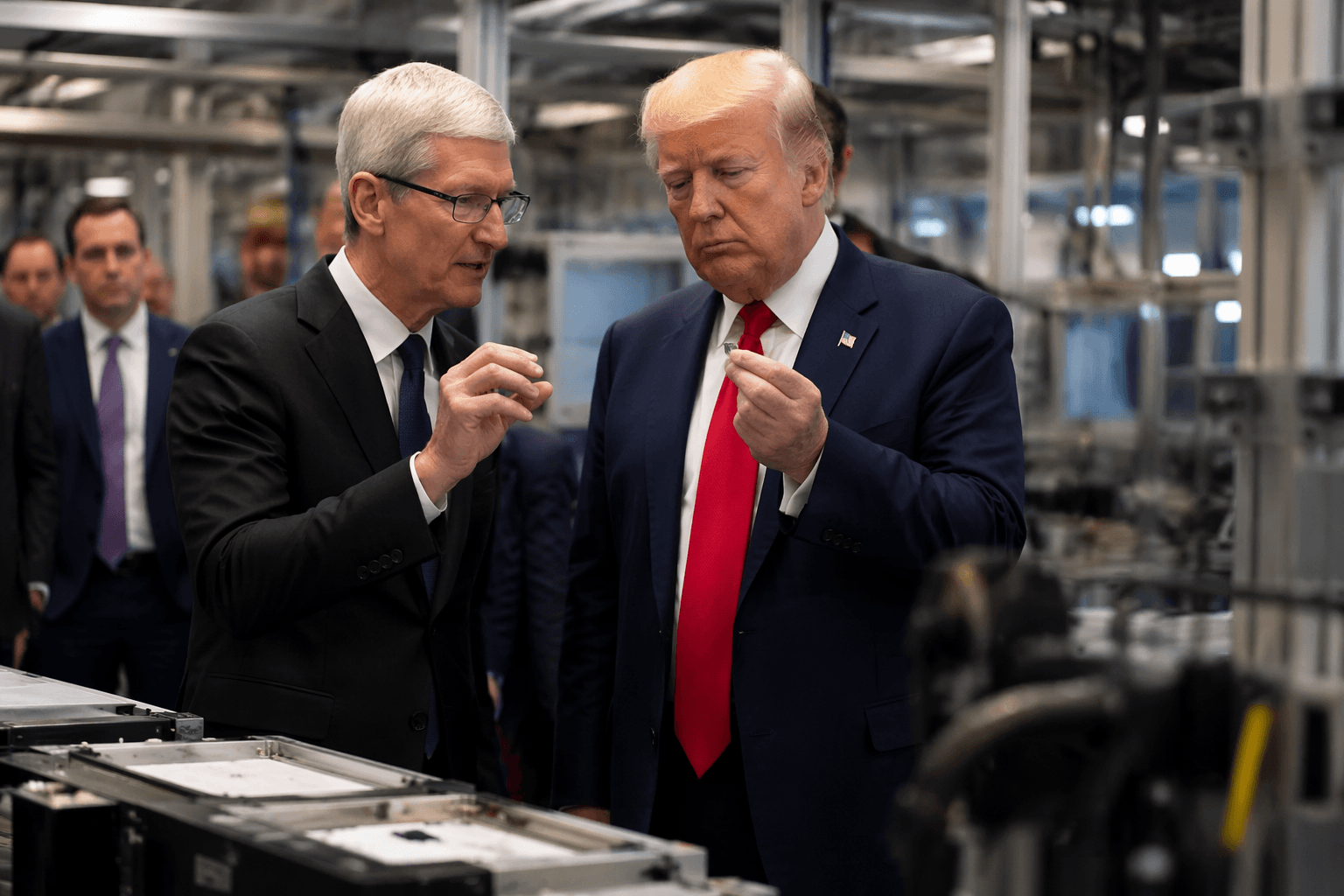
For Apple, any move toward Intel would signal an effort to diversify a supply chain that has long depended on Taiwan Semiconductor Manufacturing Co. for its most advanced chips. Reuters noted that TSMC’s leading-edge lines are already heavily booked by AI chipmakers such as Nvidia and AMD, a reminder that Apple is competing for capacity in one of the tightest corners of the semiconductor market. Shifting even part of that work to Intel would reduce Apple’s dependence on a single overseas supplier and create another domestic option for future chip production.
For Intel, the potential relationship would carry outsized strategic value. The company has been trying to reestablish itself as a foundry player after years of setbacks, and an Apple order would be a powerful signal that one of the industry’s biggest names was willing to trust Intel with high-value manufacturing. It would also bolster Intel’s argument that the United States can still host advanced chip production at scale, not just chip design.
The announcement fit Trump’s broader message about bringing strategic manufacturing back to the country, especially in sectors where supply chains have become a national-security issue. But the unanswered questions remain central. The companies have not spelled out which chips would be made in the United States, what volume would be involved or how quickly the work could move from planning into production. Until those details are public, the proposed Apple-Intel tie-up remains as much a test of U.S. reshoring ambitions as a business deal.
This article was produced by Prism’s automated news system from verified source data, official records, and press releases, then run through automated quality and moderation checks before publishing. The system is built and supervised by the people who set the standards it runs under. Read our full AI policy.
Know something we missed? Have a correction or additional information?
Submit a Tip