Trump says Iran war nearly over as U.S. strikes continue weeks longer
Trump called the Iran war nearly over, but he also warned U.S. strikes could run for weeks as oil markets and Hormuz shipping signaled the fight was still active.
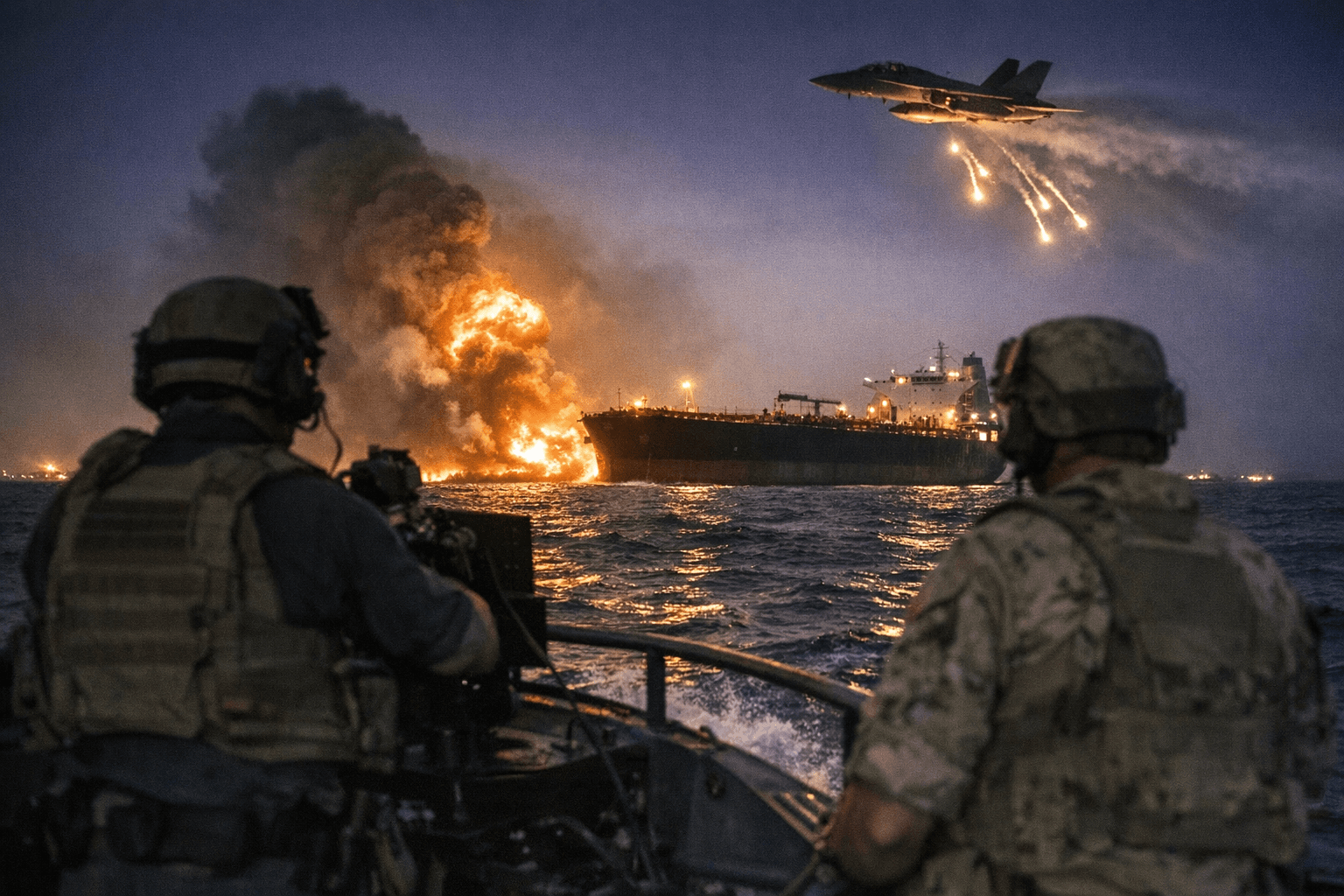
Donald Trump has portrayed the war with Iran as close to finished, yet his own timeline has repeatedly kept the fighting alive, from a March promise that combat would continue until every U.S. objective was met to an April warning that America would still hit Iran “extremely hard” in the coming weeks. The gap between the rhetoric and the benchmarks is now the central test of the conflict: whether it is actually winding down, or simply shifting into a new phase.
Trump’s public milestones have moved quickly. On March 1, after U.S. Central Command said three American service members had been killed during Operation Epic Fury, he said combat operations would continue until “all of our objectives are achieved.” By March 9, he told CBS News the war could “almost be over” and said Iran’s navy, air force, communications and missiles had been badly degraded. On April 1, he said the war would wrap up “very shortly,” even as he warned of more hard strikes. Later that day, he said the operation’s “core strategic objectives are nearing completion” and that the U.S. would keep striking Iran for two to three more weeks.
The military benchmark has been damage to Iran’s nuclear infrastructure and command network. In June 2025, the International Atomic Energy Agency confirmed that Fordow, Natanz and Esfahan had been hit in U.S. aerial attacks. Rafael Mariano Grossi later told the U.N. Security Council that the strikes caused a “sharp degradation” in nuclear safety and security, while also saying there had been no radiological release affecting the public. Trump then announced a two-week ceasefire and said the U.S. had “already met and exceeded all Military objectives,” but that declaration came with a condition tied to the “COMPLETE, IMMEDIATE, and SAFE OPENING” of the Strait of Hormuz.
That strait is the economic pressure point in the entire confrontation. The U.S. Energy Information Administration says about 20.9 million barrels per day of oil moved through the Strait of Hormuz in the first half of 2025, equal to roughly 20% of global petroleum liquids consumption and about one-quarter of global maritime oil trade. Around one-fifth of global LNG trade also passed through the waterway. CBS reported that oil futures rose more than 5% after Trump’s April 1 remarks, then fell sharply when the ceasefire was announced. Iran’s foreign minister, Seyed Abbas Araghchi, said Iran would halt “defensive operations” if U.S. attacks stop and said Iranian forces would coordinate safe passage through the strait. Benjamin Netanyahu’s office said Israel backed the ceasefire, but not the fighting with Hezbollah in Lebanon.
Michael Doran of the Hudson Institute has warned that a premature exit could leave Iran’s core threat intact, while a more lasting victory would require pressure on its broader military and economic system. For now, Trump’s scorecard is built on destruction and deterrence, not a final settlement.
This article was produced by Prism’s automated news system from verified source data, official records, and press releases, then run through automated quality and moderation checks before publishing. The system is built and supervised by the people who set the standards it runs under. Read our full AI policy.
Did this article answer your question?