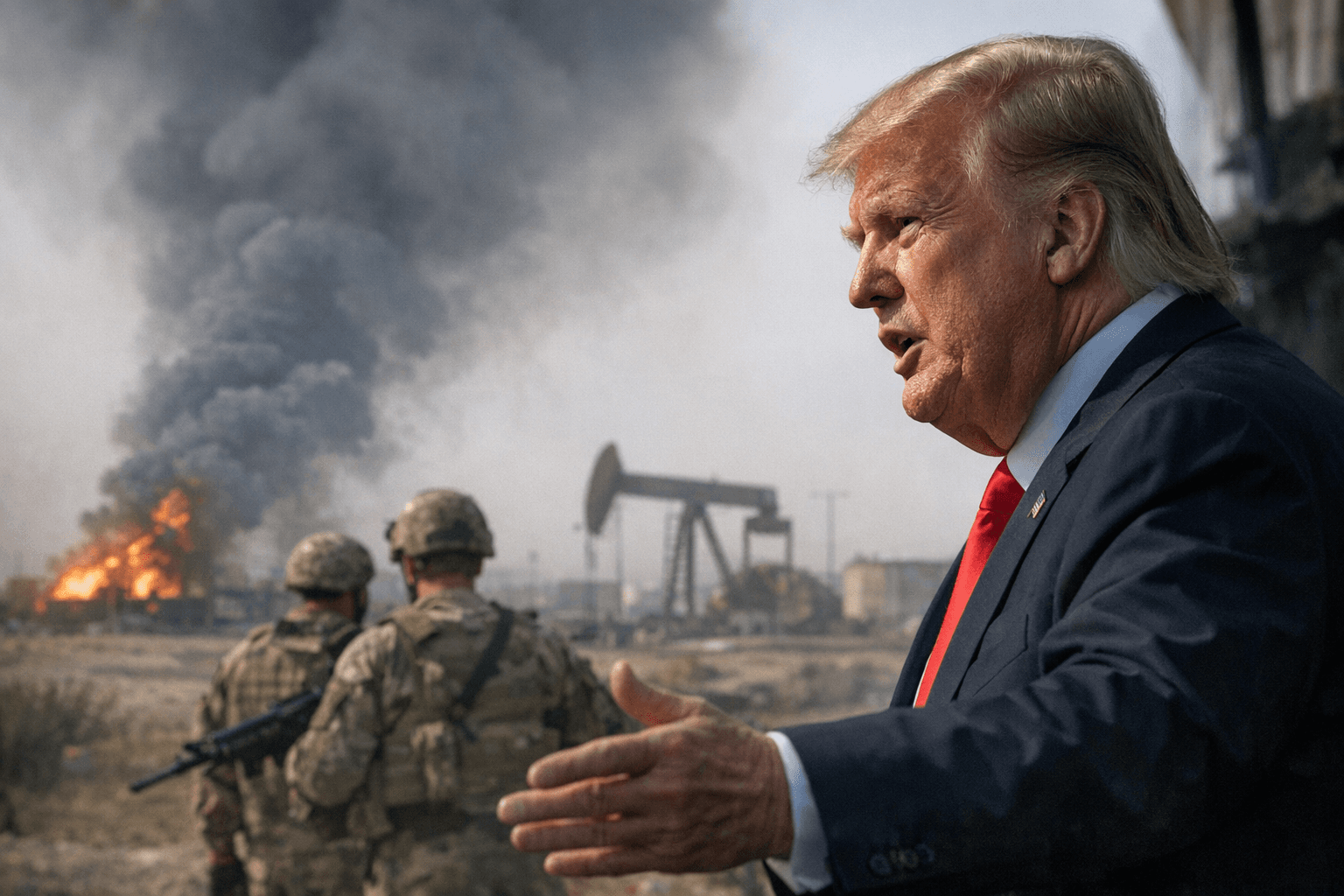
Trump Says Iran War Objectives Nearly Complete, Expects End in Weeks
Trump vowed to hit Iran "extremely hard" for 2-3 more weeks while declaring war objectives nearly complete, sending crude futures surging more than 5%.

The promise contained an embedded contradiction. Speaking from the White House Cross Hall on Wednesday in a prime-time address, President Trump declared that Operation Epic Fury's "core strategic objectives are nearing completion" and, in the same breath, vowed that the United States would "hit them extremely hard over the next two to three weeks." Crude oil futures jumped more than 5% within minutes of those words.
The pledge sets a quantifiable clock on three stated military objectives: eliminating Iran's ballistic missile systems, destroying its navy, and preventing the regime from reconstituting its combat capability. Whether those goals can be verifiably achieved within that window depends on target sets the Pentagon has not publicly specified, but Trump's threat to strike Iran's civilian energy and water infrastructure if no deal is reached signals that the next phase could expand, not contract, the conflict's scope.
Trump had previewed the timeline in a Tuesday exchange with CBS News reporter Weijia Jiang, saying he expected operations to wrap up in "two weeks, maybe three" while acknowledging he was not ready "quite yet" to abandon efforts to reopen the Strait of Hormuz. He said the strait "will open up naturally" once the fighting ends, a formulation that sidesteps a central strategic problem: Iran's demonstrated ability to hold global energy flows hostage regardless of its military losses on the battlefield.
The Strait of Hormuz closure has removed roughly one-fifth of the world's oil and gas supply from the market since Operation Epic Fury launched February 28, 2026, jointly with Israel. Brent crude surpassed $100 per barrel on March 8 for the first time in four years and has peaked at $126. U.S. gas prices have surged past $4 a gallon. The International Energy Agency's head has described the crisis as the "greatest global energy security challenge in history," and analysts now consider $200-per-barrel oil a credible scenario. Russia's Foreign Ministry spokeswoman Maria Zakharova reinforced that dynamic Wednesday, stating that Hormuz navigation requires Iran's consent and dismissing third-party regulator proposals as unhelpful.
To defend the 32-day campaign's duration, Trump recited historical conflict timelines: World War I lasted "one year, seven months and five days," World War II "three years, eight months and 25 days," and Vietnam represented a nearly 20-year American commitment. The comparison served as a patience plea, but it left untouched a more immediate legal question. Congressional attempts to invoke the 1973 War Powers Resolution failed in both chambers in early March, with the Senate rejecting a resolution 47-53 on March 4. A similar resolution failed in the House the following day. That outcome handed Trump broad operational latitude with no firm congressional check for the foreseeable future.
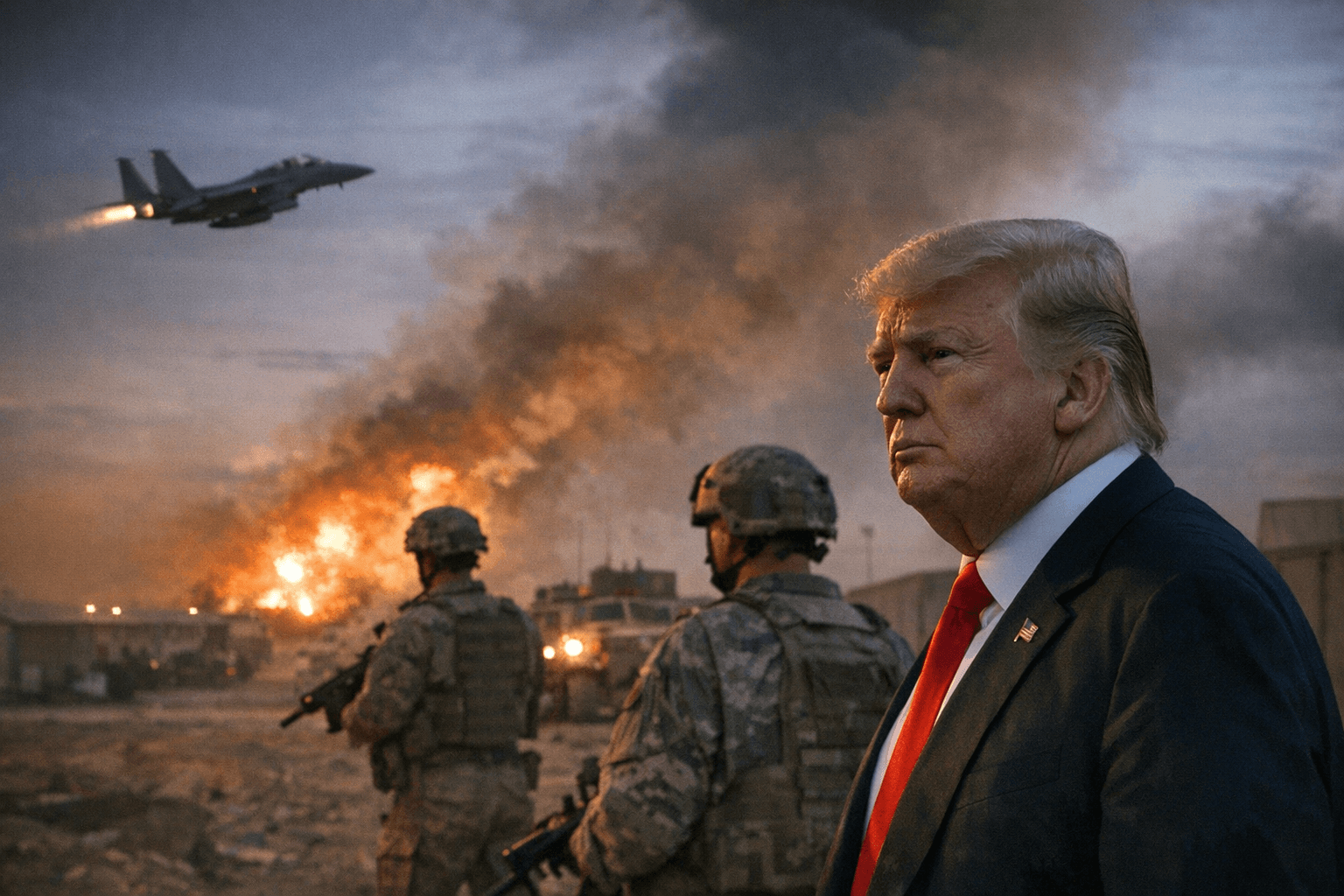
Trump also threatened to pull the U.S. out of NATO, a move that would legally require either a two-thirds Senate supermajority or an act of Congress under the National Defense Authorization Act of 2024, according to legal experts, though those constraints "remain far from solid." Some Gulf states, including Saudi Arabia and the United Arab Emirates, have privately urged Washington to press ahead with strikes. But a tanker loaded with oil was hit by an Iranian attack off Dubai this week, a reminder that shipping risk in the region is real and ongoing.
An AP-NORC poll found 6 out of 10 U.S. adults said Trump's actions in Iran had gone too far, a figure recorded before Wednesday's announcement of two to three more weeks of intensified strikes. Iran's civilian economy was already fragile before the war began: inflation exceeded 40% in 2025 and the rial was in sustained decline under sanctions pressure.
Every additional week the Strait of Hormuz stays closed adds strain to an energy market already operating without a safety margin. At $126 per barrel, the cost of "nearly complete" is landing at every American gas pump, and the arithmetic only tightens if the next escalation phase targets Iranian energy infrastructure as threatened.
Sources:
Know something we missed? Have a correction or additional information?
Submit a Tip