Trump says U.S. will soon stop suspected Venezuelan traffickers by land, escalating Caribbean posture
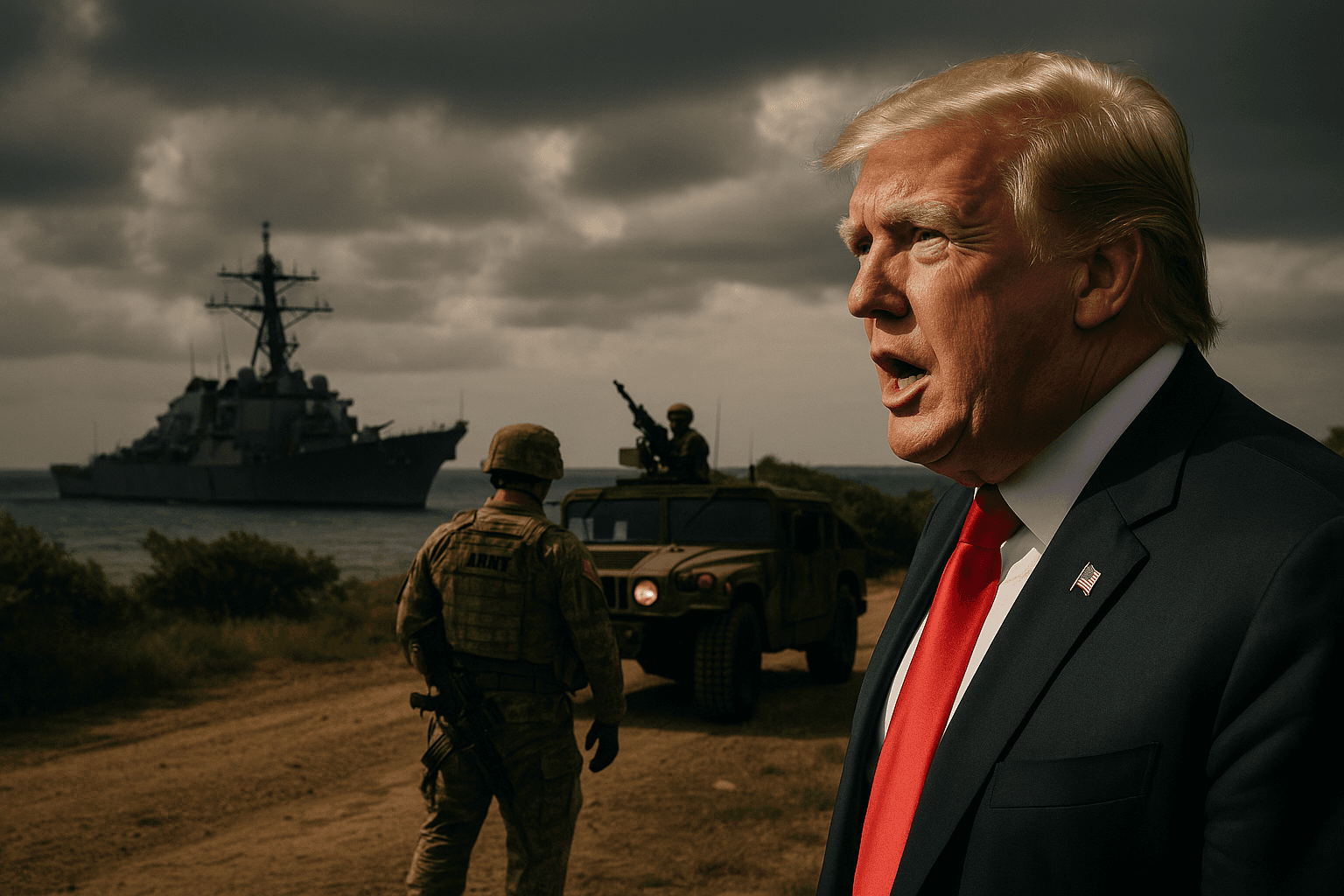
In a Thanksgiving address to U.S. troops, President Donald Trump said Washington would "very soon" expand counter narcotics operations to intercept suspected Venezuelan drug traffickers on land, a shift from recent sea strikes. The declaration comes amid a large U.S. military buildup in the Caribbean and rising diplomatic tensions with Caracas, raising legal and oversight questions about the scope and risks of the campaign.

President Donald Trump told troops in a Thanksgiving video address on November 28 that the United States would "very soon" begin targeting suspected Venezuelan drug traffickers on land, saying smuggling by sea has largely been deterred and that land interdiction is "easier" and would begin shortly. The remarks signaled a substantial escalation of U.S. counter narcotics operations that have concentrated on maritime interdictions in recent months.
Since September, U.S. forces have carried out multiple strikes on vessels the United States said were carrying illicit drugs. Reuters reported that those operations, along with a broader military buildup in the Caribbean, reflected an intensifying campaign to disrupt trafficking routes that U.S. officials say are being exploited to send large quantities of cocaine northward. Caracas has consistently denied government involvement in narcotics trafficking and has condemned U.S. actions, a response that has included diplomatic measures such as bans and suspension of flights.
The announcement crystallizes several policy and institutional challenges for Washington. Expanding operations ashore raises questions about the legal authority for U.S. forces to operate on the territory of a sovereign state without explicit consent. International law and longstanding U.S. statutes limit the circumstances under which military force may be used in another country for law enforcement purposes. The administration will face pressure from Congress to clarify the legal basis for any land based operations, to outline rules of engagement, and to specify whether partner governments in the region have been consulted or invited to cooperate.
Operationally, land interdiction presents different risks from maritime strikes. Ground operations can increase the likelihood of civilian casualties, create opportunities for mission creep, and complicate intelligence requirements. They also raise questions about coordination with regional security and law enforcement partners, including Colombia and other nations that host trafficking networks and migration flows. A more visible U.S. footprint in Venezuela or nearby states could deepen regional instability and prompt retaliatory diplomatic or security measures from Caracas and its international allies.
Domestically, the move is likely to resonate with voters who prioritize border security and combating the drug trade, but it will also galvanize critics who view expanded military operations overseas as a risky escalation that lacks clear congressional authorization. Members of Congress, particularly those on defense and judiciary committees, are positioned to demand briefings and potential oversight hearings to determine whether such operations conform to U.S. law and strategic objectives.
For Venezuelan authorities the announcement compounds an already fraught relationship with Washington. Caracas has used the strikes and the buildup to assert sovereignty claims and to rally domestic support, even as it denies any role in trafficking. The interaction between military measures and diplomatic channels will be critical in the coming days, as policymakers weigh enforcement gains against the prospect of broader confrontation.
As operations shift from sea to land, the United States faces a complex calculus of legal constraints, congressional oversight, regional diplomacy, and operational risk. How the administration plans to manage those trade offs will determine whether the new phase achieves its stated objective of disrupting trafficking without precipitating wider instability.
This article was produced by Prism’s automated news system from verified source data, official records, and press releases, then run through automated quality and moderation checks before publishing. The system is built and supervised by the people who set the standards it runs under. Read our full AI policy.
Did this article answer your question?

