Trump sends US negotiators to Pakistan for Iran talks, warns of strikes
Pakistan has become the unlikely stage for a new Iran channel, as Trump pairs diplomacy with threats to hit power plants and bridges.
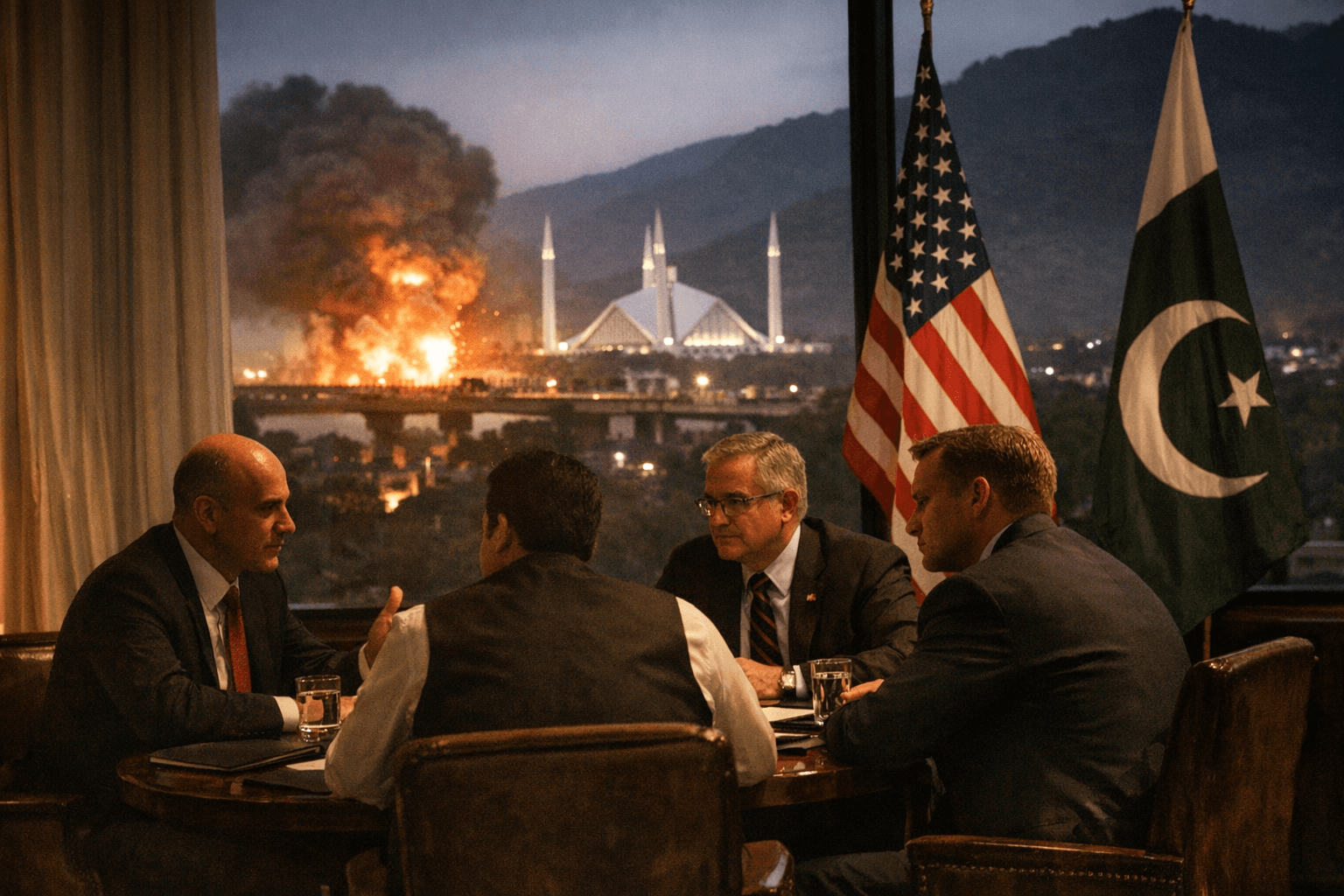
Pakistan’s role in the Iran talks is unusual because Islamabad is not the obvious venue for a direct U.S.-Iran exchange, yet that is precisely what makes it significant. By sending negotiators to Islamabad for a second round of in-person talks and pressing a deal as the ceasefire deadline approaches on Wednesday, Donald Trump has turned Pakistan into a pressure point in a wider regional contest, one that tests whether intermediaries can still shape outcomes in the Persian Gulf.
Trump said the U.S. delegation would arrive in Islamabad Monday evening and warned that if Tehran rejected the deal being offered, the United States would “knock out every single Power Plant, and every single Bridge, in Iran.” The message was unmistakable: Washington is keeping diplomacy open, but only under the shadow of military escalation. Iran had not immediately said it would send a delegation, adding to the sense that the next move may still be made by the intermediaries rather than by the principals.
The first round of talks in Islamabad ran for 21 hours before ending without agreement on April 12. It was the highest-level direct U.S.-Iran engagement since the 1979 Islamic Revolution and the first direct encounter in more than a decade. Iran sent more than 70 people, led by Mohammad Baqer Ghalibaf and Foreign Minister Abbas Araghchi, while Pakistani Prime Minister Shehbaz Sharif met separately with both sides and said he hoped the talks would be a “stepping stone toward durable peace in the region.”
The cast for the next round underlines how many layers now separate Washington and Tehran. Vice President JD Vance was expected to lead the U.S. delegation, with Steve Kushner and Jared Kushner also expected to attend. Iran’s foreign ministry spokesman, Esmaeil Baqaei, said the U.S. blockade of Iranian ports violated the Pakistan-mediated ceasefire and called it “unlawful and criminal.” The issues on the table remain the same: Iran’s nuclear program, sanctions, and control of the Strait of Hormuz.
That strait is already reacting to the crisis. Traffic fell to six transits on Monday, down from 14 on Sunday, 17 on Saturday and 13 on Friday, and at least seven ships initially reversed course after the U.S. blockade announcement. More than 10,000 U.S. sailors, Marines and airmen were involved in the blockade effort. The diplomacy in Islamabad may still be a tactical workaround, but it also shows how much leverage Pakistan can gain when the world’s most dangerous disputes need a neutral room, a deadline and a broker who can keep both sides talking.
This article was produced by Prism’s automated news system from verified source data, official records, and press releases, then run through automated quality and moderation checks before publishing. The system is built and supervised by the people who set the standards it runs under. Read our full AI policy.
Did this article answer your question?