Iran’s blackout deepens, critics warn of tiered internet access
Access is trickling back for favored users while most Iranians remain cut off, deepening fears that a whitelisted internet is becoming a tool of political control.
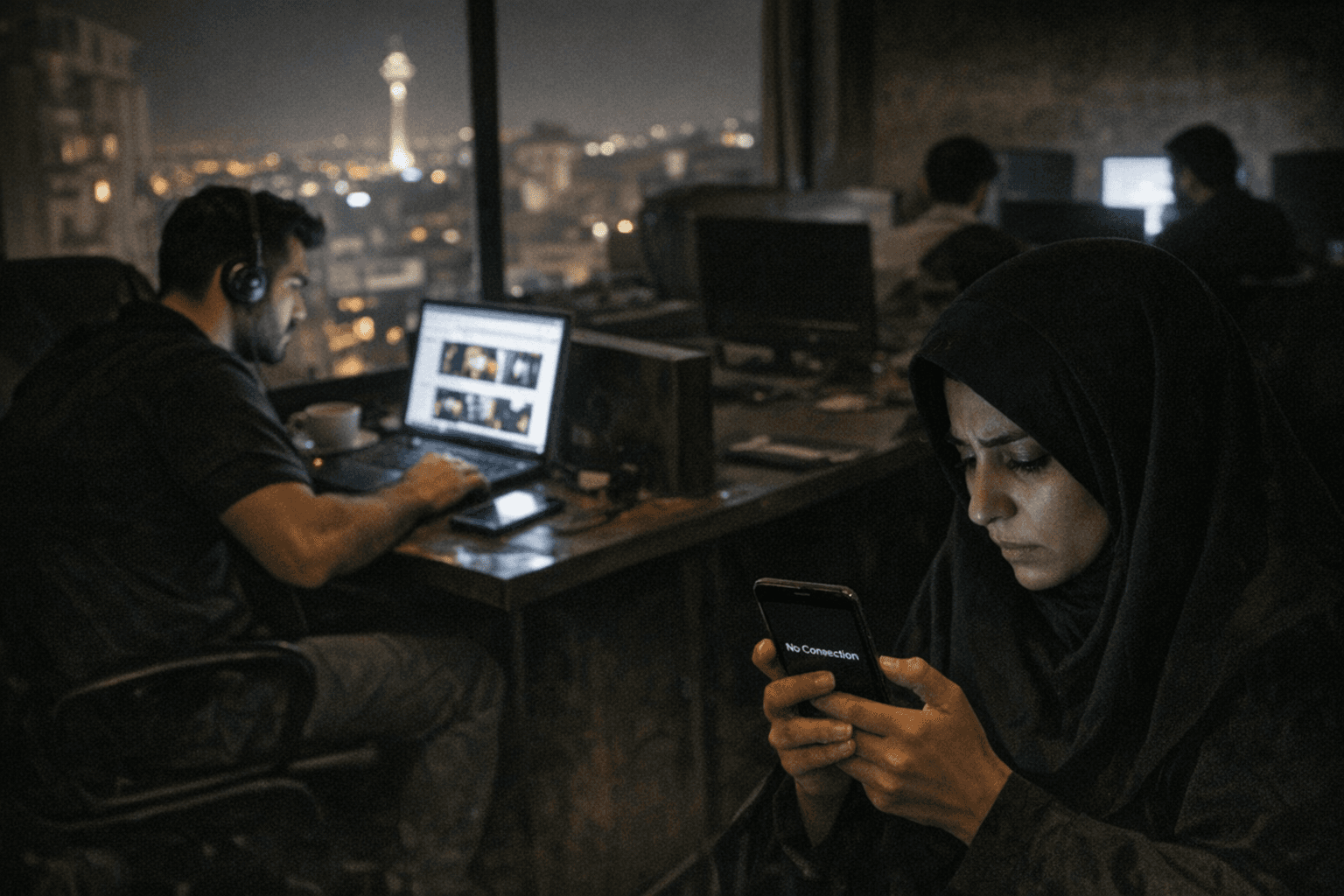
Iran’s internet blackout has begun to look less like a blanket shutdown than a sorting mechanism, with access returning unevenly to some users and platforms while millions remain cut off. By April 18, NetBlocks said the disruption had entered its 50th day and had stretched beyond 1,176 hours, reinforcing fears that Tehran is building a tiered internet that rewards the politically useful and the economically privileged.
The blackout began on January 8, 2026, as nationwide protests spread over mounting economic pressure, currency devaluation and rising living costs. The shutdown hit more than daily life. NetBlocks said it continued to damage livelihoods and human rights, while the Committee to Protect Journalists said it severely restricted journalists’ ability to verify arrests, injuries and deaths on the ground. When access is rationed, independent reporting becomes harder, and so does accountability for what happens during unrest.
The current restrictions fit a wider pattern. Freedom House said internet freedom in Iran remained highly restricted in 2025 and that authorities continued pushing users toward a domestic version of the internet that is easier to control. It also documented a near-total nationwide shutdown in June 2025 after Israeli airstrikes in Iran, a blackout the communications ministry later described as temporary and tied to “special conditions.” Reuters and other reports described that episode as a nationwide internet and telephone restriction justified by security concerns and cyberattack risks.
That June shutdown now looks like a rehearsal for the present crisis. Independent researchers later described it as a more sophisticated stealth blackout, one that preserved the appearance of connectivity for outside observers while cutting most Iranians off from the global web. The logic is political as much as technical: selective access can keep state-friendly channels open, preserve the flow of approved messaging and leave ordinary users navigating a narrower, more monitored network.
Iranian officials have sometimes said the quiet part out loud. In March 2026, government spokeswoman Fatemeh Mohajerani said opportunities would be provided for those who could “carry our voice further,” and Foreign Minister Abbas Araghchi later defended his own access by saying he was “the voice of Iranians.” Mahsa Alimardani of the Carnegie Endowment for International Peace has argued that such comments show connectivity being treated as a political instrument, not just a censorship tool.
The danger is not only isolation, but inequality. When some people regain access and others do not, the blackout becomes a status marker, widening the divide between those close to power and those left in the dark. Iran has used that tactic before. During the November 2019 protests, authorities cut the internet nationwide; Amnesty International said at least 323 people were killed in five days, while Reuters has reported estimates of around 1,500 deaths in the crackdown. The current shutdown raises the same warning: in Iran, control over connectivity remains control over the story, the economy and the street.
This article was produced by Prism’s automated news system from verified source data, official records, and press releases, then run through automated quality and moderation checks before publishing. The system is built and supervised by the people who set the standards it runs under. Read our full AI policy.
Did this article answer your question?