Trump tariffs on China backfire, Beijing gains leverage in rare earth standoff
Trump’s tariff war left Beijing with a rare earth lever, and the Beijing summit is testing whether Washington now faces China as a peer.

Donald Trump’s tariff offensive on China ended up strengthening the leverage Beijing could bring to the table. As Trump and Xi Jinping met in Beijing on May 14-15, 2026, the first visit by a U.S. president to China since November 2017, the sides were weighing whether to extend a fragile truce on Chinese rare earth export curbs that helped force Washington into negotiations.
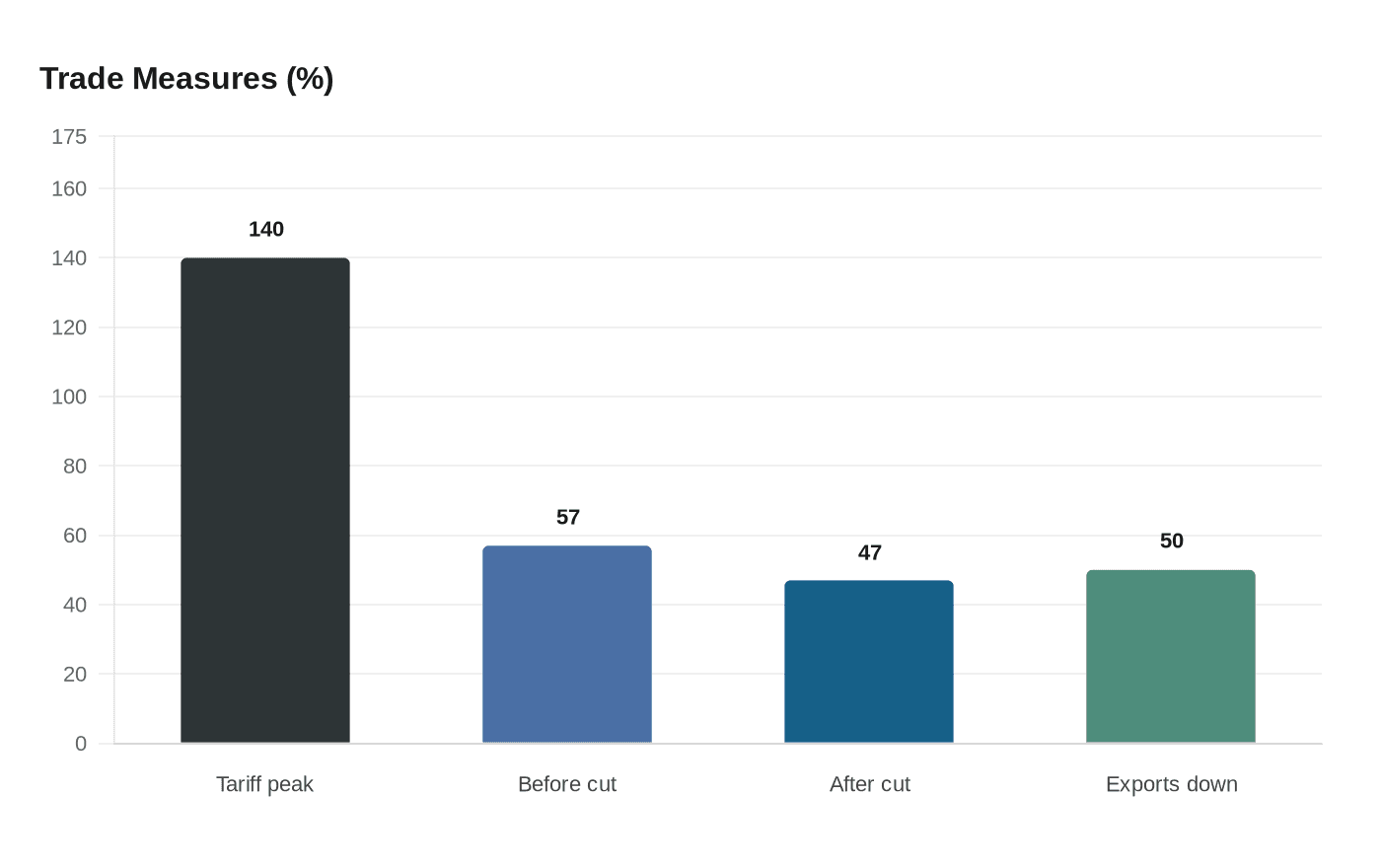
Rush Doshi, now a senior fellow at the Council on Foreign Relations, argued that Trump pushed tariffs past 140% before Xi used China’s control over critical minerals to lock in a détente. The result, Doshi said, is a relationship in which China can meet the United States as a peer rather than a subordinate power. That shift matters because the rare earth controls are not symbolic. Reuters reported they were imposed in retaliation for Trump’s Liberation Day tariffs and have squeezed supplies of yttrium, dysprosium and terbium, with exports of those specialty materials still about 50% below pre-control levels.
The pressure reaches deep into defense, manufacturing, aerospace, semiconductor and electric-vehicle supply chains. China’s ability to throttle those inputs gave Beijing a bargaining chip that tariffs on their own failed to break. Instead of bending China, the trade war pushed both sides toward an uneasy balance, with Washington forced to consider a summit deal that preserves access to materials American industry still needs.
The optics of the diplomacy underscored that change. In Busan, South Korea, in October 2025, Trump cut tariffs on Chinese imports from 57% to 47% after talks that lasted about 1 hour and 45 minutes. Now the White House and Chinese officials were discussing possible Chinese purchases of Boeing aircraft and larger imports of U.S. agriculture and energy. Reuters also reported that both sides were examining a possible revival of U.S. oil and liquefied natural gas sales, which were worth $8.4 billion in 2024 before tariffs largely shut the trade down.
For Trump, the summit offered a chance to show toughness without a clean break. For Xi, it offered something more durable: the image of a leader who had absorbed the tariff and still arrived able to negotiate on roughly equal footing. Doshi’s broader case is that the trade war did not break China. It rearranged the contest, leaving Beijing more confident, more diversified in its trade ties and still able to turn supply-chain control into strategic power.
This article was produced by Prism’s automated news system from verified source data, official records, and press releases, then run through automated quality and moderation checks before publishing. The system is built and supervised by the people who set the standards it runs under. Read our full AI policy.
Did this article answer your question?