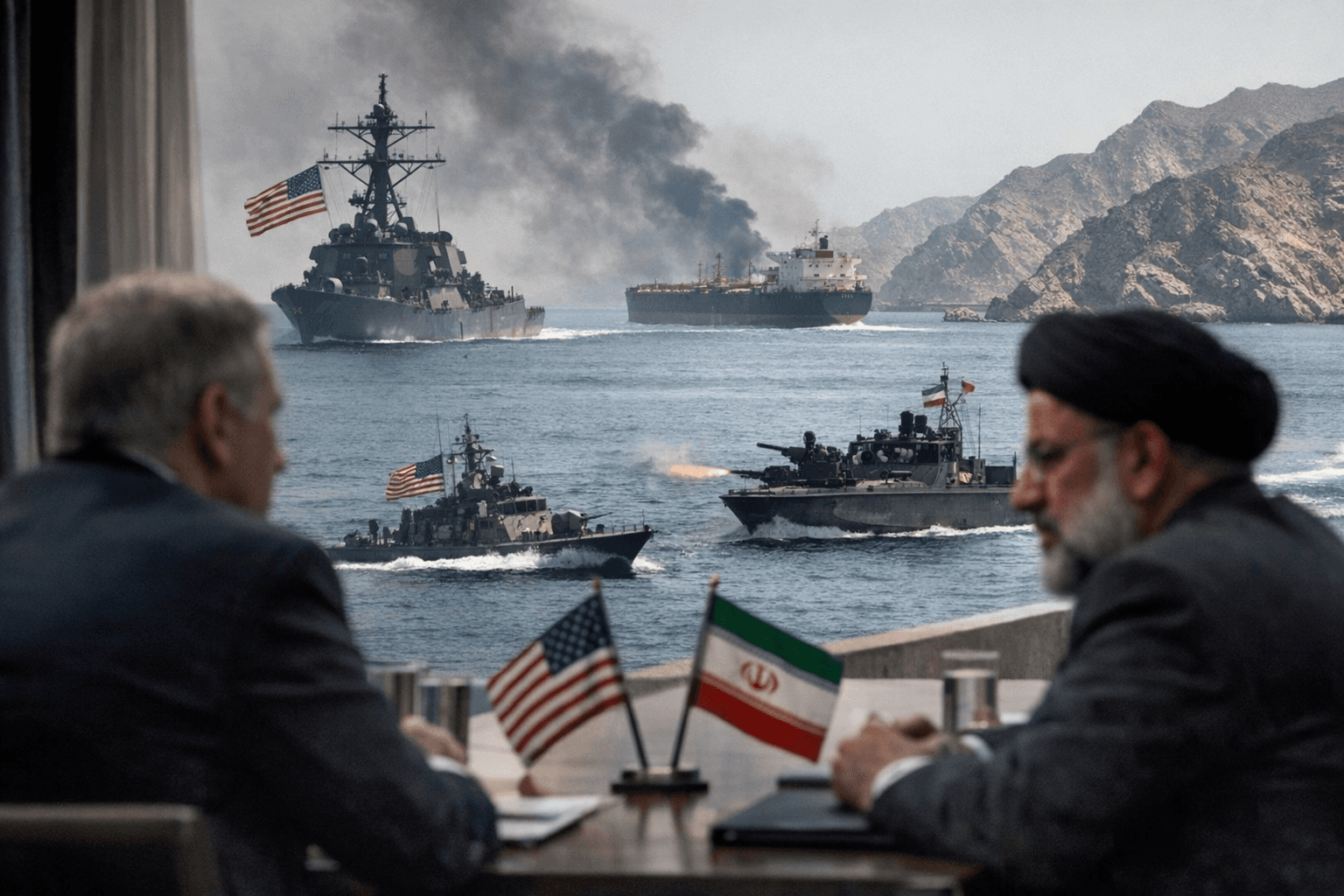
Trump threatens Hormuz blockade, warns Iran as ceasefire talks fail
Trump’s Hormuz threat turned quickly into a test of force, law and markets. As ceasefire talks collapsed, U.S. ships moved toward the strait and oil traders braced for a wider war.
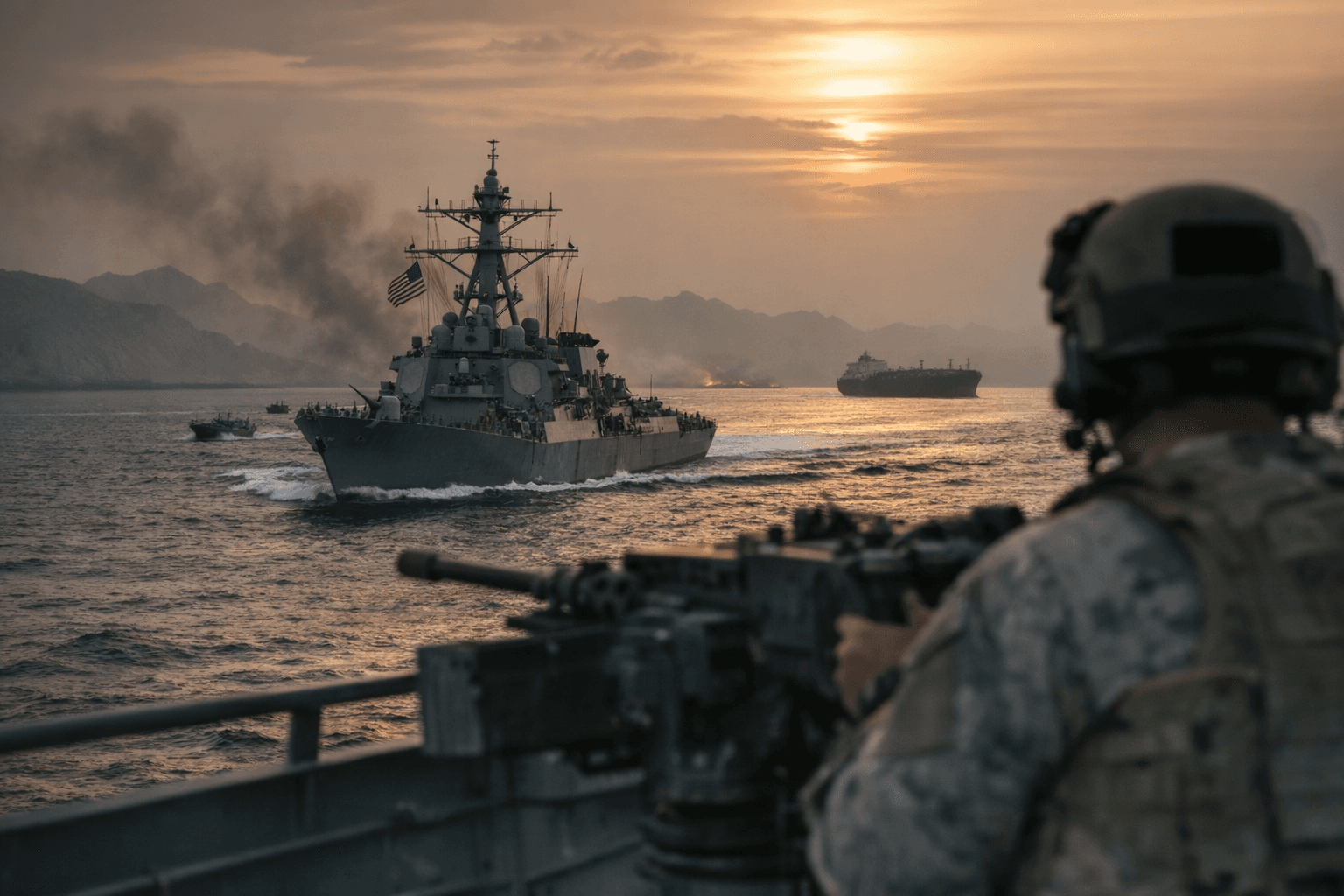
Trump’s warning about Iran moved from social media into naval planning as ceasefire talks in Islamabad collapsed and U.S. forces began preparing to clear mines in the Strait of Hormuz. The chokepoint carries about 20 million barrels of oil a day, roughly one-fifth of global petroleum liquids consumption, so any effort to block it would hit energy markets almost immediately.
The escalation began with Trump’s April 7 Truth Social post, in which he wrote, “A whole civilization will die tonight, never to be brought back again.” Within hours, the White House had tied a temporary ceasefire to Iranian compliance, including reopening the strait. By April 11 and 12, Vice President J.D. Vance was in Islamabad leading direct talks with Iranian officials, but after roughly 21 hours he said no agreement had been reached.
While the diplomacy stalled, U.S. Central Command said it had “begun setting conditions” for mine clearance in the strait. The USS Frank E. Petersen and USS Michael Murphy transited the waterway as part of the mission, a sign that Washington was no longer speaking only in hypothetical terms. Iranian state media pushed back hard, warning that Tehran would respond if foreign warships entered without permission.
A true blockade would be far more consequential than the rhetoric suggests. Under the law of naval warfare, a blockade must be declared, notified to neutral states and made effective; it also cannot deliberately cut civilians off from essential goods in a way that violates humanitarian law. That makes a Hormuz blockade legally fraught even before a shot is fired. It would also carry a substantial risk of being treated as an act of war if imposed outside a recognized armed conflict.
The military precedent is sobering. When Washington protected Gulf shipping in the 1980s, it did so through major escort operations such as Operation Earnest Will and through direct strikes in Operation Praying Mantis after mines damaged the USS Samuel B. Roberts. A modern blockade or sustained reopening campaign would likely require similarly large assets, clear rules of engagement and a willingness to absorb Iranian retaliation.
Markets have already shown how quickly the strait can move prices. Brent and WTI swung sharply around the ceasefire announcement, with reports of roughly 15 percent movement, and the Energy Information Administration warned that any disruption in Hormuz could tighten supply further. That is the practical consequence of Trump’s threat: not just a political standoff, but the prospect of higher fuel costs, naval confrontation and a war that neither side can easily control.
At home, the reaction exposed how little consensus exists around the next step. More than 70 Democrats called for Trump’s removal, while most Republicans stayed silent or only cautiously uneasy. Abroad, the U.N. Secretary-General said he was alarmed, and Gulf states watched the maneuvering with obvious concern. The strait remains open for now, but the balance around it has become much more dangerous.
Sources:
Know something we missed? Have a correction or additional information?
Submit a Tip