Trump Threatens Massive Strikes on Bridges, Power Plants by Tuesday
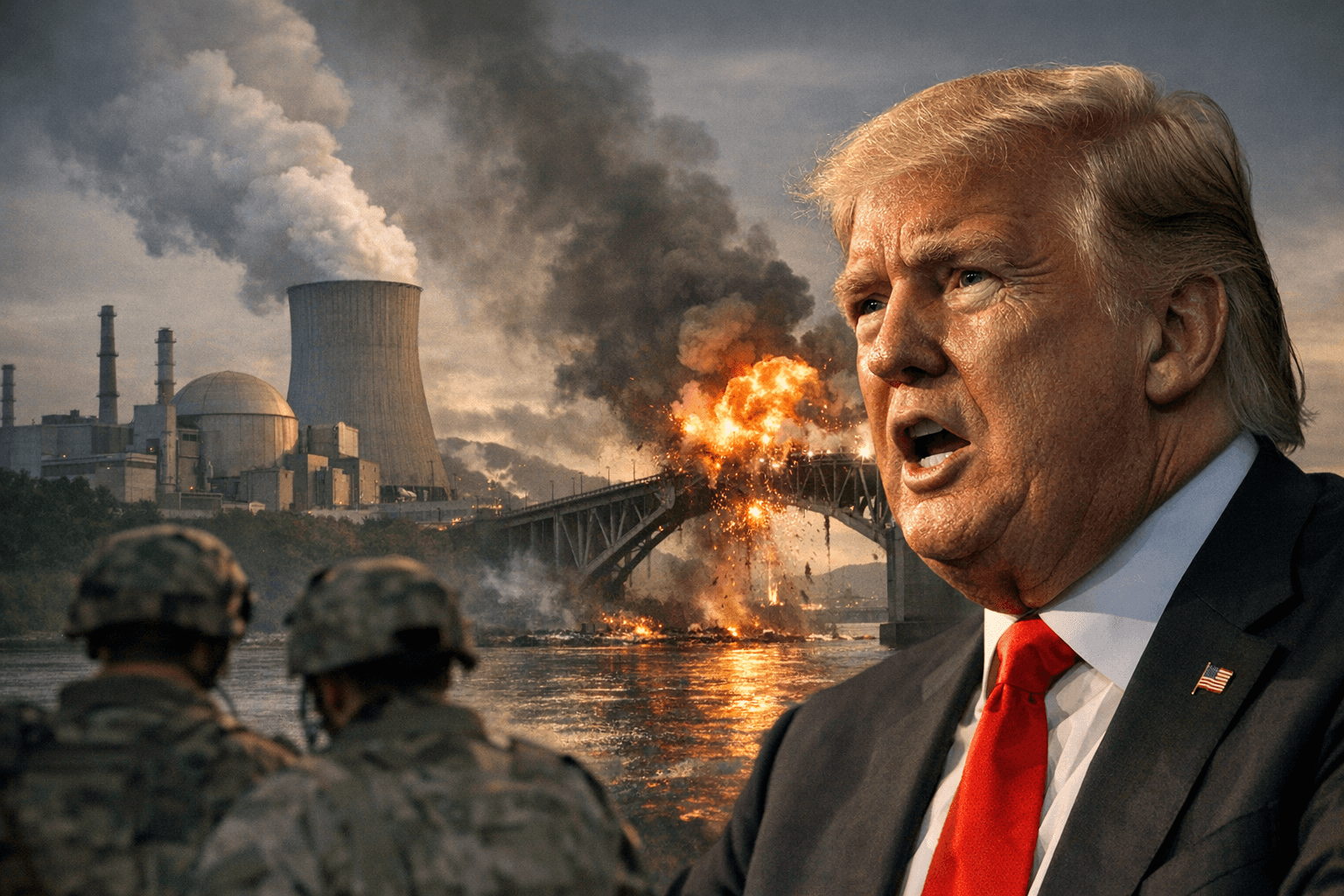
Trump set an 8 p.m. Tuesday deadline to destroy every bridge and power plant in Iran unless Tehran reopens the Strait of Hormuz, as legal experts warn the strikes could constitute war crimes.
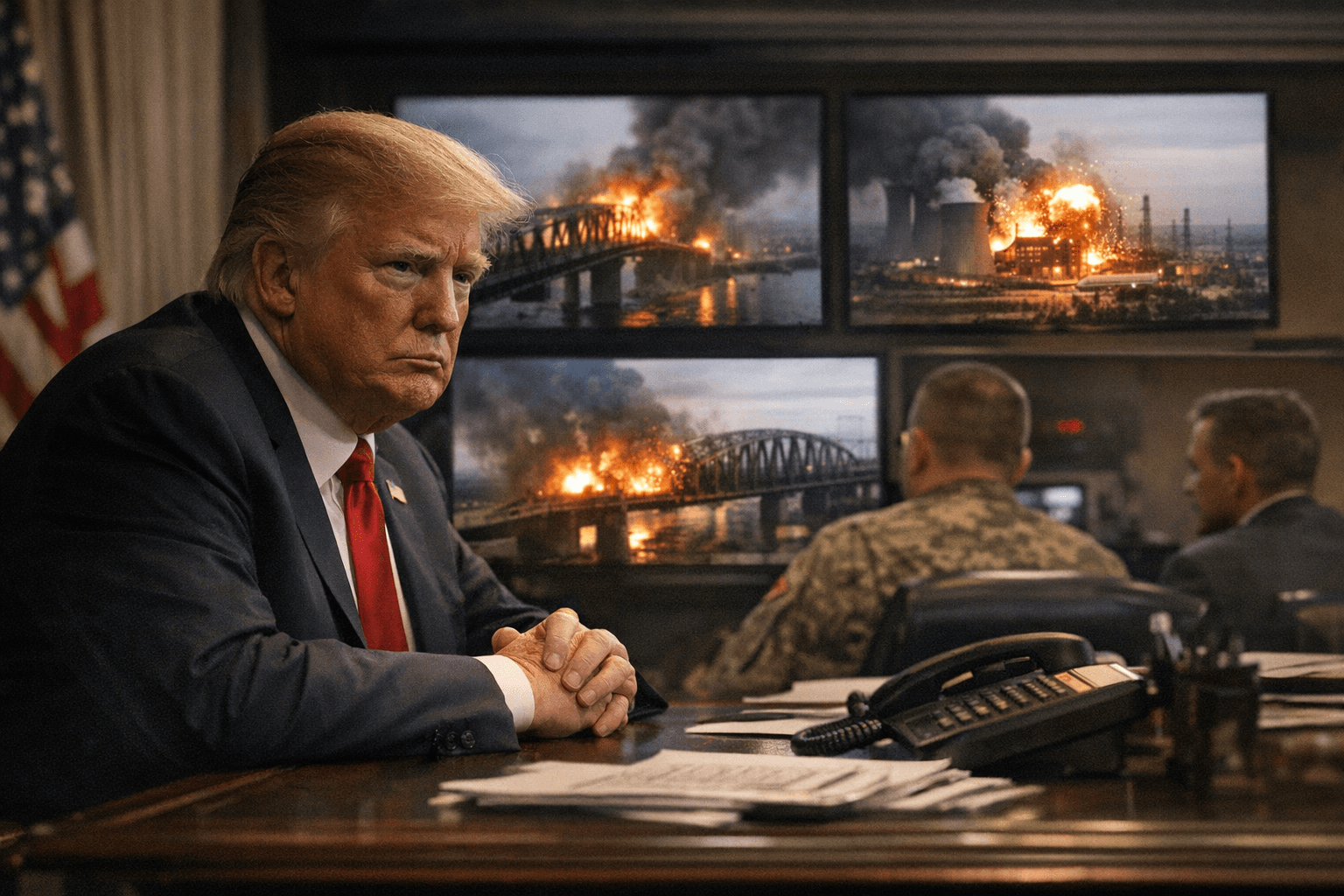
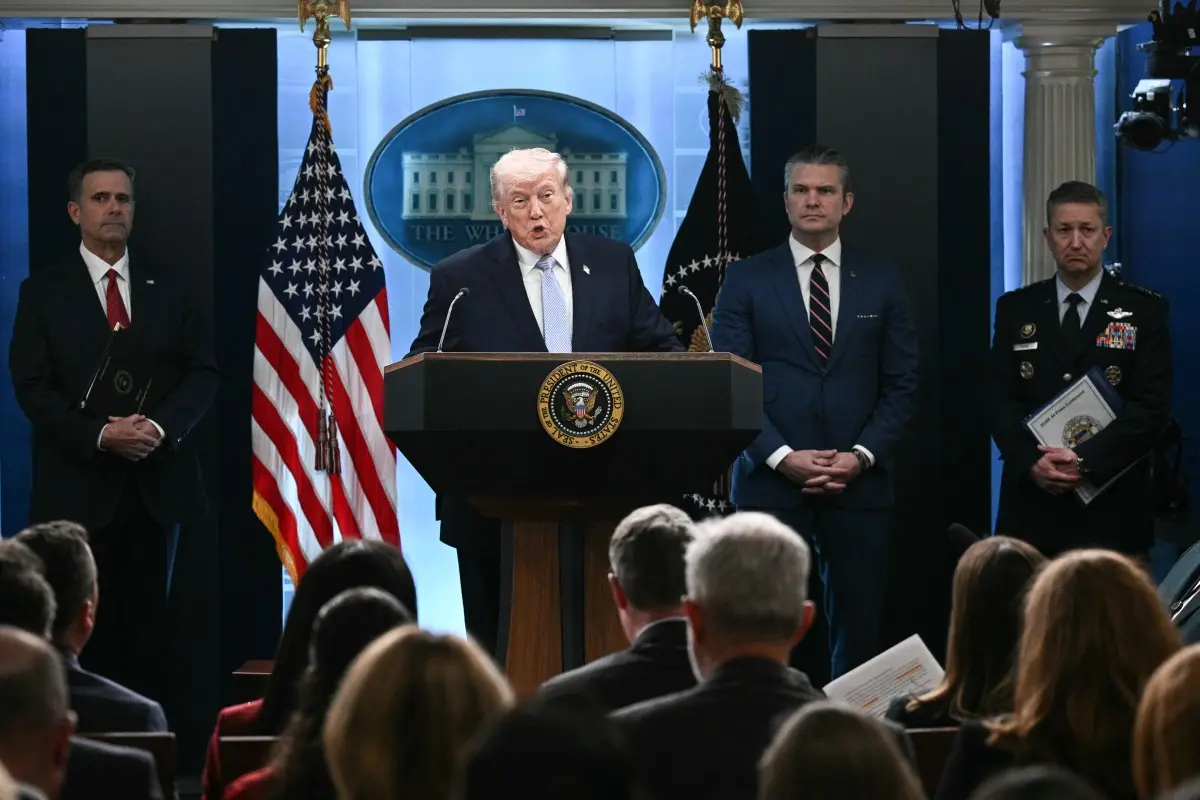
President Trump stood before reporters Monday and described a four-hour air campaign that would leave Iran without power or intact bridges, raising an ultimatum with no precedent in recent American presidential history and pushing the United States to the edge of a threshold that international law experts say cannot be crossed without consequence.
"Every bridge in Iran will be decimated by 12 o'clock tomorrow night, where every power plant in Iran will be out of business, burning, exploding and never to be used again," Trump told reporters at the White House. The remarks expanded on a Truth Social post from Sunday in which he warned Tehran: "Tuesday will be Power Plant Day, and Bridge Day, all wrapped up in one, in Iran. Open the F***in' Strait, you crazy bastards, or you'll be living in Hell." He has set 8 p.m. Eastern Tuesday, April 7, as the hard deadline for Iran to reopen the Strait of Hormuz to all shipping traffic, saying he has already given Iran enough extensions on an ultimatum that first appeared on March 21.
When asked directly whether he was concerned about committing possible war crimes, Trump said he was "not at all" worried and refused to identify any civilian targets that would be off-limits.
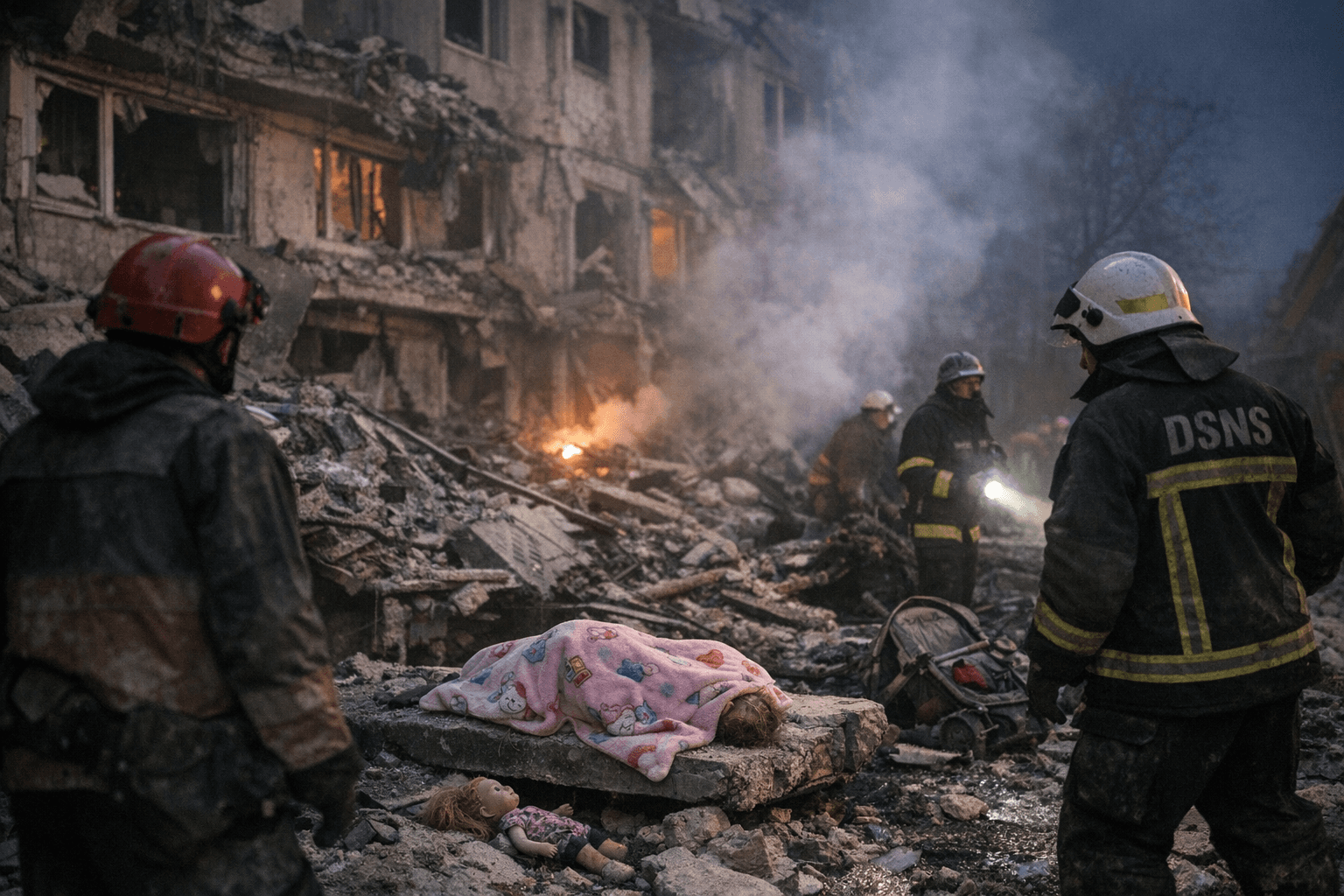
That answer alarmed international legal scholars. Under international humanitarian law, attacks on objects indispensable to the survival of the civilian population are explicitly prohibited, and legal experts told CNN that strikes on power facilities would likely constitute a war crime. The destruction of Iran's electrical grid would cascade into hospital blackouts, collapsed water treatment systems and disrupted food supply chains across a country of nearly 90 million people. The White House maintained Monday that the U.S. military would act in accordance with the law, but offered no specifics reconciling that position with the president's stated targets. Agnes Callamard, secretary general of Amnesty International, called Trump's original Sunday post "revolting."
The diplomatic off-ramp narrowed sharply on Monday when Iran rejected a 45-day ceasefire proposal submitted by Pakistan and countered with a demand for a permanent end to the war. Trump described the proposal as "significant" but "not good enough." Iran's foreign ministry characterized the entire negotiating environment as "incompatible with ultimatums and threats to commit war crimes." Oman's Foreign Ministry said experts from both sides had met and presented proposals "that will be studied," though no agreement was announced. The European Commission's president, Antonio Costa, warned that "the Iranian civilian population would also be the main victim of a widening of the military campaign" and called escalation incompatible with reaching a ceasefire.
Regional allies are calibrating their exposure carefully. Anwar Gargash, a senior policy adviser to the UAE leadership, told NPR that the Gulf states want the conflict resolved but without "continuous instability in the region." His country, along with Saudi Arabia, Kuwait, Qatar and Iraq, faces direct economic damage from Iran's closure of the strait, through which roughly 20 percent of globally traded oil flows. Shipping traffic through the waterway has collapsed from approximately 150 vessels per day before the conflict to between 10 and 20 ships daily. Iran has also struck Gulf refineries and energy facilities in neighboring countries, and has explicitly threatened to retaliate against Israeli and Gulf Arab infrastructure if the U.S. expands its campaign.
Oil markets edged higher Monday as the deadline approached, with the U.S. West Texas Intermediate May contract rising 0.78 percent. The broader economic toll of the strait closure has already pushed average U.S. gasoline prices to $4 per gallon, a direct result of a disruption that has cut off the Persian Gulf's oil export route since Iran formally declared the strait closed on March 4. Brent crude surged 10 to 13 percent to around $80 to $82 per barrel in the days immediately following the February 28 start of the conflict.
Trump said "the entire country can be taken out in one night, and that night might be tomorrow night." Whether that threat closes or destroys whatever negotiating channel remains will become clear by 8 p.m. Tuesday, a deadline he insists is final.
Sources:
Know something we missed? Have a correction or additional information?
Submit a Tip