Trump to order federal research into psychedelics for PTSD treatment
Trump is poised to push psychedelics into federal trials, but ibogaine would stay Schedule I, keeping the shift squarely in research.
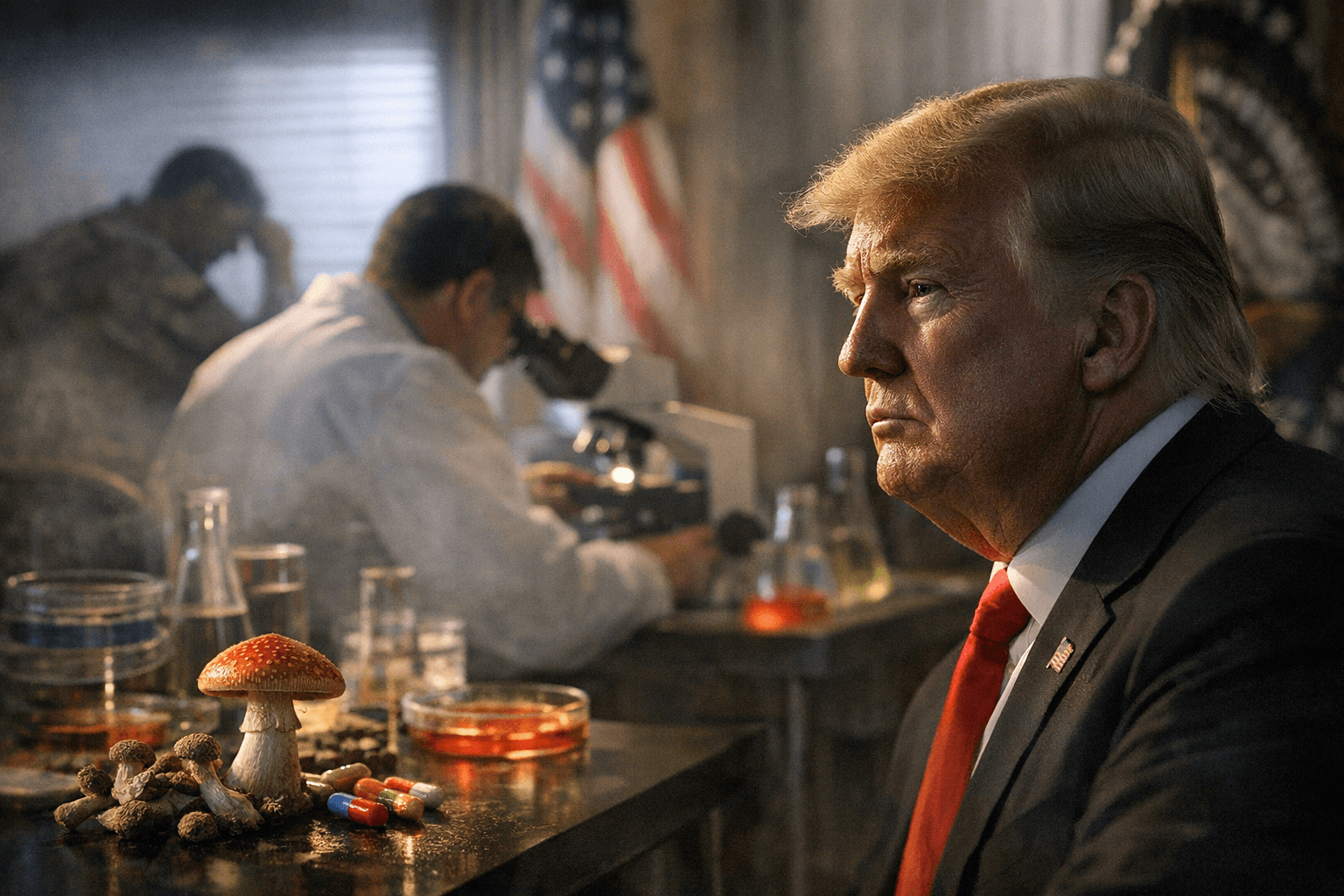
Donald Trump is preparing to direct federal agencies to expand research on psychedelics, with Health Secretary Robert F. Kennedy Jr. championing the move. The order is expected to focus on psilocybin and ibogaine, and to center on PTSD, depression, addiction and traumatic brain injury. It would not amount to broad legalization. Ibogaine would remain a Schedule I drug for now, which makes the policy a federal research push rather than an immediate change in medical access.
In practice, that means the government would be pressing deeper into the machinery of clinical evidence, trial design and federal oversight. The U.S. Food and Drug Administration issued its first draft guidance on psychedelic-drug clinical investigations in June 2023, laying out general considerations for sponsors developing these drugs for medical conditions. The Department of Veterans Affairs followed in 2024 with its first VA-funded psychedelic-assisted therapy study for veterans since the 1960s, a study of MDMA-assisted therapy for PTSD and alcohol use disorder. The VA’s own PTSD research center says the most studied psychedelics to date are psilocybin and MDMA, underscoring how selective and supervised the evidence base still is.
The strongest near-term pressure is coming from veterans’ advocates, especially around PTSD and traumatic brain injury. Some veterans have traveled to Mexico and the Caribbean to seek ibogaine in clinics that operate outside the U.S. system, while Veterans Exploring Treatment Solutions has pushed for access and research at the state and federal levels. Rick Perry and W. Bryan Hubbard have also promoted the drug publicly. Supporters argue the drug deserves more study because early reviews and newer research suggest possible benefits for addiction, depression and PTSD. But the safety concerns are serious: ibogaine has been linked to QT prolongation, ventricular arrhythmias and cardiac arrest, which is why researchers emphasize cardiac screening and closely monitored settings.
Texas has already moved to make its own bet. State leaders announced in April 2026 that Texas would fully fund a $100 million ibogaine research effort, a sign that the politics of psychedelic medicine are spreading beyond Washington and into state budgets. That momentum gives Trump’s move a sharper meaning: the federal government is no longer treating psychedelics only as a relic of the drug war, but as a possible medical frontier. The test now is whether the evidence can keep pace with the enthusiasm.
Sources:
Know something we missed? Have a correction or additional information?
Submit a Tip