Trump touts Intel stake as Apple partnership lifts shares
Trump tied Intel’s latest rally to a tentative Apple chip deal, while Washington’s 9.9% stake in the company swelled to an estimated $60 billion.

Donald Trump used a social media post to turn Intel into both a market story and a political one, saying the U.S. government’s 10% stake in the chipmaker was now worth $60 billion and linking that paper gain to a new Apple partnership. Intel shares jumped about 6.5% in premarket trading, while CNBC said the stock was up about 7% and the company’s market value had reached about $608.7 billion after a huge rally over the past year.
The Apple deal is the more consequential part of the announcement. Trump said Apple had agreed to work with Intel to design and build chips in the United States, a move that would give Intel a major customer for its foundry business and help Apple reduce its heavy dependence on TSMC. Reuters reported earlier that Intel had reached a preliminary deal to make some chips for Apple after more than a year of discussions, and Intel said earlier this week that its 18A manufacturing technology had entered initial production.
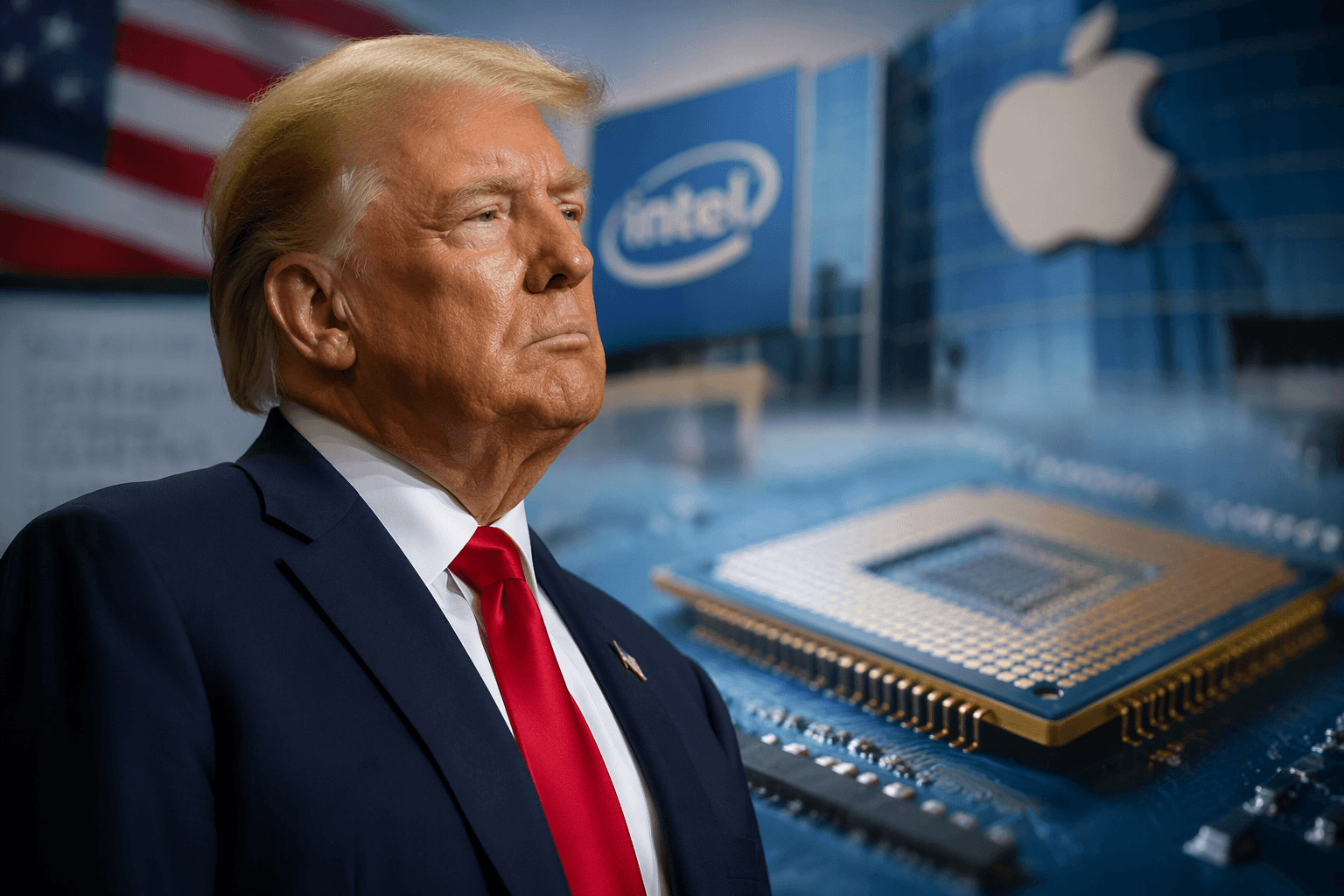
The government’s position in Intel was created last year through an unconventional arrangement that converted federal support into ownership. Washington took a 9.9% stake for $8.9 billion, buying 433.3 million shares at $20.47 each, funded by $5.7 billion in unpaid CHIPS Act grants and $3.2 billion from the Secure Enclave program. Trump said that stake had already been worth more than $50 billion eight months earlier, underscoring how sharply Intel’s share price has moved.
That rise also highlights the incentive shift created by the deal. The administration no longer just subsidizes semiconductor capacity; it now has a direct equity interest in Intel’s success, which ties government policy more closely to stock-market performance. Supporters frame that as a way to rebuild U.S. manufacturing and reduce reliance on China in strategic supply chains. Critics see a more unusual model, one that gives Washington a larger role in corporate affairs and raises the stakes for every policy move.
The politics around Intel have been just as sharp as the market reaction. Trump previously urged Intel chief executive Lip-Bu Tan to resign over alleged conflicts of interest tied to Chinese firms, but the tone improved after a White House meeting. Commerce Secretary Howard Lutnick said Tan struck a deal that was fair to Intel and to the American people. For now, the Apple announcement gives Intel a fresh narrative, but whether it becomes a durable manufacturing strategy or another headline-driven intervention will depend on whether chips are actually built, at scale, in the United States.
This article was produced by Prism’s automated news system from verified source data, official records, and press releases, then run through automated quality and moderation checks before publishing. The system is built and supervised by the people who set the standards it runs under. Read our full AI policy.
Did this article answer your question?