Trump warns of more strikes on Iran as ceasefire frays
Trump said more strikes on Iran were coming as missiles hit U.S. sites in Bahrain, Kuwait and Jordan and the Strait of Hormuz came under renewed pressure.

The immediate question in Washington is how far President Donald Trump is willing to push the campaign against Iran before a limited exchange becomes a wider regional war. After two days of strikes on Iranian facilities and retaliation across the Gulf, the ceasefire that began in April looked increasingly brittle, with the Strait of Hormuz back at the center of the confrontation.
U.S. Central Command launched another round of strikes after Trump said Iran had taken too long to negotiate a deal and would pay the price. The American strikes hit Iranian air-defense, ground-control and surveillance radar sites near the Strait of Hormuz, a chokepoint for global oil shipping that gives the crisis an economic reach far beyond the battlefield. Trump also warned that the United States would continue bombing Iran if Tehran did not accept an interim accord.
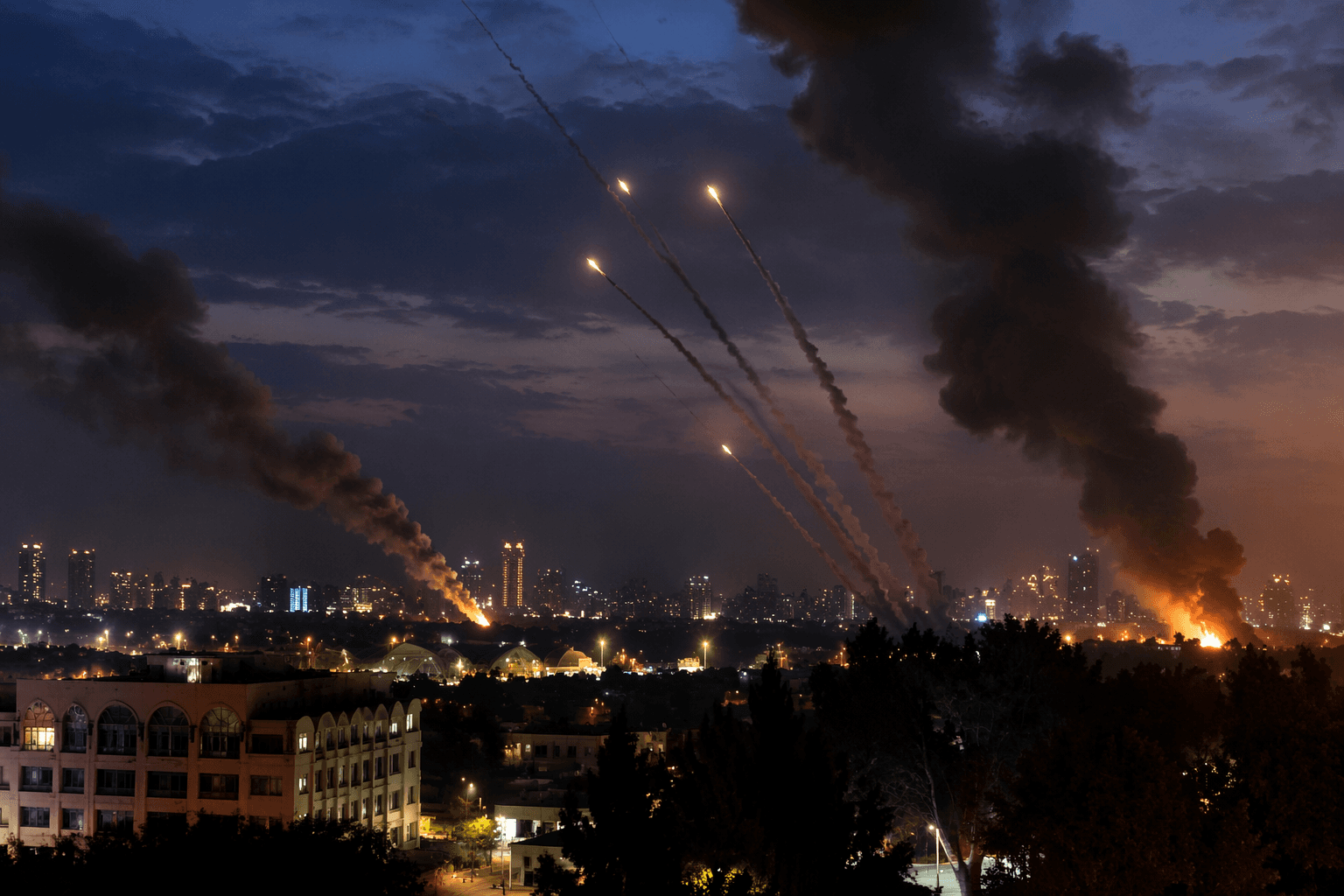
Iran answered with missile and drone attacks aimed at U.S. bases or facilities in Bahrain, Kuwait and Jordan, including sites hosting American troops. The Jordanian military said it intercepted 20 Iranian missiles headed toward an area hosting an American military base. Bahrain and Kuwait activated air-defense systems during the latest exchange, underscoring how quickly the fighting spread across multiple front lines in the Persian Gulf.
The latest escalation also sharpened the political stakes in Washington and in the Gulf. Iran’s foreign ministry warned its neighbors that they had a legal and moral responsibility to prevent U.S. and Israeli strikes, a message aimed squarely at governments that could be pulled deeper into the conflict if the exchanges continue. The clash leaves those states trying to defend their own airspace while avoiding a broader confrontation between Tehran and Washington.

For now, the ceasefire looks less like a pause than a temporary hold on a much larger crisis. With Trump threatening more strikes and Iran hitting back at American-linked sites, the confrontation has moved beyond isolated retaliation and into a cycle that could test U.S. military posture, regional diplomacy and the security of one of the world’s most important shipping lanes.
This article was produced by Prism’s automated news system from verified source data, official records, and press releases, then run through automated quality and moderation checks before publishing. The system is built and supervised by the people who set the standards it runs under. Read our full AI policy.
Know something we missed? Have a correction or additional information?
Submit a Tip