Trump-Xi meeting tests whether AI boom can outlast trade tensions
Investors want Trump and Xi to leave AI off the trade-war menu, because chip access and cloud spending now matter more than tariff headlines.
The biggest economic test in the Trump-Xi meeting is whether the AI boom can keep running while Washington and Beijing keep their trade fight contained. Investors are watching for any signal that the United States might ease chip export restrictions, because that decision would ripple through semiconductor makers, cloud builders and the pace at which American companies deploy AI systems.
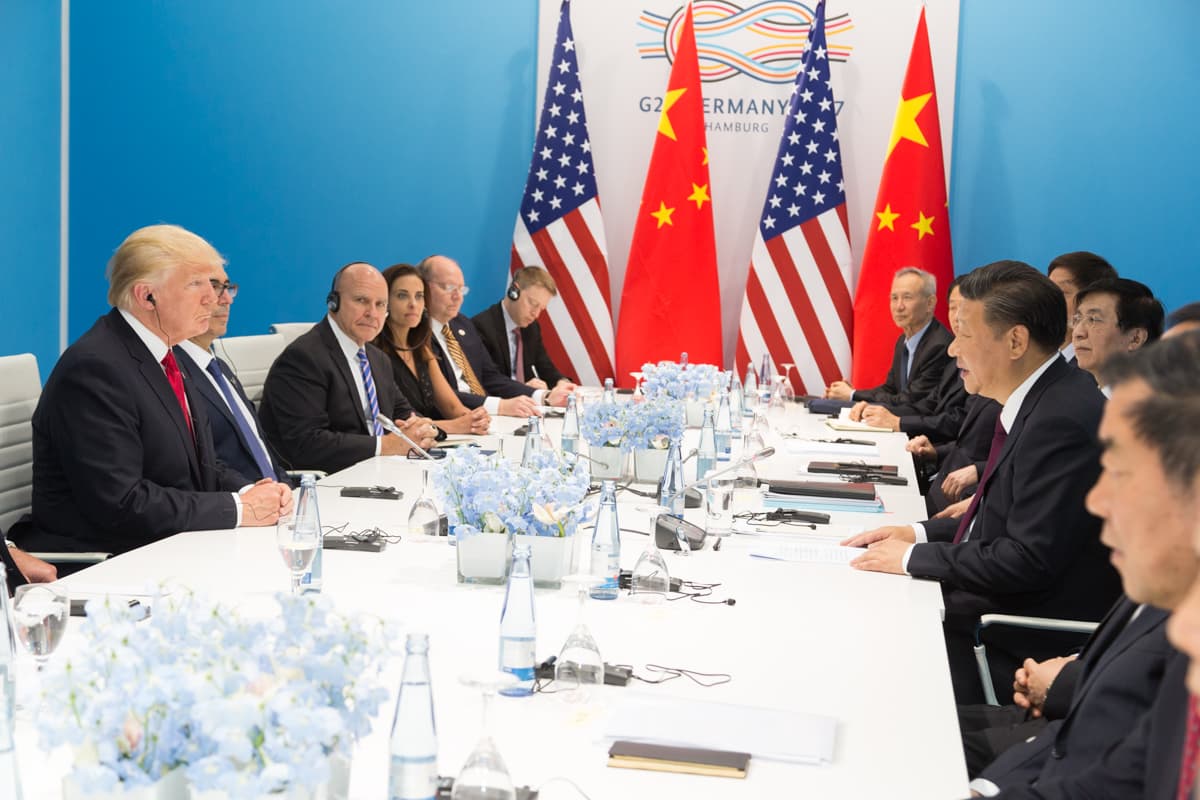
Donald Trump and Xi Jinping are set to discuss Iran, Taiwan, artificial intelligence and nuclear weapons as they try to stabilize ties, in their first face-to-face meeting in more than six months. Markets are not betting on a sweeping breakthrough. They are betting on restraint, especially on steps that could choke off chip flows or trigger another round of technology sanctions.
Chinese markets have already started to price in that narrower, more practical view of the relationship. The Shanghai Composite closed at 4,225.02 on May 12, an 11-year high, while the CSI 300 and ChiNext also climbed sharply. The yuan has risen for a year to about 6.79 per dollar, a three-year high, and was trading near that level on Tuesday. That strength suggests investors are treating the currency, and not just trade headlines, as a barometer of whether AI-related exports and supply chains can keep moving.
The policy backdrop is still restrictive. The U.S. Commerce Department’s Bureau of Industry and Security said in a May 13, 2025 policy statement that access to advanced computing ICs and related commodities used to train AI models may require export authorization. A Jan. 15, 2025 Federal Register rule tightened controls on advanced computing ICs and certain AI model weights. BIS later said chips such as Nvidia’s H200 and AMD’s MI325X would be reviewed case by case under security requirements. That makes chip policy one of the most obvious bargaining chips in any détente.
China’s own AI buildout is helping explain why markets have been steadier than in earlier trade flareups. Chinese domestic AI chips accounted for nearly 41% of China’s market in 2025, up from the period before restrictions tightened in 2023, when Nvidia held more than 90% of the market. Investors are now looking past the symbolism of a summit and toward the practical guardrails: keep tariffs from escalating, keep chip policy from tightening further, and stop the Iran conflict from spilling into a new technology crackdown.
That is why the summit matters beyond diplomacy. If Trump and Xi preserve room for AI investment, the rally in Chinese shares, the resilience in the yuan and the flow of semiconductor orders can continue. If they do not, the market’s newest growth story could become another casualty of the broader U.S.-China trade fight.
Know something we missed? Have a correction or additional information?
Submit a Tip