Trump-Xi Meeting Yields Fragile Truce as Trade Tensions Persist
Trump and Xi left Busan with soybean, rare-earth and fentanyl promises, but the real test is whether the fragile truce survives the next tariff fight.

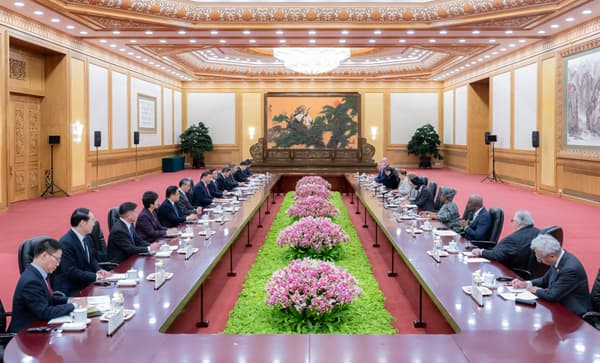
Donald Trump and Xi Jinping left Busan with a short list of concrete promises and a longer list of unresolved fights. Their October 30, 2025, meeting in South Korea was their first face-to-face encounter in six years and lasted about 100 minutes to 1 hour and 45 minutes, far shorter than Trump’s earlier expectation of three to four hours.
The clearest deliverables were commercial. Trump said China agreed to buy large amounts of soybeans, sorghum and other farm products, continue the flow of rare earths, critical minerals and magnets, and begin the process of purchasing American energy, including a possible Alaska oil and gas deal. He also said Beijing would work with Washington to stop fentanyl flows. Those are the kinds of claims that can be measured, or exposed, in the months ahead: by export volumes, by the pace of energy talks, and by whether the fentanyl crisis shows any real decline at U.S. ports and in American communities.
Trump framed the outcome as a success, calling it a “truly great meeting.” Bonnie Glaser, who leads the German Marshall Fund’s Indo-Pacific Program and has worked on Asia policy for more than three decades, put the result more cautiously, describing it as a “fragile truce.” That is the central question now. A meeting can lower the temperature for a moment, but success will depend on whether the two governments keep trade moving without immediately reaching for leverage again.
That leverage has been plain throughout the dispute. Tariffs, export controls, port fees, visa restrictions, sanctions and supply-chain pressure have all figured in the U.S.-China conflict, and Brookings scholars said the talks amounted to another momentary de-escalation rather than a permanent reset. Beijing has already used rare-earth export controls as a bargaining chip after Washington expanded export-control pressure, a reminder that the most important test of the Busan meeting may be whether each side holds back from its next escalation.
The timing made the stakes sharper. Trump announced before meeting Xi that he had ordered the Pentagon to resume nuclear weapons testing immediately, while both leaders still projected calm in public. That contrast captured the state of the relationship: stable enough for a summit, tense enough that any breakthrough could be reversed by the next tariff move, export restriction or security crisis. For now, Busan produced a truce, not trust, and the durability of that truce will be judged in soybeans shipped, minerals flowing and pressure eased, not in summit choreography.
Know something we missed? Have a correction or additional information?
Submit a Tip