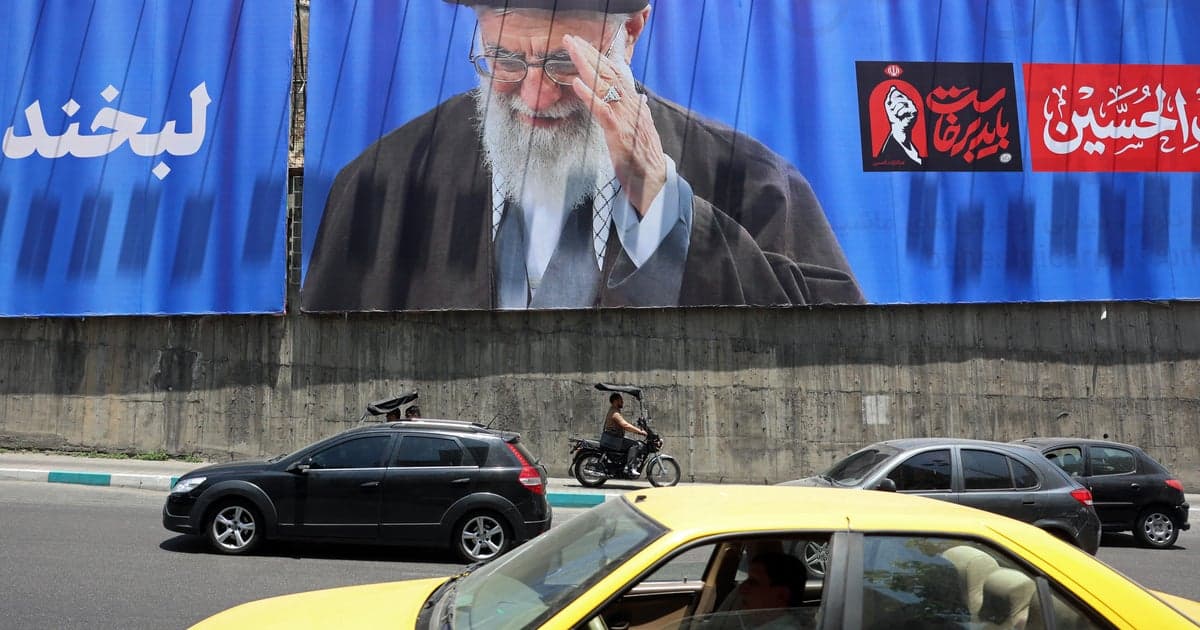
Trump's 2017 Beijing visit offers clues for new summit
Trump’s 2017 Beijing visit was all spectacle and headline deals, but the core disputes never disappeared. That makes it the clearest test of whether the new summit will produce substance.
A summit scorecard starts with what Beijing promised in 2017
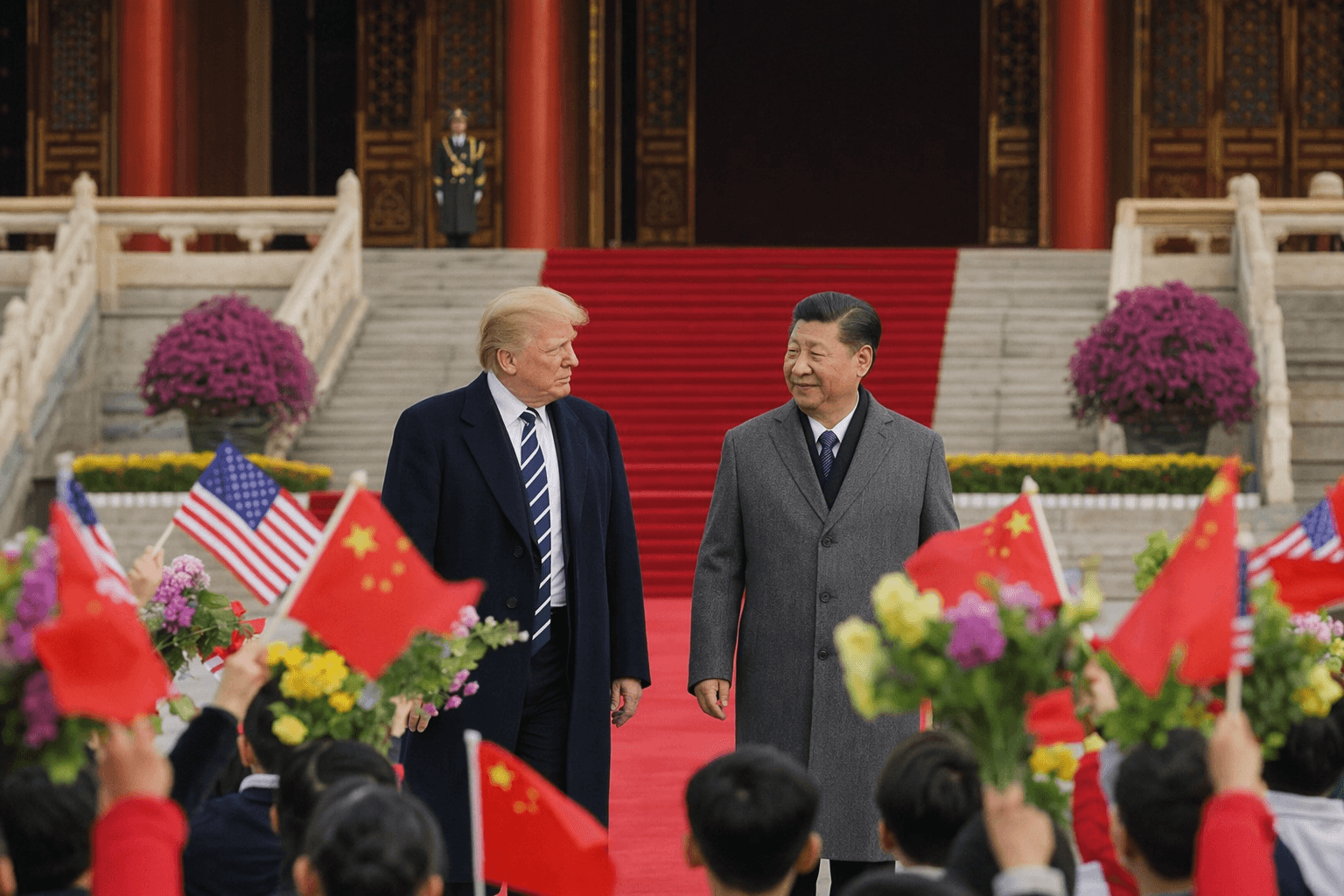
Trump’s 2017 visit to Beijing delivered a rare mix of pageantry, business theater, and strategic reassurance. China hosted President Donald J. Trump from November 8 through 10, 2017, and the White House said he and Xi Jinping used the trip to review progress since their April meeting at Mar-a-Lago and to deepen talks on U.S.-China relations and other regional issues. That makes the trip more than a historical footnote: it is a baseline for judging whether a new summit will move policy or merely reproduce the same ceremonial optics.
The core diplomatic structure was already in place before Trump landed in Beijing. After the April 2017 Mar-a-Lago meeting, the two sides set up four high-level dialogue tracks: diplomatic and security, comprehensive economic, law enforcement and cybersecurity, and social and cultural. Those channels were meant to prepare the ground for Beijing, and they signaled that both governments wanted a process that could contain friction even when agreement on the big issues remained elusive.
What the 2017 visit was supposed to solve
The White House said North Korea’s nuclear program was a major topic in Beijing, and both sides reaffirmed the goal of full, verifiable, and irreversible denuclearization of the Korean Peninsula. That phrasing mattered because it showed how the two governments tried to project alignment even while the underlying security challenge remained unresolved. The U.S. side also said Trump raised concerns about North Korea directly, underscoring that denuclearization was not a side note but one of the meeting’s central tests.
Chinese and U.S. officials described the talks as constructive and productive. Xi said the relationship mattered to world peace, stability, and prosperity, a line that captured Beijing’s effort to frame the summit as a stabilizing moment rather than a clash over trade or security. The U.S. State Department’s translation of the joint statement said the two sides had reached a series of new and important consensus, which reflected the official desire to cast the visit as a breakthrough, even if the practical results would later prove more limited.
The spectacle was the point, and the numbers were enormous
The 2017 trip was widely described as a “state visit-plus,” a label that captured how much theater Beijing attached to the diplomacy. Xi hosted Trump with a private dinner in the Forbidden City, a parade through Tiananmen Square, and a Great Hall ceremony tied to the deal announcements. Xi was joined by Peng Liyuan, and the entire visit was designed to project intimacy, prestige, and business momentum at once.
That symbolism was amplified by the commercial announcements. Reuters-linked and Chinese state media coverage described about $253.5 billion in announced business deals during the visit, while Chinese state media said 34 deals were signed and that Trump brought more than two dozen U.S. business leaders. People’s Daily Online and CGTN reported that in the past two days, deals worth a total of 253.5 billion U.S. dollars had been agreed, calling it a record for China-U.S. trade relations. For Beijing, the business showcase was not just an economic signal; it was part of the political message that high-level engagement could still produce tangible gains.
Why the 2017 scorecard still matters now
The current summit is the first state visit to China by a U.S. president since 2017, according to the Council on Foreign Relations. That alone gives the earlier trip unusual weight: it is the last time the two sides staged this level of personal diplomacy, and it offers the clearest comparison for judging whether the atmosphere now can support real progress. The difference is that expectations are lower, mistrust is deeper, and the agenda is more crowded with strategic fault lines.
The Council on Foreign Relations says the 2026 meeting comes in a much tenser environment, with trade, Taiwan, the Iran war, artificial intelligence, and rare-earth supply issues on the table. The South China Morning Post says the likely focus is pragmatic dealmaking rather than a grand reset, with possible announcements on Boeing jets, agricultural products, energy deals, rare-earth supply stability, and fentanyl cooperation. That is a narrower and more transactional menu than the grander promises attached to the 2017 visit, and it suggests both sides are looking for manageable wins rather than a sweeping diplomatic narrative.
What changed between then and now
The clearest difference is not the venue or the ritual, but the political climate surrounding it. In 2017, the visit’s warm protocol, the Forbidden City dinner, and the public deal showcase created an image of momentum, even as core disputes persisted. Today, the relationship is shaped by tariffs, tech rivalry, and much deeper strategic mistrust, which means even a well-staged summit is less likely to produce the kind of broad optimism Beijing projected eight years earlier.
That is why the 2017 trip remains useful as a reality check. It shows how quickly a summit can generate headlines, how easily pageantry can be mistaken for policy change, and how many problems survive even the most elaborate diplomatic choreography. The four dialogue tracks created after Mar-a-Lago, the North Korea statements, and the massive business announcements all promised continuity and cooperation; yet the unresolved disputes now returning to the agenda show how limited that progress was in practice.
What to watch for in the new summit
The right comparison is not whether the new meeting looks impressive. It is whether it produces commitments that survive beyond the ceremony. The key questions are the same ones that hovered over 2017, but with more urgency now:
- Are there concrete trade steps, or only a temporary truce?
- Do any agreements on Boeing, agriculture, energy, or rare earths create real supply stability?
- Is fentanyl cooperation operational, or just declaratory?
- Do the leaders move beyond symbolic reassurance on Taiwan, technology, and security rivalry?
Trump’s 2017 Beijing visit showed that China can deliver extraordinary ceremony and large deal numbers when it wants to frame a summit as successful. It also showed that headline diplomacy can coexist with unresolved structural conflict. That is the lesson for the current meeting: the atmospherics may be polished, but the measure of substance will be whether either side leaves with more than another set of photo opportunities and a new round of promises.
This article was produced by Prism’s automated news system from verified source data, official records, and press releases, then run through automated quality and moderation checks before publishing. The system is built and supervised by the people who set the standards it runs under. Read our full AI policy.
Did this article answer your question?