Trump’s approval falls as voters sour on the economy
Trump’s approval hit 34% in late April as 72% of Americans still called the economy fair or poor, with health care and housing costs driving the gloom.
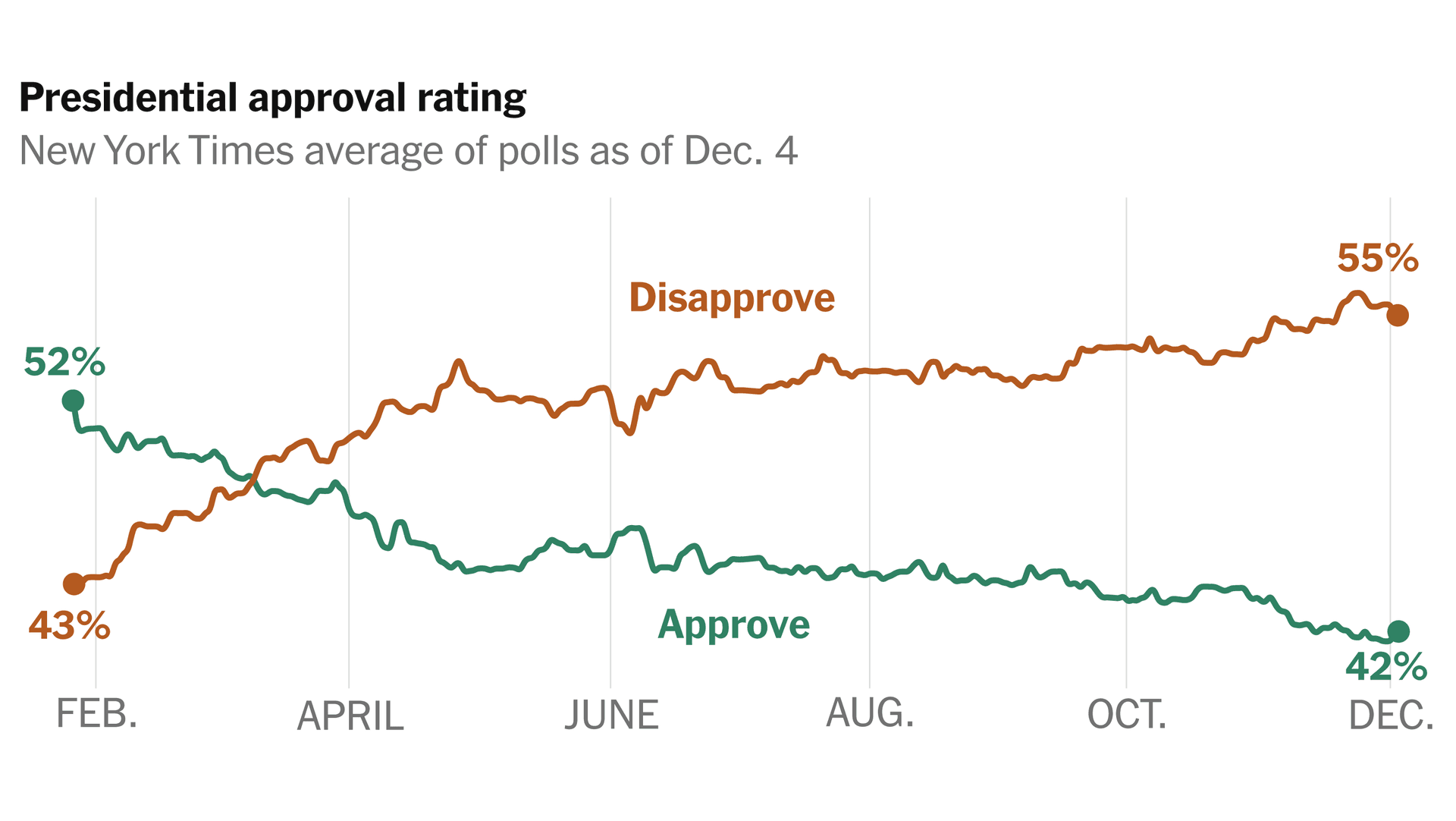
Donald Trump is losing altitude with voters on the economy, and the latest polling shows the drag reaching beyond routine partisan irritation. A Pew Research Center survey conducted April 20-26 found Trump’s job approval at 34%, the lowest mark of his second term. A Reuters/Ipsos poll taken May 8-11 put him slightly higher at 36% approval, but 63% disapproval still pointed to a broad electorate that is not giving him the benefit of the doubt.
The softening has reached some of the traits voters most often use to judge presidential competence. In Pew’s survey, 38% said Trump keeps his promises, down from 51% shortly after his reelection in November 2024. Just 44% said he is mentally sharp, down from 48% in August 2025. Those are not just abstract favorability metrics. They are measures of whether voters believe Trump can execute a governing agenda, and they have moved in the wrong direction as his second term has aged.
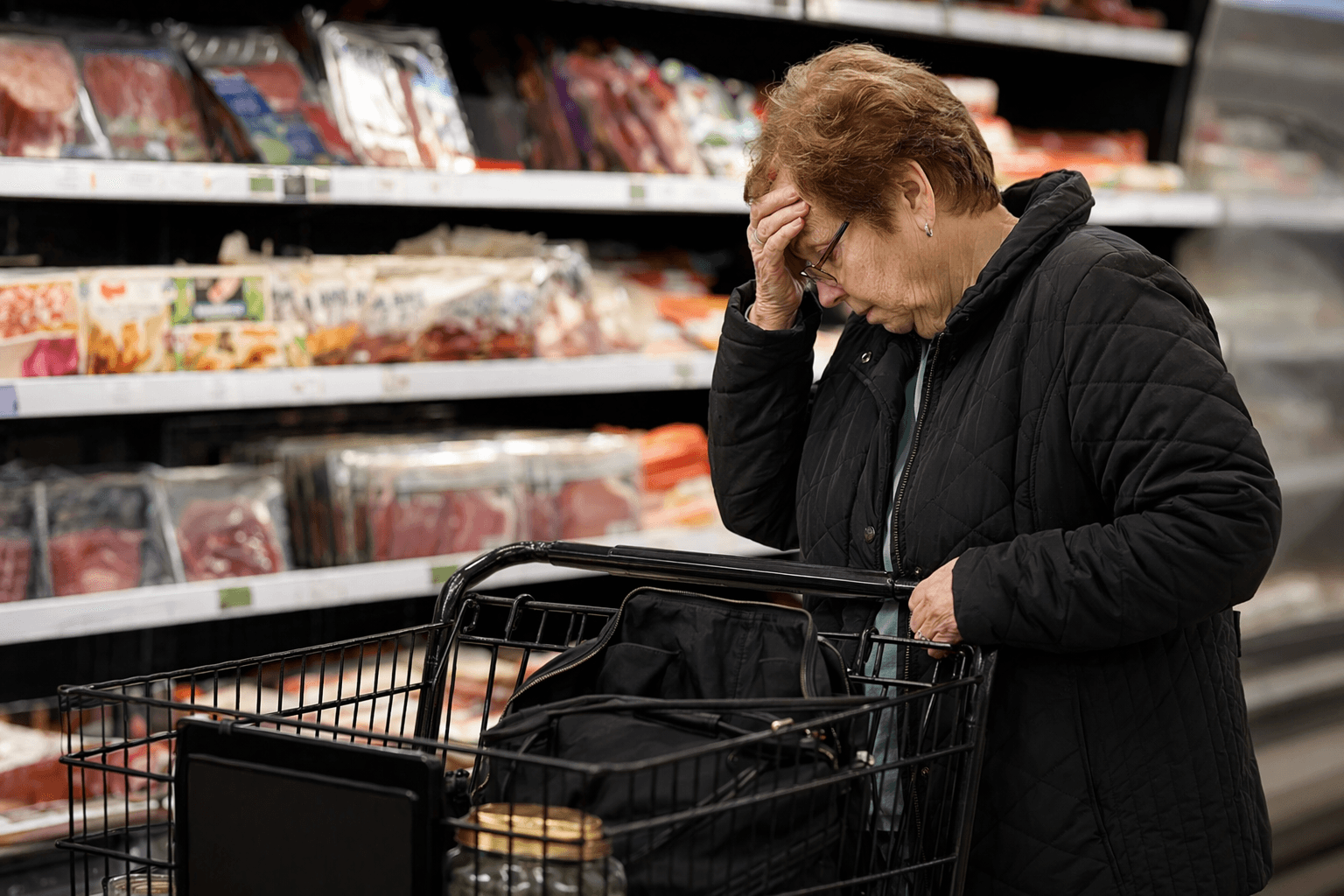
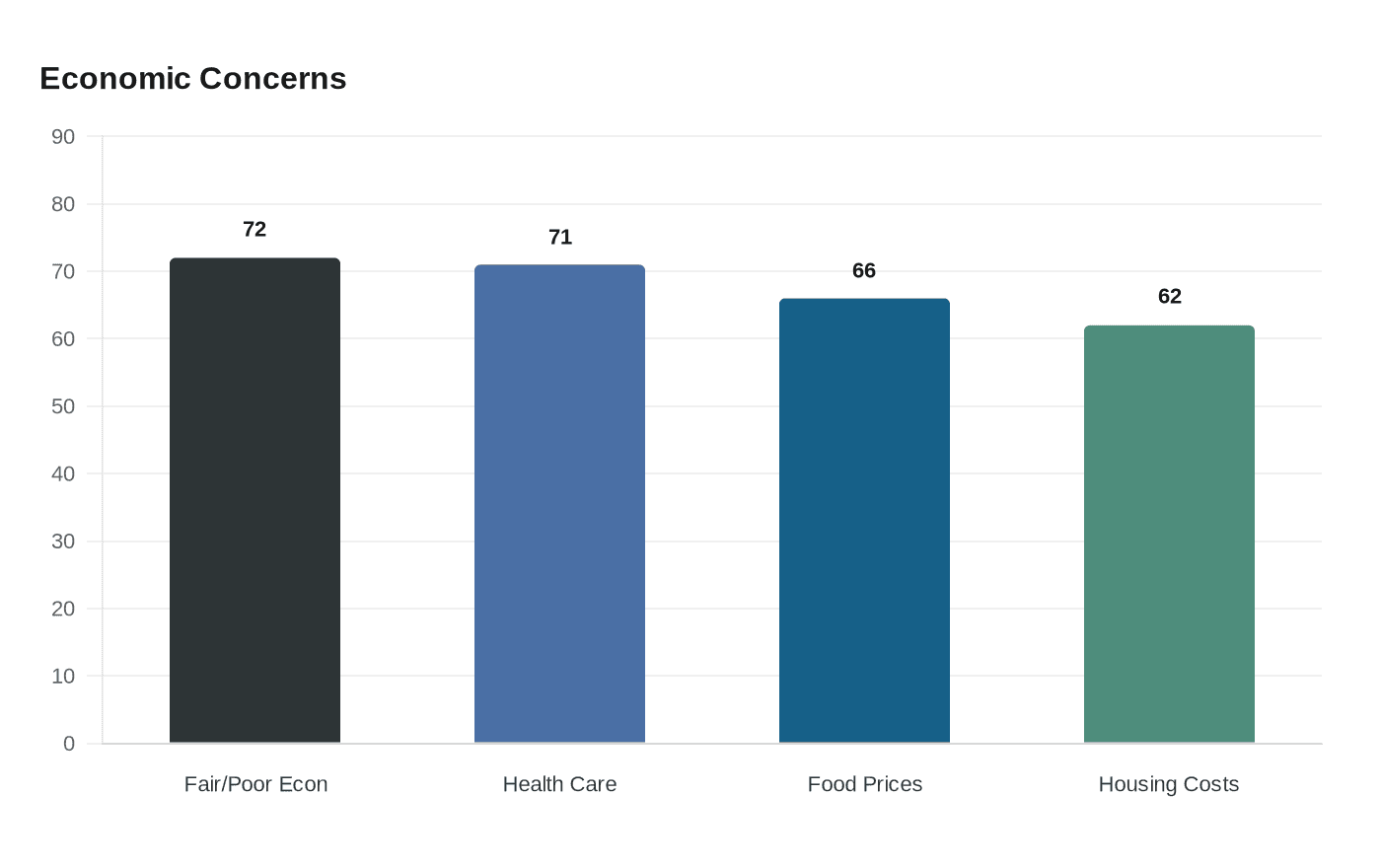
The economy is doing much of the work. Pew found in February that 72% of U.S. adults rated economic conditions as fair or poor, while only about three-in-ten called them excellent or good. The same survey showed 71% were very concerned about health care costs, 66% about food and consumer goods prices, and 62% about housing costs. That mix matters politically because it ties dissatisfaction not just to inflation in the abstract, but to the monthly bills most households actually feel.
Independent economic indicators have reinforced that gloom. FactCheck.org reported on April 23 that only 369,000 jobs had been created from January 2025 through March 2026, unemployment had risen to 4.3% in April, inflation had worsened a bit, and consumer sentiment had fallen to a record low. Even as some Republicans remain committed to Trump, the numbers suggest his second-term economic message is meeting a more skeptical public than the one that returned him to office.
That matters because the fight is no longer just about approval ratings. POLITICO has reported that the 2026 election cycle is already being reshaped by redistricting battles and a shrinking number of competitive House districts, while a recent Supreme Court decision on the Voting Rights Act has supercharged map fights in states including Tennessee, Georgia, Maryland, Florida and Louisiana. If voter fatigue with Trump hardens into a durable shift, it could alter the coalitions that define 2026 and 2028. If it does not, the country may be headed for another volatile cycle in which economic unease is loud but politically unresolved.
This article was produced by Prism’s automated news system from verified source data, official records, and press releases, then run through automated quality and moderation checks before publishing. The system is built and supervised by the people who set the standards it runs under. Read our full AI policy.
Did this article answer your question?

