U.S. debt tops economy size for first time since World War II
The red line is not 100% of GDP. The real threat is the mounting interest bill and the shrinking room Washington has left for crises.
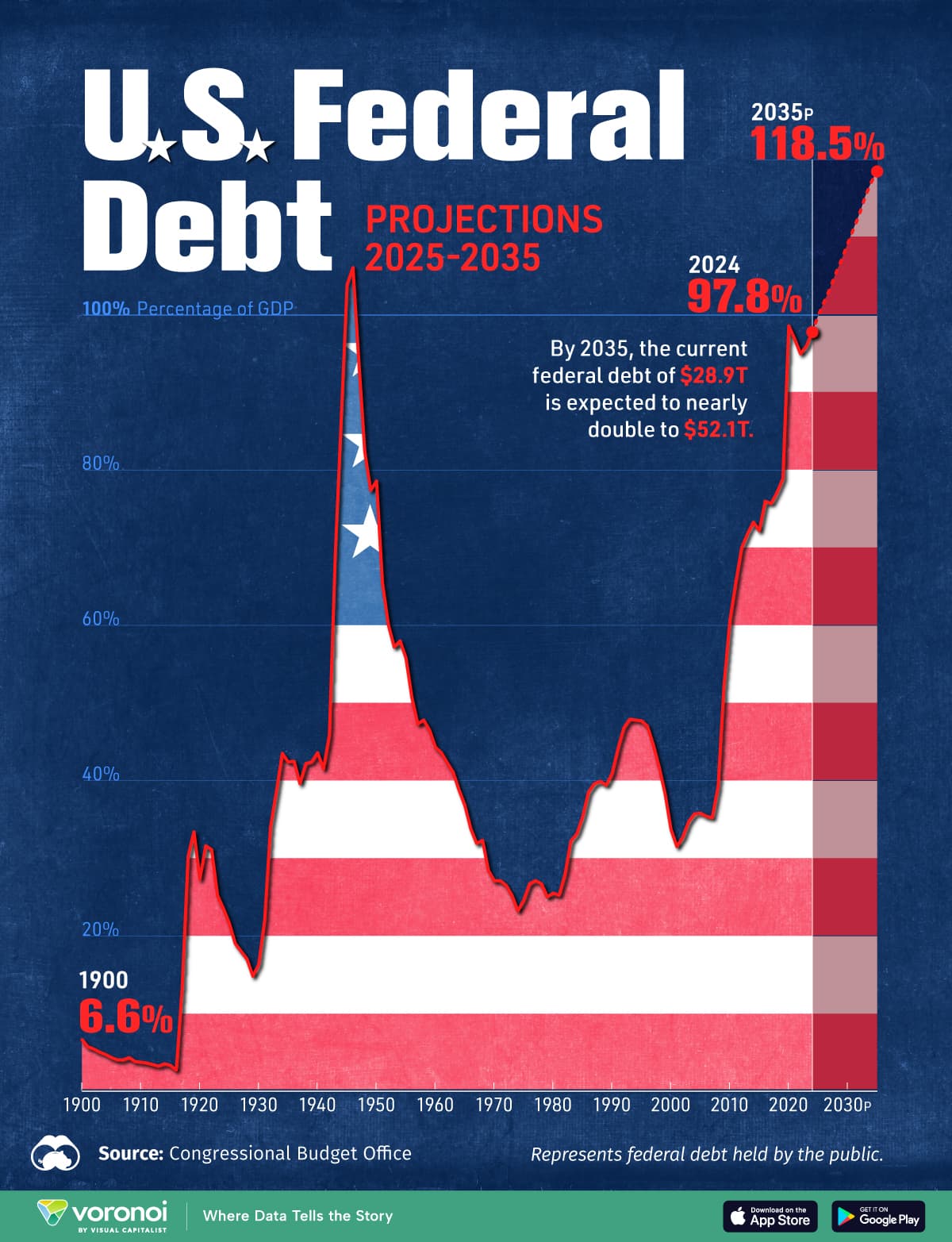
The bigger danger in Washington’s debt crossing 100% of gross domestic product is not the milestone itself. It is what comes next: higher interest costs, less room to respond to recession or disaster, and a budget that gets harder to steer as deficits keep compounding.
The Committee for a Responsible Federal Budget said on April 30 that the national debt reached 100.2% of GDP at the end of March, with debt held by the public at $31.27 trillion and nominal GDP at $31.22 trillion over the prior 12 months. That pushed U.S. debt above the size of the economy for the first time since the aftermath of World War II, when debt peaked at 106.1% of GDP in 1946.

The broader outlook is worsening, not improving. The Congressional Budget Office projects a $1.9 trillion federal deficit in fiscal 2026, rising to $3.1 trillion by 2036. Over the same period, debt held by the public is projected to climb from 101% of GDP in 2026 to 120% in 2036. The agency said outlays will reach 23.3% of GDP this year, above the 50-year average of 21.2%, while revenues will come in at 17.5% of GDP. Mandatory spending and net interest are doing most of the damage.

Interest is the part of the bill that now looms over every other choice. Public-policy groups say 2026 interest costs will hit $1 trillion, making them the fastest-growing federal budget category and, by some measures, larger than defense or Medicare. Brookings has said that a 100% rise in federal debt over 30 years could raise interest rates by 3% to 4%, while the CBO says the 10-year Treasury rate rises gradually through 2027 before leveling off. Higher debt and higher rates together mean more money sent to creditors and less available for everything else.
The scale is already visible in the government’s own tallies. The Joint Economic Committee said gross national debt reached $38.94 trillion on May 13, with debt held by the public at $31.27 trillion, up $2.70 trillion over the past year and $10.75 trillion over five years. The Bureau of Economic Analysis said real GDP grew at a 2.0% annual rate in the first quarter of 2026, which helps explain why the crossing of 100% of GDP has not triggered panic. But that steadiness can be misleading.
The CBO says debt held by the public will surpass the 1946 high in 2030 under current-law projections and reach 175% of GDP by the end of its 30-year outlook. The Committee for a Responsible Federal Budget says about $10 trillion in deficit reduction would be needed to stabilize and reduce debt as a share of GDP. Without that kind of action, the cost of delay will keep landing where it always does: on future budgets, future crisis response, and the public services that depend on room to spend.
This article was produced by Prism’s automated news system from verified source data, official records, and press releases, then run through automated quality and moderation checks before publishing. The system is built and supervised by the people who set the standards it runs under. Read our full AI policy.
Did this article answer your question?

