Trump’s Beijing visit yields spectacle, but little concrete progress
Trump’s Beijing trip ended with a state banquet and tightly staged optics, but no major breakthrough on trade, Taiwan, rare earths or Iran.
Trump returned from Beijing with the kind of scenery that fills television screens and the kind of results that move markets only if they exist. The two-day visit on May 14-15, 2026, brought a state banquet at the Great Hall of the People, business leaders at his side and a wave of carefully managed pageantry, but little evidence of a durable shift in the rivalry between Washington and Beijing.
It was Trump’s first trip to China in his second term and the first visit by a sitting U.S. president to Beijing in nearly a decade. The summit followed a fragile trade truce struck in October 2025 in Busan, South Korea, when the United States lowered tariffs and China agreed to keep rare earths flowing. In Beijing, the agenda again ran through the same fault lines: tariffs, rare earth export controls, AI semiconductor restrictions, Taiwan arms sales, the Iran war and the effort to stabilize a relationship that has been strained by a year of trade conflict.
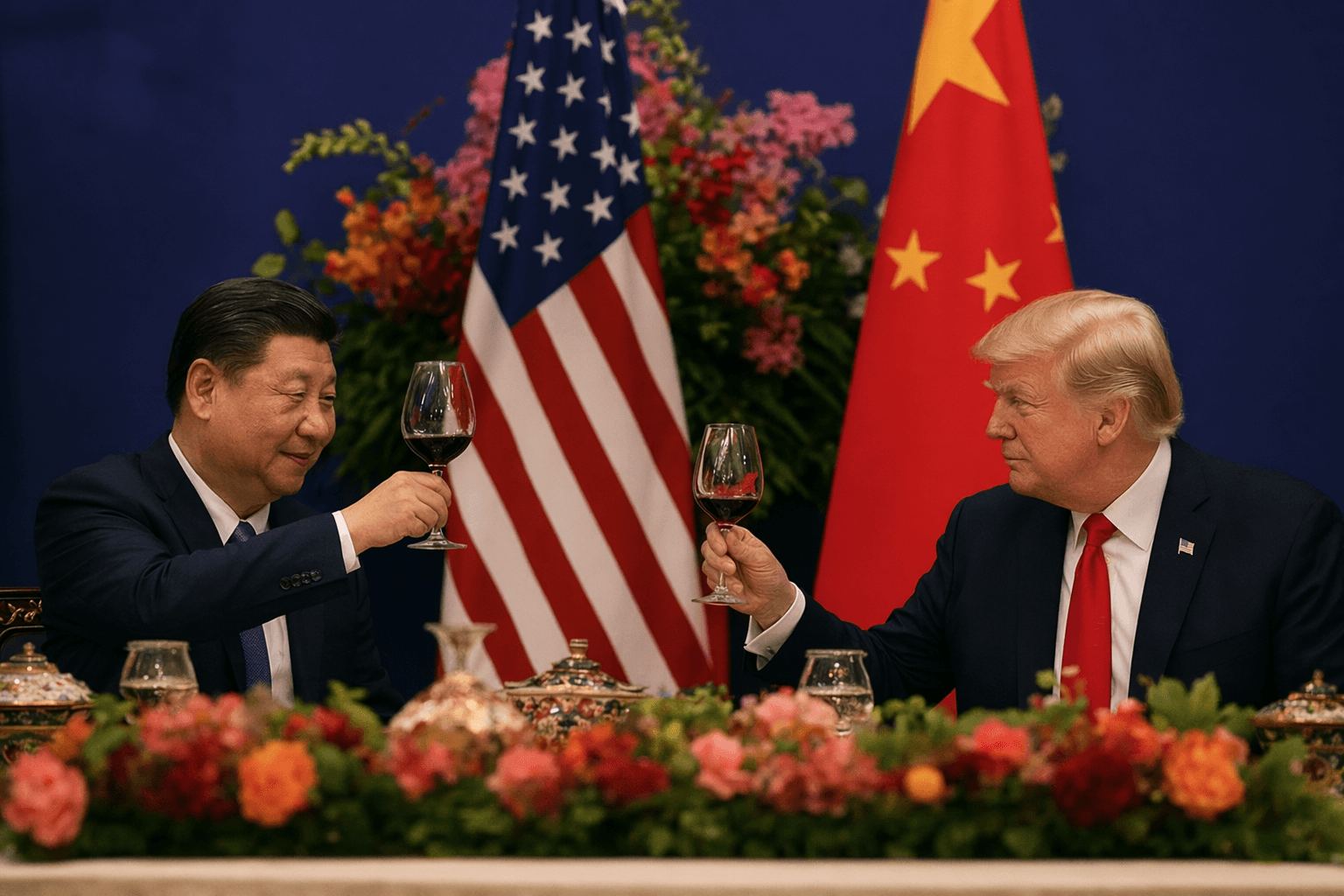
Officials had signaled before the meeting that they expected China to commit to buying double-digit billions of dollars in American farm goods. Instead, the most consequential takeaway was how little changed. Reuters reported that Trump left Beijing with no major breakthrough on trade and no tangible help on the Iran war. The White House had previously cast the October deal as a “historic trade win” and a “massive victory,” but the Beijing trip looked more like a pause than a settlement.
Taiwan remained the sharpest political warning sign. Xi Jinping told Trump that mishandling the issue could put the relationship in “great jeopardy,” and later said the Taiwan question was the most important issue in China-U.S. relations. Chinese state media framed the talks around “constructive strategic stability,” signaling a desire to preserve contact without conceding on the central disputes that define the bilateral relationship.
The spectacle was undeniable. The visit drew attention not only for the state banquet and the formal choreography, but also for the side stories that circulated around the delegation, including selfies and a noodle run involving Elon Musk and Jensen Huang. Yet the summit’s real test was always whether it would produce something more than images. On that measure, Beijing delivered a show, not a settlement.
This article was produced by Prism’s automated news system from verified source data, official records, and press releases, then run through automated quality and moderation checks before publishing. The system is built and supervised by the people who set the standards it runs under. Read our full AI policy.
Did this article answer your question?